
Features ·
Natural parks in Argentina: from the Patagonian glaciers to the forests of Iguazú
Since Francisco P. Moreno's land donation in 1903, Argentina has built one of the oldest national park networks in Latin America: 39 national parks among 55 protected areas under the jurisdiction of the Administración de Parques Nacionales (National Parks Administration), alongside hundreds of provincial areas. This article covers their history, legal status, management, major parks and current debates.
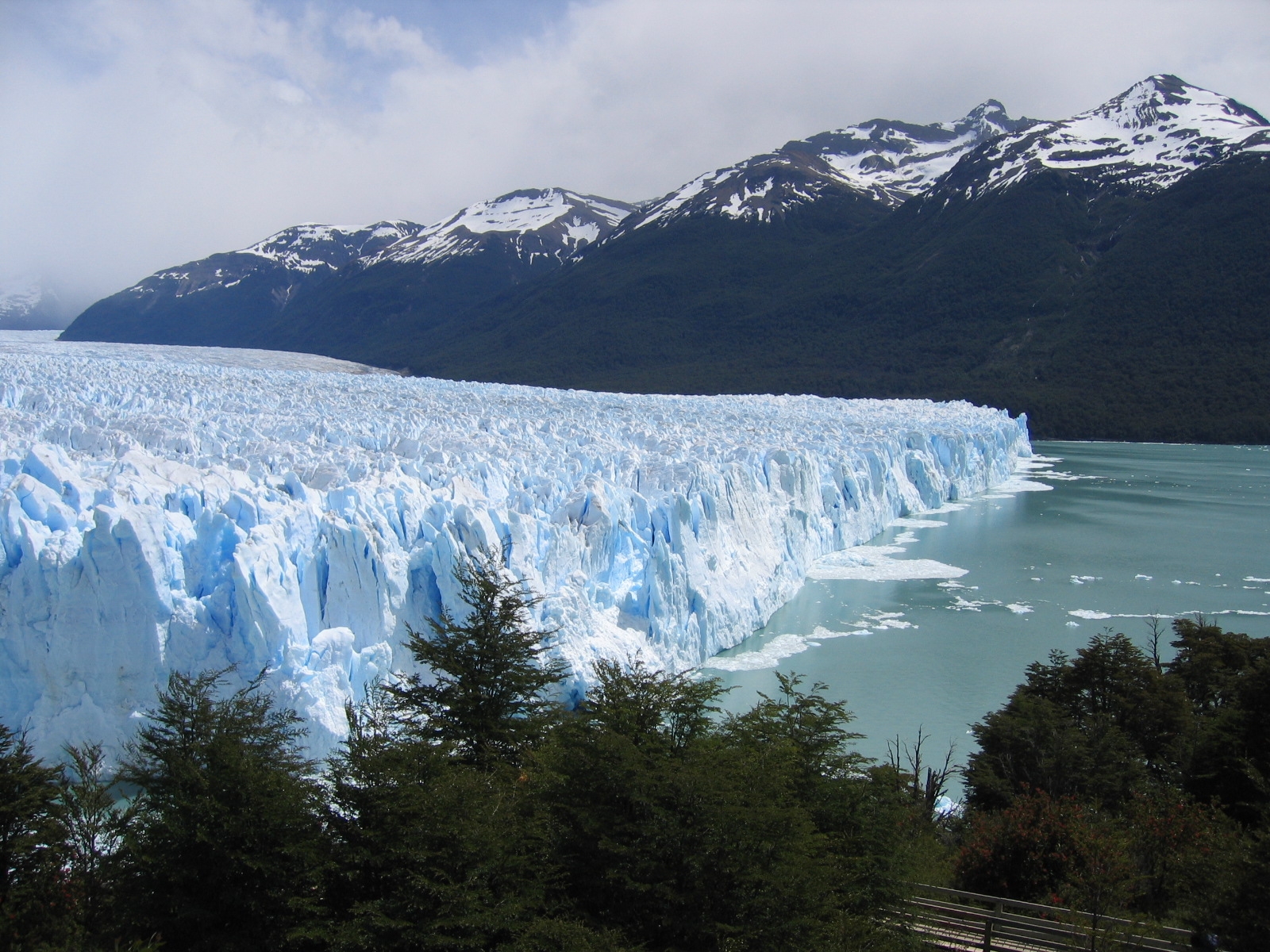
What counts as a natural park in Argentina?
In Argentina, the expression “natural park” does not refer to a single legal category. It covers two broad families of protected areas, which reflect the country's federal organization.
The first falls under the national government. Law 22.351 of 1980 defines three categories: the national park (parque nacional), an area kept in its natural state, representative of a biogeographic region and of great scenic or scientific interest, where all economic use is prohibited except tourism; the natural monument (monumento natural), which may be a site, a landscape feature or a living species, placed under absolute protection; and the national reserve (reserva nacional), a conservation area where certain activities remain permitted under supervision, often adjoining a national park as a buffer zone. These areas are managed by the Administración de Parques Nacionales (APN).
The second family falls under the provinces. The Constitution recognizes the provinces' original ownership of the natural resources within their territory (Article 124), while Article 41 guarantees every inhabitant the right to a healthy environment. Each province therefore has its own legislation and its own categories: provincial parks, provincial reserves, multiple-use reserves, protected landscapes and so on. Some of the country's most famous sites, such as Ischigualasto and Aconcagua, are provincial parks, not national parks.
This dual structure explains a central rule: a national park can be established within a province only if the province cedes ownership of and jurisdiction over the area to the national government. The two levels come together in the Sistema Federal de Áreas Protegidas (SIFAP, Federal System of Protected Areas), which lists both national and provincial areas.
History: from Perito Moreno's donation to the federal system
The history of Argentina's national parks begins in a context of territorial nation-building. At the turn of the 20th century, Patagonia and the Northeast were still “national territories” administered directly by the federal government, and the border with Chile was the subject of a long dispute. The naturalist and explorer Francisco Pascasio Moreno, who represented Argentina as an expert (perito) in that dispute, earned from it his nickname, “Perito Moreno.”
In 1902, the landscape architect Carlos Thays studied Iguazú Falls and proposed making them a national park. The following year, on November 6, 1903, Moreno, to whom Law 4.192 had just granted public land in Neuquén or southern Río Negro as a reward for services rendered to the country free of charge before his appointment as perito, asked that three square leagues (about 7,500 hectares) be allotted to him near Lake Frías and Puerto Blest, at the western end of Lake Nahuel Huapi, and donated them to the Nation to be preserved as a “natural public park,” expressing the wish that their character not be altered and that only the improvements useful to visitors be made there. That date is now celebrated as National Parks Day. A decree issued by President José Figueroa Alcorta on January 17, 1907, enlarged the protected area to 43,000 hectares.
On April 8, 1922, under the presidency of Hipólito Yrigoyen, the Parque Nacional del Sud was created, covering about 785,000 hectares; it was the forerunner of Nahuel Huapi National Park. Its first superintendent was the engineer Emilio Frey. In 1928, the government purchased 75,000 hectares around Iguazú Falls. Argentina thus became one of the pioneers of national parks in Latin America.
The institutional turning point came with Law 12.103, passed by Congress on September 29, 1934, under the presidency of Agustín P. Justo, and published in the Boletín Oficial (the official gazette) on October 29, 1934. It created the Dirección de Parques Nacionales (National Parks Directorate), attached to the Ministry of Agriculture and run by a nine-member board, and its Article 20 established Nahuel Huapi and Iguazú national parks. The law already set out a principle still in force today: no park located within a province can be brought into the system unless the province cedes ownership of and jurisdiction over its area to the national government. The law also gave the Directorate an explicit mission to promote tourism and authorized it to build roads, ports and facilities, and to grant concessions for hotels and services.
From 1934 to 1944, the Directorate was headed by the lawyer Exequiel Bustillo. His work is inseparable from the rise of San Carlos de Bariloche, then included within the park: roads, piers, hotels and above all the Bariloche Civic Center, designed and built by Parques Nacionales under his leadership and declared a national historic monument in 1987. Historians stress that this model, which combined nature protection, tourism and settlement, also served to assert the state's presence in remote border regions: in the Andes of northern Patagonia, nature conservation was associated with “the imposition of the frontier itself,” according to the study by Vejsbjerg, Núñez and Matossian (2014).
This geopolitical logic can be read on the map. On May 11, 1937, a decree created the Lanín, Los Alerces, Francisco P. Moreno (now Perito Moreno) and Los Glaciares reserves, to which the SIB also adds Lago Puelo; all of them run along the Chilean border. They became national parks in 1945, the year to which the APN also dates the creation of Laguna Blanca National Park (the SIB dates it to 1940). Iguazú, for its part, borders Brazil. In 1942, the administration acquired the Palacio Haedo in Buenos Aires, which would become its headquarters and was declared national historic heritage in 2001.
After World War II, the network expanded into the subtropical forests and the Chaco: El Rey (1948) in the Yungas of Salta, Río Pilcomayo (1951) in Formosa, Chaco (1954), then Tierra del Fuego, created by Law 15.554 published on November 3, 1960, and El Palmar (1965) in Entre Ríos, dedicated to yatay palms.
In 1970, Law 18.594, published in the Boletín Oficial on February 23, 1970, and implemented by Decree 637/1970, reorganized the regime for “national parks, natural monuments and national reserves”; the institution became the Servicio Nacional de Parques Nacionales (National Parks Service). Los Arrayanes (1971), Baritú (1974), Lihué Calel (1976) and Calilegua (1979) followed.
On December 12, 1980, under the military government, Law 22.351 was published, repealing Law 18.594 and creating the Administración de Parques Nacionales as a self-governing (autárquico) agency. Amended in particular by Law 26.389 of 2008, it remains the reference text today.
The 1980s and 1990s broadened the range of tools. In 1984, the southern right whale became the first species declared a national natural monument (Law 23.094). Decree 2148/1990 created the strict nature reserve category, and Decree 453/1994 the wildlife nature reserve (reserva natural silvestre) and educational nature reserve (reserva natural educativa) categories. The huemul and the taruca, two Andean deer, were declared natural monuments in 1996 (Law 24.702), and the jaguar (yaguareté) in 2001 (Law 25.463).
New parks multiplied, often in ecoregions that were still poorly represented: Sierra de las Quijadas (1991), Pre-Delta (1992), Los Cardones and Quebrada del Condorito (1996), Talampaya (1997, Law 24.846, after cession by La Rioja), San Guillermo (1999), Copo (2000), El Leoncito and Mburucuyá (2002), and Monte León (2004) on the coast of Santa Cruz. In 2003, the SIFAP was established, bringing together national and provincial areas. In 2007, an agreement with the Ministry of Defense paved the way for “Defense nature reserves” on military land.
From 2008 onward, Argentina turned to the sea. The Patagonia Austral interjurisdictional coastal marine park, created by a treaty between the Nation and the province of Chubut approved by Law 26.446 (published in January 2009), introduced shared management; it was followed in 2012 by the Makenke and Isla Pingüino interjurisdictional marine parks (Laws 26.817 and 26.818) in Santa Cruz. In 2013, Law 26.875 created the first offshore marine protected area, Namuncurá-Banco Burdwood. Law 27.037, promulgated on December 9, 2014, established the National System of Marine Protected Areas.
On land, new parks continued to be created, some of them supported by land donations from private foundations, such as Campos del Tuyú, a former reserve of the Fundación Vida Silvestre Argentina, or Patagonia, enlarged with estancias donated by the Fundación Flora y Fauna Argentina: Campos del Tuyú (2009), Islas de Santa Fe (2010), El Impenetrable (2014, Law 26.996) and Patagonia (Law 27.081, published on January 27, 2015). The most emblematic case is Iberá, in Corrientes. The province had protected the Esteros del Iberá since provincial Law 3771 of 1983, and land acquired by The Conservation Land Trust and the Fundación Flora y Fauna Argentina, organizations linked to Douglas and Kristine Tompkins, was donated in stages to the Administración de Parques Nacionales from 2016 onward. Law 27.481, passed on December 5, 2018, created Iberá National Park (about 157,000 ha) and an adjoining national reserve (about 23,000 ha).
Iberá has become Argentina's rewilding laboratory. In January 2021, the government announced the first jaguar releases in the Esteros, where the species had been absent for about 70 years; this program, carried out with the Fundación Rewilding Argentina and the province of Corrientes, saw the first cubs born in the wild in 2022.
In that same year, 2018, Law 27.490 created two vast marine areas, Yaganes and Namuncurá-Banco Burdwood II, and Congress created or enlarged the Traslasierra (Law 27.435), Aconquija (Law 27.451) and Ciervo de los Pantanos (Law 27.456) parks.
In 2022, two national parks were established: Islote Lobos, on the coast of Río Negro (Law 27.670), and Ansenuza, around the Mar Chiquita lagoon in Córdoba (Law 27.673); Pre-Delta National Park was enlarged (Law 27.672). In 2023, Congress created the Laguna El Palmar national park and national reserve in the Chaco (Law 27.707), while decrees created the Marismas del Tuyú wildlife nature reserve and the Cerro Pistarini educational nature reserve. As of November 2, 2026, Laguna El Palmar is the most recently created national park: according to InfoLEG, the national legislation database, no law establishing a national park was published between 2024 and October 2026.
Since December 2023, the public spending cuts of Javier Milei's government have also affected the APN: repeated changes in its administrative attachment, budget cuts and debates over staffing, detailed below. In addition, in April 2026, Law 27.804 reformed the glacier protection law, a text that directly concerns several Andean parks.
Legal framework
The foundation is Law 22.351 of 1980, the “legal regime for national parks, natural monuments and national reserves.” Its Articles 1 to 3 require that an area be declared a park, monument or reserve only by law, after the province has ceded ownership and jurisdiction. Articles 4 to 6 define national parks and list the prohibited activities; Article 8 covers natural monuments; Articles 9 and 10 cover national reserves. Articles 14 to 18 make the APN the enforcement authority, and Article 33 establishes the National Park Ranger Corps (Cuerpo de Guardaparques Nacionales).
Several decrees supplement this framework for land in the national domain: Decree 2148/1990 (strict nature reserves) and Decree 453/1994 (wildlife and educational nature reserves). At sea, Law 27.037 of 2014 created the National System of Marine Protected Areas and five categories (strict national marine reserve, national marine park, national marine monument, habitat or species management reserve, and national marine reserve); every marine protected area must be created by a law that precisely sets its boundaries. Interjurisdictional marine parks, for their part, are based on treaties between the Nation and a province, approved by law.
The general framework is provided by the 1994 Constitution (Articles 41 and 124) and by General Environmental Law 25.675 (2002). Sectoral laws also affect the parks: the native forests law, 26.331 (2007), and the glaciers law, 26.639 (2010), amended by Law 27.804 of 2026. Finally, each province has its own protected areas law. Internationally, Argentina is a party to the Ramsar Convention on Wetlands (Law 23.919, 1991) and to the World Heritage Convention.
Types of parks and protected areas
At the national level, the APN manages:
- national parks, the core of the system, where tourism is the only economic activity allowed;
- national reserves, either freestanding or adjoining a park, where livestock grazing, certain buildings and tourist services are possible with authorization;
- natural monuments, either territorial (Laguna de los Pozuelos, in the Puna of Jujuy) or covering a species (southern right whale, huemul, taruca, jaguar);
- strict, wildlife and educational nature reserves, created by decree on land owned by the national government;
- interjurisdictional marine parks, co-managed with a province;
- offshore marine protected areas, within the exclusive economic zone;
- Defense nature reserves, military land managed for conservation objectives under agreements between the APN and the Ministry of Defense.
At the provincial level, the terminology varies from one province to another: the SIFAP includes provincial parks, provincial reserves, multiple-use reserves, protected landscapes, and private and municipal reserves, among others. The “provincial park” is the closest equivalent to a regional nature park, with rules set by each province.
How many parks are there?
As of November 2, 2026, according to the APN's Sistema de Información de Biodiversidad (SIB, Biodiversity Information System) and the SIFAP registry, Argentina has 39 national parks. The most recent is Laguna El Palmar (2023).
In total, the SIB lists 55 areas under APN jurisdiction: 39 national parks, 2 freestanding national reserves (El Nogalar de Los Toldos and Pizarro, in Salta), 1 territorial natural monument (Laguna de los Pozuelos), 7 nature reserves (1 strict, 3 wildlife, 2 educational and the Formosa nature reserve), 3 interjurisdictional marine parks and 3 marine protected areas. To these are added 4 species declared natural monuments and the Defense nature reserves, of which there are 18 according to the SIFAP (19 in the SIB list). The APN's land areas cover about 5.36 million hectares according to the SIB, and its three offshore marine areas nearly 12.9 million hectares.
Including provincial, municipal and private areas, the SIFAP registry shows, as of the same date, 658 terrestrial protected areas (63 of them coastal and marine), covering 36,704,821 ha, or 13.2% of the continental territory, and 39 marine areas (36 of them coastal and marine), covering 15,745,844 ha, or 6% of the continental shelf. Since registration with the SIFAP is voluntary, these figures do not necessarily reflect every area created by the provinces.
The Parkavela atlas currently has pages for most of these parks, but the number of pages is not an official figure: as of this date, Iberá and Laguna El Palmar national parks do not yet have a page.
Map
To locate the parks, the atlas's country page displays an interactive map of Argentina: Argentina: map and protected areas. The world map allows comparison with neighboring countries, especially Chile, with which Argentina shares the Andes and several border parks.
The SIFAP also provides its own official map of national and provincial areas, with data downloads in KML and GIS formats.
Complete list
The up-to-date list can be found in the atlas directory: all national parks in Argentina, the marine protected areas and all of the country's protected areas.
For reference, here are the 39 national parks grouped by major geographic region, with their year of creation according to the SIB:
- Northwest: Baritú (1974), Calilegua (1979), El Rey (1948), Los Cardones (1996), Aconquija (2018), Talampaya (1997), San Guillermo (1999), El Leoncito (2002), Copo (2000).
- Northeast: Iguazú (1934), Iberá (2018), Mburucuyá (2002), Chaco (1954), El Impenetrable (2014), Laguna El Palmar (2023), Río Pilcomayo (1951), El Palmar (1965), Pre-Delta (1992), Islas de Santa Fe (2010).
- Center: Quebrada del Condorito (1996), Traslasierra (2018), Ansenuza (2022), Sierra de las Quijadas (1991), Lihué Calel (1976), Ciervo de los Pantanos (2018), Campos del Tuyú (2009).
- Patagonia: Lanín (1937), Laguna Blanca (1940), Los Arrayanes (1971), Nahuel Huapi (1934), Lago Puelo (1937), Los Alerces (1937), Islote Lobos (2022).
- Southern Patagonia: Perito Moreno (1937), Los Glaciares (1937), Patagonia (2015), Bosques Petrificados de Jaramillo (1954, a national park since 2012), Monte León (2004), Tierra del Fuego (1960).
How a national park is created
The creation of a national park almost always follows the same path. First, the province passes a law ceding to the national government ownership of the public land and jurisdiction (or only environmental jurisdiction) over the area, often with conditions attached. Congress then passes a law accepting the cession and creating the park, sometimes together with an adjoining national reserve, under Law 22.351. Finally, the APN carries out the survey, registers the land and draws up a management plan.
The most recent example illustrates these steps. The province of Chaco ceded jurisdiction over about 5,600 ha through its Law 3458-R, passed on November 10, 2021. Congress accepted the cession and created the Laguna El Palmar national park and national reserve through Law 27.707, passed on March 28, 2023, and published on April 18, 2023. Provincial laws often include a reversion clause in case the national government fails to honor its commitments; Law 27.670 on Islote Lobos thus accepts the reversion condition set out in Río Negro provincial Law 5.476, while committing the national government to establish the park's superintendency (intendencia) in Sierra Grande.
When the land already belongs to the national government, nature reserves can be created by decree, as with Marismas del Tuyú (Decree 123/2023). Offshore marine protected areas require a specific law, and interjurisdictional parks a treaty approved by Congress.
Who manages the parks?
The Administración de Parques Nacionales is a decentralized, self-governing agency with its legal headquarters in Buenos Aires. It is run by a board made up of a president, a vice president and four members, appointed by the executive branch for three years. Each park is administered by a superintendency; the network is organized into large regions (Northwest, Northeast, Center, Patagonia, Southern Patagonia and the Argentine Sea). Its attachment has changed several times since 2023: texts published in October 2026 describe it as a decentralized agency operating within the orbit of the Vicejefatura de Gabinete del Interior, part of the Jefatura de Gabinete de Ministros (the Office of the Chief of Cabinet).
On the ground, enforcement relies on the National Park Ranger Corps, defined by law as an auxiliary administrative police service, and on wildfire brigades. The APN opened a new recruitment competition for park rangers (guardaparques) in 2026.
Other actors are also involved: the provinces manage their own areas through their environment ministries or agencies; interjurisdictional marine parks are co-managed by the Nation and the province; and the Defense reserves involve the armed forces. The SIFAP is steered by an executive committee bringing together the Federal Environmental Council (COFEMA), which chairs it, the APN, which coordinates it, and the national Undersecretariat of Environment. Finally, private foundations such as Rewilding Argentina play an important role in land acquisition and reintroduction programs.
Funding
Law 22.351 created a Fondo de Fomento de Parques Nacionales (National Parks Development Fund), financed by entrance fees, concessions and sales, sport fishing and hunting fees, fines, grants and donations, as well as by appropriations in the national budget. The APN's budget is set each year by the budget law and can be modified by administrative decisions of the Chief of Cabinet.
This was the case with Administrative Decision 20/2026, dated May 8, 2026, and published in the Boletín Oficial on May 11, 2026, which cut the APN's appropriations as part of a broader amendment to the 2026 budget. According to a draft resolution submitted in the Chamber of Deputies to oppose it, the cut amounts to 3,879 million pesos, 65.9% of which affects the day-to-day operation of parks and reserves, and the APN's budget in real terms is said to have fallen by about a third compared with 2023. The government presents these measures as part of its general policy of reducing public spending.
The provinces fund their own areas from their budgets. Foundations and international cooperation programs also contribute to some projects.
Missions
Law 22.351 gives national parks a primary mission: to preserve in their natural state representative samples of the country's biogeographic regions, for the enjoyment of present and future generations. The APN is responsible for protecting wildlife, flora and landscapes, controlling access and uses, approving management plans, promoting scientific research and education, and organizing visitor services. Law 12.103 of 1934 had already added the development of tourism and the conservation of mountain watersheds. Today these are joined by wildfire prevention and suppression, the protection of archaeological heritage and the management of marine areas.
Regulations
In a national park, the law prohibits, among other things, mining, industrial, agricultural and forestry operations, commercial fishing, hunting, the introduction of exotic species, new human settlements and most construction, as well as overflights by powered aircraft, with some exceptions. Tourist infrastructure should in principle be located in national reserves, and concessions for a maximum of 30 years can be granted by decree.
National reserves are more flexible: sporting, commercial and industrial activities, agriculture, livestock grazing and quarrying are allowed there under supervision, but other mining, commercial fishing and hunting remain prohibited, except for sport hunting of exotic species already present. Natural monuments are inviolable, except for official inspections and authorized research. Violations are punished by fines set by the APN, whose schedule is updated by decree.
For visitors, this means entrance fees, marked trails, designated camping areas, permits for sport fishing and strict rules on fires, particularly in Patagonia. In provincial areas, the rules depend on each province's legislation.
Local life and economic activity
Argentina's parks are not empty of people. As early as 1934, Law 12.103 recognized the rights of municipalities and landowners located within park boundaries; Bariloche and the Nahuel Huapi agricultural colony were then part of the park. Even today, rural communities and Indigenous peoples live in or around several parks, notably Mapuche communities in the Andean parks of Neuquén: Lanín National Park pioneered the co-management (comanejo) launched around 2000 with the Mapuche Confederation of Neuquén, and a co-management board for the Lanín and Nahuel Huapi parks bringing together the APN, the National Institute of Indigenous Affairs (INAI) and the communities was formalized in 2017.
Extensive livestock grazing, handicrafts, hospitality and services (guides, transportation, lodging) are the main authorized activities, especially in the national reserves. Tourism concessions (hotels, mountain huts, boat trips, ski lifts) are a source of revenue for the APN as well as for the gateway towns: Puerto Iguazú, Bariloche, Villa La Angostura, San Martín de los Andes, El Calafate, El Chaltén, Ushuaia and Colonia Carlos Pellegrini, the gateway to the Esteros del Iberá.
Recent park creation laws explicitly include this local dimension: the Iberá law provides for the park's visitor centers and hotels to be located in neighboring towns, and the Islote Lobos law sets the location of the superintendency and an information center in Sierra Grande, with a second center in Playas Doradas.
Tourism
Tourism has been part of the DNA of Argentina's parks since Bustillo. Iguazú National Park is by far the most visited: according to the APN, it reached a record 1.5 million visitors in 2025. The other major destinations are Los Glaciares, with the Perito Moreno Glacier and the Fitz Roy massif; Nahuel Huapi and the lake district around Bariloche; Lanín; Tierra del Fuego near Ushuaia; and the combination of Talampaya and the neighboring Ischigualasto Provincial Park.
The newer parks of the Northeast and Center focus on wildlife watching: the Iberá wetlands, the Ansenuza lagoon and its flamingos, the forests of the Chaco. The coastal parks of Patagonia (Monte León, Islote Lobos, and the marine parks of Santa Cruz and Chubut) draw visitors with their colonies of seabirds and marine mammals. Entrance fees, set in 2026 by APN resolution, distinguish between a general rate, a rate for Argentines, a rate for residents of the province and a student rate; local residents, Argentine retirees and children up to age 6 are exempt.
Biodiversity
The APN divides Argentina into 18 ecoregions, ranging from the humid subtropical forests of the north to the steppes and cold forests of Tierra del Fuego, by way of the high plateaus of the Puna, the arid Monte, the Pampas, the wetlands of the Paraná and the Argentine Sea. The national park network was built partly to fill gaps in representation: after the Andean-Patagonian forests, it took in the Yungas (Calilegua, Baritú, El Rey), the Paraná forest (Iguazú), the dry and humid Chaco (Copo, El Impenetrable, Chaco), the Esteros wetlands (Iberá, Mburucuyá), the central sierras (Quebrada del Condorito, Traslasierra) and the Patagonian coast.
The SIB records the species observed in each area: Iguazú comes first with 3,338 recorded taxa, ahead of Nahuel Huapi (3,002) and Calilegua (2,609). These figures measure the state of the inventories more than actual species richness, but they give an idea of the weight of the subtropical and Andean forests in the country's biodiversity.
Wetlands are gaining importance: Argentina had 24 Ramsar sites in February 2025, including several national parks (Laguna Blanca, Río Pilcomayo, El Palmar, Pre-Delta, Ansenuza, Laguna El Palmar, among others).
Flagship species
Four species hold the status of national natural monument, the strongest protection in Argentine law: the southern right whale (1984), which breeds in particular around the Valdés Peninsula; the huemul (1996), a deer of the Andean-Patagonian forests; the taruca (1996), a deer of the northwestern Andes; and the jaguar, or yaguareté (2001), found in the Yungas, the Paraná forest and the Chaco, and reintroduced in Iberá.
Other species are emblems of the parks: the Andean condor, which can be seen from Quebrada del Condorito to the Patagonian Andes; the guanaco and the vicuña, both common in San Guillermo; the marsh deer, which gave its name to Ciervo de los Pantanos National Park; the pampas deer, protected in Campos del Tuyú; the hooded grebe (macá tobiano), listed as critically endangered by the IUCN, which nests on the plateaus of Santa Cruz and whose protection is one of the reasons for Patagonia National Park; the capuchin monkey (mono caí) in El Rey; and the South American sea lion and the Magellanic penguin on the coasts of Monte León and Islote Lobos.
The atlas also has “Where to see” pages for Darwin's rhea of the Patagonian steppes, the Chilean flamingo of the salt lagoons, and the upland goose and the toco toucan of the northeastern forests.
As for plants, the parks protect remarkable trees: the alerce, a giant and very long-lived conifer that gave its name to Los Alerces National Park; the cinnamon-barked arrayán of Los Arrayanes; the lenga and ñire forests of Tierra del Fuego; the yatay palms of El Palmar; and the candelabra cacti (cardones) of the Northwest.
Major parks
- Nahuel Huapi (Neuquén and Río Negro, 717,261 ha including its reserve): the country's oldest park, around Bariloche's large glacial lake, among southern beech (Nothofagus) forests, volcanoes and Andean lakes.
- Iguazú (Misiones, 67,698 ha): Iguazú Falls and the Paraná forest, inscribed on the World Heritage List in 1984.
- Los Glaciares (Santa Cruz, 731,932 ha according to the SIB): the Southern Patagonian Ice Field, the Perito Moreno Glacier and Fitz Roy; a World Heritage site since 1981.
- Los Alerces (Chubut, 259,822 ha): temperate forests of thousand-year-old alerces, inscribed on the World Heritage List in 2017.
- Lanín (Neuquén, 412,000 ha): Lanín Volcano, araucaria forests and Mapuche territory.
- Tierra del Fuego (68,909 ha): sub-Antarctic forests and the Beagle Channel, on the doorstep of Ushuaia.
- Talampaya (La Rioja, 213,800 ha): red sandstone canyons and Triassic fossil beds, a World Heritage site together with Ischigualasto since 2000.
- Iberá (Corrientes, 195,094 ha according to the SIB): vast wetlands, marsh deer, caimans and the return of the jaguar; no atlas page yet.
- Ansenuza (Córdoba, 661,416 ha including its reserve): the Mar Chiquita salt lagoon and the Río Dulce marshes, a stronghold for flamingos.
- El Impenetrable (Chaco, 128,000 ha): dry Chaco forest along the Bermejo River, one of the newest parks in the north.
- Calilegua (Jujuy, 76,306 ha): a complete gradient of Yungas forest.
- Patagonia (Santa Cruz, 106,424 ha): basalt plateaus and the lagoons of the hooded grebe.
- Monte León (Santa Cruz, 62,169 ha): cliffs and colonies of penguins and sea lions on the Atlantic.
All areas are those given by the SIB, consulted on November 2, 2026; they sometimes include the associated national reserves.
Records
- Oldest: Nahuel Huapi, which grew out of Moreno's donation (1903) and the Parque Nacional del Sud (1922), and was created under its current name by Law 12.103 of 1934, at the same time as Iguazú.
- Largest national park: Los Glaciares, with 731,932 ha according to the SIB, ahead of Nahuel Huapi (717,261 ha) and Ansenuza (661,416 ha, park and reserve combined).
- Smallest national park: Los Arrayanes, 1,796 ha, on the Quetrihué Peninsula in Lake Nahuel Huapi.
- Largest national protected area: the Yaganes marine protected area, south of Tierra del Fuego, with 6,883,431 ha.
- Newest national park: Laguna El Palmar (Chaco), created by Law 27.707 of 2023.
- Most visited: Iguazú, with 1.5 million visitors in 2025 according to the APN.
- Most recorded species: Iguazú, with 3,338 taxa recorded in the SIB.
- First World Heritage inscription: Los Glaciares, in 1981.
- Highest protected summit: Aconcagua, the highest point in the Americas, in a provincial park in Mendoza created by provincial Law 4807 of 1983.
Threats
Wildfires are the most visible threat in the Patagonian Andes, where dry summers fuel large-scale fires; Los Alerces National Park, for example, was hit by a severe fire in January 2024. In the dry forests of the north, deforestation outside the parks isolates protected areas and weakens ecological corridors.
Invasive exotic species pose lasting problems: the beaver introduced in Tierra del Fuego, red deer and wild boar in the Andean forests, and planted pines spreading into the steppes and sierras. Climate change is reflected in the retreat of Andean glaciers and in droughts affecting wetlands.
Other pressures are more diffuse: poaching, tourist visits concentrated on a few sites, industrial fishing around marine areas, and mining or infrastructure projects on the periphery. The reform of the glaciers law (Law 27.804, published on April 24, 2026) now specifies that protection covers glaciers and periglacial landforms that perform a water-supply function: those in the National Inventory remain protected until the competent authority in each jurisdiction has established, on the basis of studies, that they lack this function; in areas governed by Law 22.351, that authority is the APN.
Finally, shrinking resources are a source of concern for park rangers and the sector's unions, which denounce job cuts and the voluntary retirement scheme opened by the APN in 2026, under which the positions vacated are eliminated; draft resolutions submitted in the Chamber of Deputies also point to cuts in fuel, vehicle maintenance and training. The government, for its part, presents these measures as a rationalization of public spending, while continuing to recruit park rangers.
Conservation policies
Argentina's protected areas policy rests on several pillars. The SIFAP, created on March 20, 2003, by a framework agreement between the APN, the Secretariat of Environment and the COFEMA, coordinates national and provincial areas and maintains a shared registry. Species natural monuments make it possible to protect the jaguar, the huemul, the taruca and the southern right whale well beyond park boundaries. The APN is also developing ecological corridors between protected areas and a network of “conservation lighthouses” in the Paraná Delta.
The Defense nature reserves, stemming from a 2007 agreement with the Ministry of Defense, add military land to the conservation network. The National System of Marine Protected Areas (Law 27.037) made possible the creation of the three large offshore areas. Ramsar sites, biosphere reserves and World Heritage properties strengthen the international recognition of several parks.
Finally, Argentina has become a benchmark for rewilding: the reintroduction of the jaguar in Iberá, carried out with the province of Corrientes and the Fundación Rewilding Argentina, is the best-known example of a policy of restoring locally extinct species.
New projects
Several projects are underway or under discussion. In June 2023, the executive branch sent Congress a bill creating the Frente Valdés marine protected area, off the Valdés Peninsula (Chubut); as of November 2, 2026, no law establishing it had been published. At the time, the SIFAP pointed to the international target of protecting 30% of marine areas by 2030.
On land, the newest parks (Laguna El Palmar, Ansenuza, Islote Lobos) are still being set up: surveying, management plans, visitor facilities. Reintroduction programs are continuing in Iberá and in the Chaco. At the provincial level, Tierra del Fuego has created the Península Mitre protected natural area (provincial Law 1.461, 369,417 ha), which became the country's 24th Ramsar site in early 2025.
What future for Argentina's parks?
Argentina approaches the end of the 2020s with an extensive and diverse network, but in a constrained institutional and budgetary context. Three challenges stand out. The first is financial and human: maintaining enough park rangers and firefighters to cope both with wildfires, which are increasing in Patagonia, and with the flooding expected in the Northeast, where since October 2026 the APN has been applying a work plan linked to the 2026–2027 El Niño event in 18 protected areas. The second is territorial: connecting protected areas through corridors in regions where forest cover is shrinking, and consolidating the newer parks. The third concerns the sea, where the large offshore areas exist on paper but require substantial monitoring resources.
The Argentine tradition, built on provincial cessions, laws passed by Congress and alliances with the private sector, has shown that it can create parks even in difficult times. Its future will depend largely on the balance between the national government, the provinces, which retain control over their natural resources, and the local actors who live in and around the parks.
Sources and official data
- Administración de Parques Nacionales (APN): official portal, regions, conservation, regulations.
- Historia de los Parques Nacionales (APN): official chronology, 1902–2023.
- Sistema de Información de Biodiversidad (SIB), list of protected areas: categories, creation dates, areas, recorded species.
- Sistema Federal de Áreas Protegidas (SIFAP): federal registry of national and provincial areas.
- Overview of the SIFAP
- Law 22.351 (text published by the APN)
- InfoLEG, national legislation database: Laws 12.103, 18.594, 22.351, 27.037, 27.481, 27.490, 27.670, 27.672, 27.673, 27.707 and 27.804, Decrees 2148/1990 and 453/1994.
- Boletín Oficial de la República Argentina
- Iberá vuelve a ser territorio del yaguareté (Argentine government, January 2021)
- Iguazú: 1.5 million visitors in 2025 (APN, December 2025)
- SIFAP: Península Mitre, a new Ramsar site (February 2025)
- SIFAP: proposed Frente Valdés marine protected area (July 2023)
- Vejsbjerg, Núñez and Matossian, “Transformation of Frontier National Parks into Tourism Sites” (Almatourism, 2014)