
Features ·
Natural parks in Turkey
Born in 1958 in a black pine wood near Yozgat, Turkey's national park network now numbers 54 milli parklar (national parks), from the glaciers of Ağrı Dağı (Mount Ararat) to the battlefields of the War of Independence and, since August 2026, the country's first marine national parks. Around them, nearly 280 nature parks and other protected areas form a system run by a single administration, the General Directorate of Nature Conservation and National Parks.
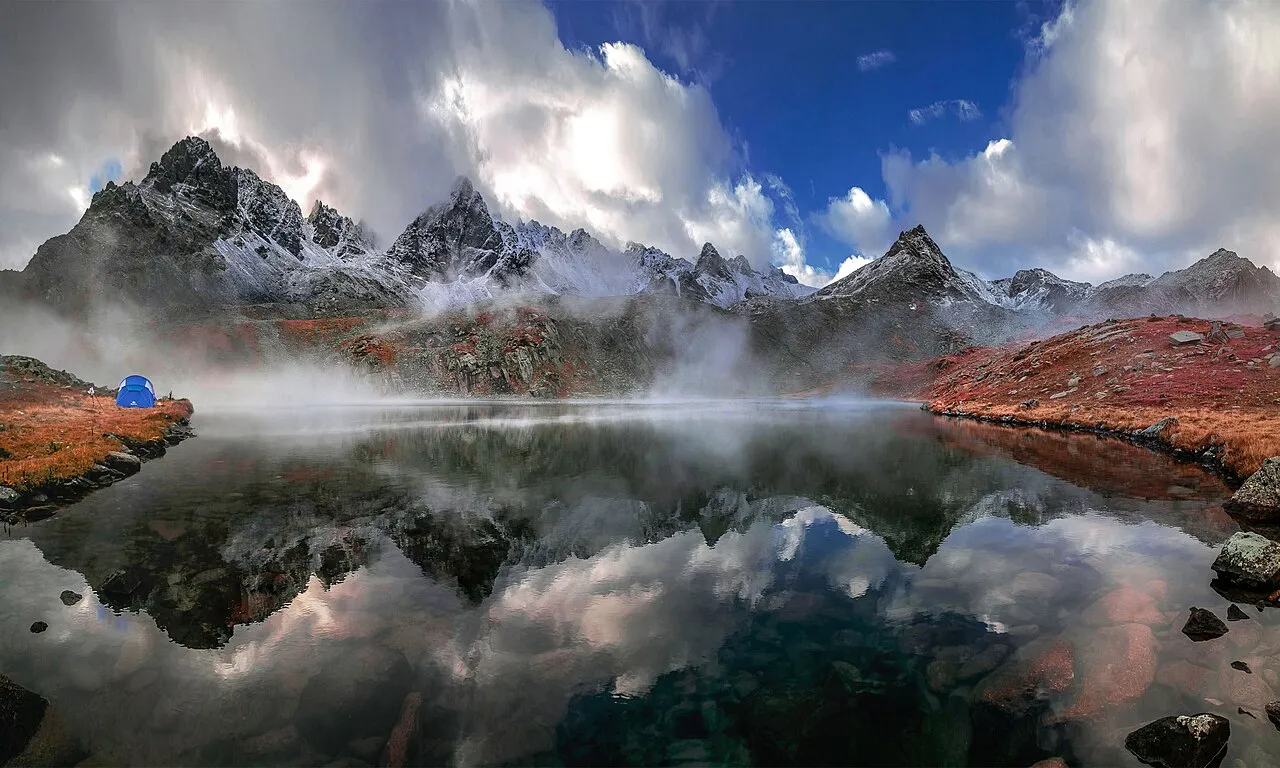
What counts as a natural park in Turkey?
In Turkey, the term for “national park” is milli park. Law No. 2873 on National Parks (Milli Parklar Kanunu) defines it as an area of nature with natural and cultural resources that are rare on a national and international scale, of scientific and aesthetic interest, and suited to protection, recreation and tourism. This definition, which from the outset brings together nature, heritage and public access, explains a distinctive feature of the Turkish network: alongside mountains, lakes and forests, several national parks protect archaeological sites (Troy, Hattuşa) or battlefields; several of them are designated “historical national parks” (tarihi milli park), such as Troy, Başkomutan and Sakarya.
The same law creates three other categories: the nature park (tabiat parkı), described as an area with remarkable vegetation and wildlife, suited to public rest and recreation within a coherent landscape; the natural monument (tabiat anıtı), a natural formation or phenomenon of scientific interest protected according to national park principles; and the nature conservation area (tabiatı koruma alanı), reserved for science and education and subject to absolute protection.
Turkey has no “regional” parks in the French sense: local authorities do not create parks. The closest equivalent, in scale and recreational purpose, is the nature park (tabiat parkı), but it is designated by the state and managed by the same administration as the national parks. A second tool, the special environmental protection area (Özel Çevre Koruma Bölgesi, ÖÇK), falls under another ministry and covers large coastal, lake or marine areas. This article focuses on national parks, then deals more briefly with nature parks and ÖÇKs.
History: from the 1956 forest law to the first marine parks
Turkey's natural parks were born within the forest administration. Before them, a few initiatives foreshadowed the idea of protection. A tree protection association, the Türkiye Ağaç Koruma Cemiyeti, was active from 1928 to 1955, and the Turkish Society for the Protection of Nature (Türkiye Tabiatını Koruma Derneği) was founded in Ankara in 1955. In 1950, a special law (No. 5614) entrusted the surroundings of Lake Abant, in Bolu Province, to the provincial administration to turn them into a resort; it was not repealed until 1983, when the lake returned to the forest regime.
The founding text is Forest Law No. 6831 of August 31, 1956 (Orman Kanunu, Resmî Gazete, the Official Gazette, of September 8, 1956, No. 9402). It allows the forest administration to set aside certain forests as national parks because of their location and qualities. On this basis Turkey declared its first national park on February 5, 1958: Yozgat Çamlığı, a relict black pine wood on the outskirts of the city of Yozgat, in Central Anatolia. The park covers only 517 ha today, but it remains the starting point of the whole network. It was followed on May 29, 1958, by Karatepe-Aslantaş, in present-day Osmaniye Province, which protects a Neo-Hittite site on the shore of the Aslantaş reservoir.
New parks then followed at a steady pace, according to the official statistics of the General Directorate of Nature Conservation and National Parks (DKMP). In 1959 came Soğuksu, near Ankara (February 19), then Kuş Cenneti (July 27), on the shore of Lake Manyas, in Balıkesir Province, a “bird paradise” where pelicans and cormorants nest. The Uludağ massif, above Bursa, became a national park on September 20, 1961. Next came Yedigöller (1965), the Dilek Peninsula facing the island of Samos (1966), Spil Dağı near Manisa (1968), Kızıldağ and its cedars in Isparta Province (1969), Güllük Dağı-Termessos and Lake Kovada (1970), the Munzur Valley (1971) and, on March 16, 1972, the Olympos-Beydağları coast near Antalya, now listed as Beydağları Sahil.
The year 1973 brought history into the national parks. On May 26, a decree of the Council of Ministers (No. 7/6477) made the Gallipoli Peninsula (Gelibolu), scene of the 1915 Dardanelles campaign, a national park. In December, Köprülü Canyon, with the ruins of the ancient city of Selge, joined the network, which then numbered 15 parks. In 1976, Kuş Cenneti received the Council of Europe's European Diploma of Protected Areas, a distinction it still holds. In 1981, Başkomutan Historical National Park, straddling the provinces of Afyonkarahisar, Kütahya and Uşak, came to protect the battlefield of the decisive battle of the War of Independence (1922).
The legal turning point came in 1983. On August 9, under the military regime that followed the 1980 coup and before the return of an elected parliament in November, Law No. 2873 on National Parks and Law No. 2872 on the Environment were adopted on the same day, both published in the Resmî Gazete of August 11, 1983 (No. 18132). Law 2873 gave parks a status of their own, separate from forest law alone, and created the four categories still in force. The country then had 17 national parks. The first nature park, Ölüdeniz-Kıdrak, on the coast of Fethiye, was declared on December 1, 1983.
The 1980s extended the network to archaeological heritage: the Göreme Valley, in Cappadocia, became a national park by decree on October 30, 1986, followed in 1988 by Boğazköy-Alacahöyük, around the former Hittite capital of Hattuşa (Hattusa), and Nemrut Dağı (Mount Nemrut), with the colossal statues of the sanctuary of Antiochus I of Commagene. In the same year, 1988, the environment law served as the basis for the first special environmental protection areas, on the Aegean and Mediterranean coasts.
The 1990s were the decade of the great mountains and the humid forests. In 1994, Turkey declared several parks at once in Artvin Province and the Pontic Mountains (Kaçkar Dağları, Hatila Vadisi, Karagöl-Sahara), as well as Kazdağı, the ancient Mount Ida, and Altınbeşik Cave. Then came the Aladağlar, in the Taurus Mountains (1995), Marmaris, Saklıkent and Troy (1996), Honaz Dağı (1998) and the Küre Mountains, near the Black Sea (2000). By the end of 2000, the country had 33 national parks. The same decade saw Turkey designate its first Ramsar sites (five in 1994).
The 2000s were marked by administrative reorganizations. Law No. 4856 of May 1, 2003, created the Ministry of Environment and Forestry and, within it, the General Directorate of Nature Conservation and National Parks (Doğa Koruma ve Milli Parklar Genel Müdürlüğü, DKMP). Law No. 4915 on Terrestrial Hunting, adopted on July 1, 2003, created wildlife development areas. New parks continued to be declared farther east: Ağrı Dağı (Mount Ararat) and Sarıkamış-Allahuekber Dağları in 2004, then Lake Gala in the Evros (Meriç) delta (2005), the Sultan Sazlığı marshes (2006), Tek Tek Dağları near Şanlıurfa and the floodplain forests of İğneada (2007).
In 2011, a decree-law (Kanun Hükmünde Kararname, KHK No. 645, Resmî Gazete of July 4, 2011) transferred the DKMP to the new Ministry of Forestry and Water Affairs, while another decree-law (No. 648) rewrote Article 3 of the 1983 law: national parks were still declared by the Council of Ministers, but on the proposal of the new Ministry of Environment and Urbanization. The number of nature parks jumped that year, from 40 to 179 according to official statistics.
From 2014 onward, two historical parks left the network to be entrusted to dedicated authorities. Law No. 6546 of June 19, 2014, created the Çanakkale-Gelibolu historical battlefield area, with its own presidency (Çanakkale Savaşları Gelibolu Tarihi Alan Başkanlığı), and expressly abolished the peninsula's national park status. In Cappadocia, Law No. 7174 of May 23, 2019, created a Cappadocia Area Presidency; a presidential decision published on October 22, 2019 (No. 1673) then repealed the 1986 decree that had made the Göreme Valley a national park. This withdrawal was challenged by professional bodies of architects and urban planners, while the government presented it as a way of unifying the management of the site.
In 2018, the switch to a presidential system changed the framework again: the Ministry of Agriculture and Forestry (Tarım ve Orman Bakanlığı) absorbed the DKMP and, since Decree-Law No. 700, national parks have been declared by decision of the President of the Republic. Between 2015 and 2020, the network gained historical parks (Sakarya in 2015, Kop Dağı in 2016, Malazgirt (Manzikert) and İstiklal Yolu in 2018) and mountain parks in the east and southeast: the Botan Valley (2019) and the Cilo and Sat Mountains, in Hakkâri Province (2020). In 2023, Law No. 7432 entrusted part of Uludağ National Park, the ski resort area, to a new Uludağ Area Presidency.
Recent years have transformed the administration itself. Presidential Decree No. 175 (Resmî Gazete of December 28, 2024) made the DKMP a body with legal personality, attached to the ministry, and Law No. 7553 (Resmî Gazete of July 14, 2025) gave it a special budget. Law No. 7576 of March 11, 2026, published on March 19, rewrote a large part of the 1983 law (plans, permits, penalties, revenue). New designations accelerated: Abant Gölü, Akdağ and Divriği in 2024, the Geben Valley (Kahramanmaraş) on May 30, 2025, then, in August 2026, the country's first two marine national parks, Fethiye-Kaş and Kuzey Ege (August 16), the Nemrut caldera near Lake Van (August 19) and the Deveboynu Peninsula, on the southern shore of Lake Van (August 31). The network thus numbered 54 national parks as of November 2, 2026.
Legal framework
The cornerstone is Law No. 2873 on National Parks of August 9, 1983. It sets out the definitions, the designation procedure (Article 3), planning (Article 4), expropriation and allocation of land (Articles 5 and 6), permits granted to public bodies and private parties (Articles 7 to 11), prohibitions (Article 14) and penalties (Articles 20 and 21). It has been amended many times, notably in 2011 (Decree-Law No. 648), in 2018 (Law No. 7139 and Decree-Law No. 700) and above all by Law No. 7576 of March 11, 2026.
Other texts supplement this foundation. Forest Law No. 6831 of 1956 applies to parks located in forests, that is, to most of them, and it governs the prosecution of offenses. Law No. 4915 on Terrestrial Hunting (2003) governs wildlife development areas. Law No. 2872 on the Environment (1983) provides the basis both for the protection of wetlands, whose management falls to the DKMP, and for special environmental protection areas, declared by the President of the Republic under its Article 9. Law No. 2863 on the Protection of Cultural and Natural Property applies in parallel in parks containing archaeological sites: excavations and restorations there remain subject to authorization by the Ministry of Culture and Tourism.
Finally, three flagship sites are governed by special laws that removed them, wholly or partly, from the national park regime: Law No. 6546 of 2014 for Gallipoli, Law No. 7174 of 2019 for Cappadocia and Law No. 7432 of 2023 for Uludağ.
Types of parks
The DKMP manages several categories of protected areas, defined by three different laws:
- National park (milli park): Law No. 2873. Large natural or cultural areas of national and international value, open to the public according to a development plan. Historical national parks (tarihi milli park) are a variant devoted to battlefields and historical sites.
- Nature park (tabiat parkı): Law No. 2873. Smaller areas intended for outdoor recreation (lakes, waterfalls, periurban forests, canyons).
- Natural monument (tabiat anıtı): Law No. 2873. Geological formations, notable trees, caves, waterfalls.
- Nature conservation area (tabiatı koruma alanı): Law No. 2873. Absolute protection, use limited to science and education.
- Wildlife development area (yaban hayatı geliştirme sahası): Law No. 4915. Areas where wildlife is protected and encouraged, with hunting allowed only under a special plan.
- Wetlands: Ramsar sites, wetlands of national importance and of local importance, under the wetland protection regulation adopted pursuant to Law No. 2872.
In addition, outside the DKMP, there are special environmental protection areas (ÖÇK) and natural sites (doğal sit), which fall under the Ministry of Environment, Urbanization and Climate Change, as well as forests with special status managed by the General Directorate of Forestry (protection forests, gene conservation forests, seed stands, urban forest parks).
How many parks?
As of November 2, 2026, Turkey has 54 national parks, according to the DKMP: the 54th, the Deveboynu Peninsula on Lake Van, was declared by a presidential decision published in the Resmî Gazete of August 31, 2026. The official count rose from 50 parks (at the end of 2025 and still on May 24, 2026) to 54 in August 2026.
The official protected area statistics, produced by the DKMP under the official statistics program and certified by the Turkish Statistical Institute (TÜİK), give the following figures for the end of 2025: 50 national parks covering 942,286 ha, 274 nature parks (94,294 ha), 111 natural monuments (8,389 ha), 32 nature conservation areas (56,386 ha) and 85 wildlife development areas (1,169,873 ha). The four national parks created in 2026 add 2,170,603 ha for Fethiye-Kaş, 174,214 ha for Kuzey Ege, about 4,800 ha for the Nemrut caldera and 12,533 ha for the Deveboynu Peninsula (according to the map annexed to the presidential decision). In the absence of an official total for 2026, the national parks as a whole can be estimated to now exceed 3.3 million hectares, more than two-thirds of it at sea.
For nature parks, the latest published figure is 279, reached on September 25, 2026, with Çamlık Nature Park, in Karabük. As of May 24, 2026, the DKMP counted a total of 692 protected areas under its responsibility: 50 national parks, 275 nature parks, 112 natural monuments, 32 nature conservation areas, 85 wildlife development areas, 14 Ramsar sites, 59 wetlands of national importance and 65 of local importance. This total rose to 698 in August 2026, according to the ministry.
There are 19 special environmental protection areas, covering 3,833,881 ha (2024 figures from the Ministry of Environment, Urbanization and Climate Change, cited in the DKMP's annual report on the state of nature conservation). Across all categories and ministries, and after removing overlaps, protected areas in 2024 covered 6,134,807 ha on land, or 7.86% of the country, and 2,754,390 ha at sea, or 5.96% of its marine areas, according to the same report. These figures predate the 2026 marine parks.
Map
The atlas's Turkey page shows on a map the national parks and nature parks described by Parkavela, and the world map places them among the protected areas of neighboring countries. Their distribution is uneven: parks are concentrated along the Aegean and Mediterranean coasts, in the Marmara region and along the Pontic Mountains, while Eastern Anatolia, long poorly provided for, has received a large share of the recent designations (Cilo and Sat, Botan, the Nemrut caldera, Deveboynu). The two 2026 marine parks, off Fethiye and Kaş and in the northern Aegean Sea, have extended the network out to sea.
Complete list
The national parks described in the atlas are listed in the directory of national parks in Turkey, and the nature parks in the directory of nature parks. The atlas does not yet cover all official areas: only some of the 279 nature parks are included, and several national parks (Fethiye-Kaş, Deveboynu, Saklıkent, Derebucak Çamlık Mağaraları) do not yet have a page. The official list, with declaration dates and areas, is published each year by the DKMP in its protected area statistics.
How a park is created
Under Article 3 of Law No. 2873, a national park is declared by decision of the President of the Republic, on the basis of a study by the Ministry of Agriculture and Forestry establishing that the area has the character of a national park. Until 2018, this decision lay with the Council of Ministers. Nature parks, natural monuments and nature conservation areas located in forests are designated by simple ministerial approval; outside forests, the decision lies with the President of the Republic and registration with the Ministry of Environment.
In practice, the DKMP carries out studies and inventories (etüt, envanter) before proposing a designation, and anyone can submit a proposal to designate a protected area through the e-Devlet government portal. The decision is published in the Resmî Gazete with a map and a list of boundary coordinates. Once a park is established, the DKMP prepares a long-term development plan (uzun devreli gelişme planı) for national parks, a development plan for nature parks and a management plan for the other categories; no tourism development permit may be issued before the plan is finally adopted. Boundaries can later be changed by the same procedure: in 2025, those of Sakarya and the Botan Valley were.
Several recent parks are upgrades of areas that were already protected: the Nemrut caldera, a natural monument since 2003, became a national park in August 2026 because of rising visitor numbers and the need for more effective management, according to the DKMP.
Managing agencies
The General Directorate of Nature Conservation and National Parks (DKMP) manages national parks, nature parks, natural monuments, nature conservation areas, wildlife development areas and wetlands. Since Presidential Decree No. 175 of December 2024, it has been a body with legal personality and a special budget, attached to the Ministry of Agriculture and Forestry. Its responsibilities also cover hunting, animal protection (Law No. 5199), biodiversity and nature tourism.
According to its 2026 performance program, the DKMP relies on 15 regional directorates, 81 provincial directorates (one per province), 11 national park directorates and 293 local units (şeflik). It employs 4,251 people, 273 at headquarters and 3,978 in the field. Since 2026, the staff responsible for enforcement have held the title of hunting and nature conservation officers (av ve doğa koruma memuru).
Three sites that have been removed from the network or partly transferred are managed by authorities attached to the Ministry of Culture and Tourism: the Çanakkale-Gelibolu Historical Area Presidency (created in 2014), the Cappadocia Area Presidency (2019) and the Uludağ Area Presidency (2023). Special environmental protection areas fall under the Ministry of Environment, Urbanization and Climate Change, through its General Directorate for the Protection of Natural Assets (Tabiat Varlıklarını Koruma Genel Müdürlüğü). From 1989 these areas were entrusted to a specialized authority, created by Decree-Law No. 383, before being integrated into the ministry in 2011.
Funding
The parks are funded mainly by the state budget. According to the DKMP's 2026 performance program, its budget for 2026 amounts to 8,372,565,000 Turkish lira, all of it appropriated in the budget. It is divided among nature tourism (4.11 billion lira, including 2.31 billion for protected area management and 1.80 billion for ecotourism), nature conservation (3.28 billion, including 2.02 billion devoted to stray animals, which also fall under the DKMP) and administration (0.98 billion). In 2025, the initial budget of 6,810,196,000 lira was reduced during the year to 5,676,638,029 lira, 99% of which was spent, according to the 2025 activity report.
The DKMP's own revenue comes from entrance fees it sets, rents and fees paid by operators of tourist facilities, the sale of confiscated goods, donations and a share of fines. Since Law No. 7576 of 2026, the DKMP receives 25% of the administrative fines imposed under the national park and hunting laws (with 75% going to the general budget) and can set up revolving fund enterprises; according to the DKMP, the same law provides for a 2% levy on hunting-related purchases. Anyone entering a fee-charging site without paying faces a fine of four times the entrance fee.
Missions
Law No. 2873 gives the parks a dual objective: to select and protect areas of national and international value without altering their character, and to develop and manage them for public use. The DKMP's practical missions, as described in its performance program, are the creation of new protected areas, the planning and management of existing ones, biodiversity inventory and monitoring, the conservation of threatened species, the management of hunting and wildlife, nature education, notably with the Ministry of National Education, and the development of nature tourism.
Historical parks have an additional mission of national remembrance: the DKMP lays out trails, interpretation centers and ceremonial grounds, for example at Başkomutan, Sakarya, Sarıkamış and Malazgirt, where the Battle of Manzikert (1071) is commemorated every year.
Regulations
Article 14 of Law No. 2873 prohibits, in all the areas it covers, disrupting the natural and ecological balance, destroying wildlife, causing any pollution of soil, water or air, and carrying out any forestry production, hunting or grazing that would threaten the natural balance. No construction is permitted other than that provided for in approved plans and defense installations, except in cases of overriding public interest, and no new settlement is allowed outside existing inhabited areas.
In natural monuments and nature conservation areas, no usage rights may be granted. In the other areas, mining or petroleum exploration and extraction permits may be issued only by decision of the President of the Republic (Article 11). The law also prohibits the occupation and land registration of public land located in protected areas: since 2026, illegal buildings, even those under construction, are seized and demolished by the DKMP without any further decision (Article 15).
Penalties were increased in 2026: violations of the prohibitions in Article 14 are now punishable by one to three years' imprisonment and a judicial fine of up to 5,000 day-fines, compared with a maximum of six months' imprisonment previously (Article 21); since 1983, the penalties provided for in the forest, hunting and fisheries laws have also been doubled when the offense is committed in a park (Article 20). Fines for hunting in prohibited areas have risen sharply: from 200 to 10,000 lira on land closed by the Central Hunting Commission, and from 350 to 15,000 lira in areas where hunting is banned by special laws, including wildlife development areas, according to the DKMP.
Local life and economic activity
Turkish parks are not uninhabited: the law tolerates existing inhabited areas, and several parks include villages, high summer pastures (yayla) or farmland. Production, grazing and hunting activities may be authorized in specified places and periods, on the basis of special management plans (Article 13).
Tourism is the main economic activity. In national parks and nature parks located outside tourism development zones, the ministry may authorize individuals or companies to build tourist facilities provided for in the plan, with a usufruct right limited to 49 years, extendable to 99 years if the Ministry of Culture and Tourism judges the operation successful; at the end of the term, the facilities revert to the DKMP. Since 2026, paid permits may also be granted, where the plans provide for them and in cases of public interest necessity, for roads, power lines, oil and gas pipelines, telecommunications networks, and water and thermal water networks. The DKMP regularly puts the operation of services in the parks (food service, picnic areas, accommodation) out to tender, as in October 2026 at Köprülü Kanyon, Soğuksu and the Nemrut caldera.
Finally, the law provides for the training of “site guides” (alan kılavuzu) recruited from among the residents of the parks and their surroundings, in order to reduce the losses suffered by the local population as a result of protection.
Tourism
Turkey's protected areas are heavily visited. According to the DKMP's 2026 performance program, they received 67.85 million visitors in 2024, a ten-year record according to the Minister of Agriculture and Forestry, and about 64.24 million in 2025 (year-end estimate). The religious holidays marking the end of Ramadan and the Feast of Sacrifice (Eid al-Adha) bring peak attendance: nearly 3 million visits during the 2025 Feast of Sacrifice, according to the ministry.
Coastal parks top the list. In 2022, Marmaris National Park received 9,014,827 visitors and Beydağları Sahil 8,090,472, according to the ministry. Uses vary from site to site: skiing on Uludağ, rafting and hiking in Köprülü Canyon, mountaineering in the Aladağlar and the Kaçkar Mountains, birdwatching at Kuş Cenneti, Sultan Sazlığı and Lake Gala, and visits to ancient sites at Troy, Termessos and Hattuşa. The DKMP publishes practical information on its Ekotaban portal and on a national parks mobile app.
Biodiversity
Turkey lies at the crossroads of three biogeographical regions (Euro-Siberian in the north, Mediterranean in the south and west, Irano-Turanian in the center and east), which gives it an exceptionally rich flora. According to the national profile published by the Convention on Biological Diversity, the country has about 11,000 species of seed plants, about a third of them endemic, some 19,000 invertebrate species and nearly 1,500 vertebrate species. The country overlaps three global biodiversity hotspots defined by Conservation International: the Mediterranean Basin, the Caucasus and the Irano-Anatolian hotspot, which covers much of Central and Eastern Anatolia.
The national parks sample this diversity: the humid forests of the Black Sea region (Küre Dağları, Hatila, Kaçkar), the cedar and pine forests of the Taurus (Kızıldağ, Köprülü Kanyon), high mountains and glaciers (Ağrı Dağı, Aladağlar, Cilo and Sat), the steppes and marshes of Central Anatolia (Sultan Sazlığı), the deltas and lagoons of the Aegean (Dilek Yarımadası-Büyük Menderes Deltası, Lake Gala), the floodplain forests of Thrace (İğneada) and, since 2026, marine environments. Between 2013 and 2019, a national biodiversity inventory mapped the species and areas to be monitored in each of the 81 provinces; its data feed the national “Nuh'un Gemisi” (Noah's Ark) database, and 194 plant species, 111 animal species and 45 sites are regularly monitored.
Flagship species
Several parks were created around a remarkable species or stand, which the DKMP's official statistics cite as their main natural asset. Lake Kuş Cenneti is known for the Dalmatian pelican and the white-headed duck; the pygmy cormorant can also be seen there. The lagoons of Dilek, Lake Gala and the Büyük Menderes delta host the greater flamingo. Kızıldağ protects Lebanon cedar forests, Marmaris stands of oriental sweetgum, a relict tree whose natural range is largely confined to southwestern Turkey, and Yozgat Çamlığı a relict forest of black pine. At Soğuksu, the DKMP reports a bright red tulip and a petrified forest.
The Munzur Valley is renowned for its trout and wild goats, Köprülü Canyon for its snowdrops and red-spotted trout, and Ağrı Dağı and the Aladağlar for the Apollo butterfly. Among birds of prey, the cinereous vulture, the griffon vulture, the bearded vulture and the Egyptian vulture are reported in the high mountain and Taurus parks, according to observations compiled by the atlas. In the pine forests of Anatolia, Krüper's nuthatch, a small passerine whose range is centered on Turkey, has been recorded, according to observations compiled by the atlas, in some fifteen national parks, and the black stork frequents several wooded valleys.
Major parks
Among the 54 national parks, a few sum up the diversity of the network (areas and dates from the DKMP's official 2025 statistics):
- Yozgat Çamlığı (1958, 517 ha): the country's first national park, a relict black pine wood in Central Anatolia.
- Kuş Cenneti (1959, 17,058 ha): Lake Manyas, a prime birdwatching site, holder of the European Diploma of Protected Areas, awarded in 1976 and renewed until 2031 after a suspension from 2001 to 2004.
- Uludağ (1961, 10,978 ha): a massif overlooking Bursa, with glacial lakes and a winter sports resort.
- Dilek Yarımadası-Büyük Menderes Deltası (1966, 27,598 ha): a wooded peninsula and lagoon delta facing Samos.
- Köprülü Kanyon (1973, 47,473 ha): the canyon of the Köprüçay and the ancient city of Selge, in the Taurus.
- Beydağları Sahil (1972, 31,166 ha): the Lycian coast of Olympos and Phaselis, at the foot of Tahtalı Dağı.
- Nemrut Dağı (1988, 13,827 ha): the royal sanctuary of Commagene, a UNESCO World Heritage Site.
- Kaçkar Dağları (1994, 52,970 ha): glacial valleys and forests of the eastern Pontic Mountains.
- Aladağlar (1995, 55,064 ha): a limestone massif in the Taurus, between Adana, Niğde and Kayseri.
- Troy (1996, 13,517 ha): the ancient site of Troy and the landscape of the Troad.
- Ağrı Dağı (2004, 88,015 ha): Mount Ararat, the country's highest peak.
- Sultan Sazlığı (2006, 24,358 ha): marshes and salt lakes in the Kayseri steppe.
- Başkomutan (1981, 34,834 ha): the largest of the historical parks, devoted to the battle of 1922.
- Hakkâri Cilo ve Sat Dağları (2020, 27,500 ha): high mountains and glacial lakes in the far southeast.
- Kuzey Ege (2026, 174,214 ha): one of the first two marine national parks.
- Nemrut Caldera (2026, about 4,800 ha): a volcanic caldera and lakes near Lake Van.
Records
- Oldest: Yozgat Çamlığı, declared on February 5, 1958 (official DKMP statistics).
- Newest: the Deveboynu Peninsula (Van Gölü Deveboynu Yarımadası), declared by Presidential Decision No. 11682, published on August 31, 2026.
- Largest: Fethiye-Kaş, a marine national park of 2,170,603 ha (Decision No. 11626, August 16, 2026). On land, the largest is Ağrı Dağı (88,015 ha), ahead of Beyşehir Gölü (82,157 ha) and Kızıldağ (80,200 ha).
- Smallest: İstiklal Yolu (236 ha, 2018), a historical park marking the War of Independence supply route between the Black Sea and Ankara, followed by Malazgirt (238 ha).
- Highest: Ağrı Dağı, whose summit (5,137 m) is the highest point in Turkey.
- First marine parks: Fethiye-Kaş and Kuzey Ege, presented by the DKMP as the country's first marine national parks (August 16, 2026).
- Most visited: Marmaris, with 9,014,827 visitors in 2022 according to the ministry; it was still in the lead for the first four months of 2025.
- Largest nature park: the Ayvalık Islands (19,624 ha), ahead of Lake Bafa (11,842 ha).
Threats
Forest fires are the most visible threat. The year 2021 was the most destructive since the 1940s: nearly 140,000 ha of forest burned according to statistics from the General Directorate of Forestry, a total exceeded only in 1945 (about 165,000 ha), particularly on the Aegean and Mediterranean coasts (Manavgat, Marmaris). Coastal parks, covered in pine forests, and their surroundings are directly exposed.
Tourism pressure and development are the subject of recurring debate. The removal of national park status from Gallipoli (2014) and Göreme (2019), followed by the transfer of part of Uludağ to a special authority (2023), were justified by the government as necessary for unified management, and criticized by associations, professional bodies and opposition politicians, who saw them as a risk of urbanization. Law No. 7576 of 2026 sparked the same kind of debate: its opponents in Parliament denounced the possibility of authorizing private facilities in the parks for periods of up to 99 years, which has in fact existed since 1983, as well as the routing of infrastructure, while the ministry called claims that the law would allow hotels to be built in national parks unfounded.
Extractive activities remain possible in protected areas by presidential decision. Mining controversies often concern the surroundings of parks: in 2019, the Kirazlı gold mine project, in Çanakkale Province, triggered strong public mobilization in defense of the Kaz Dağları (Mount Ida), even though the company and the Ministry of Energy placed the site some forty kilometers from the national park. Added to this are the effects of climate change on the lakes and wetlands of Central Anatolia, dams and water abstraction, and poaching.
Conservation policies
Turkish policy rests on expanding the protected area network, planning each site and monitoring biodiversity. The DKMP applies the international Management Effectiveness Tracking Tool (METT) for protected areas and implements action plans for threatened species. The country is a party to the Ramsar Convention, the Bern Convention and the Convention on Biological Diversity, and frames its objectives within the Kunming-Montreal Global Biodiversity Framework (protecting 30% of land and sea), the Twelfth Development Plan and the ministry's strategic plans.
At sea, Turkey adopted marine spatial planning, announced on April 16, 2025, then designated marine protected areas in August 2025; the Fethiye-Kaş and Kuzey Ege marine national parks gave part of these areas permanent legal status in 2026, according to the DKMP. Special environmental protection areas complement this system along the coasts: the first were declared in 1988, and the most recent, covering the Sea of Marmara and its islands, by Presidential Decision No. 4758, published on November 5, 2021.
New projects
The pace of designation shows no sign of slowing. In 2026 alone, four national parks and five nature parks (including Yedimeşe, Akhisar Musalar, Erikçe and Çamlık) were declared, as well as one natural monument (Dilimkayalar). The DKMP's 2026 performance program targets 705 protected areas by the end of 2026, 720 by the end of 2027 and 735 by the end of 2028, with the area covered rising from 3.49 to 3.52 million hectares (excluding the 2026 marine parks, which were not included in these targets).
In the recent parks, the DKMP has launched infrastructure work: visitor centers, viewpoints, trails and day-use areas, including, for example, a call for tenders for works in Divriği park in 2026. Law No. 7576 also provides for new regulations on plans, permits and building conditions in protected areas, which have yet to be published.
The future of the parks
Turkey's national parks have entered a phase of rapid expansion, in number (from 50 to 54 in a few weeks) and above all in area, thanks to marine areas. This change of scale raises the question of management resources: 4,251 staff and a budget of 8.37 billion lira in 2026 must cover several hundred protected areas, wildlife and the protection of stray animals. The DKMP's new powers (demolition of illegal buildings, criminal penalties, site guides, own revenue) are intended to strengthen management on the ground.
The balance between protection and use will remain at the heart of the debate: visitor numbers exceed 60 million a year, tourism is the parks' main economic activity, and the law now allows certain public interest infrastructure. How the long-term development plans are drafted and applied, and how the new marine parks are managed, will determine how the network evolves.
Sources and official data
- General Directorate of Nature Conservation and National Parks (DKMP): news on park designations (Nos. 427, 436, 442, 443, 445, 447 of 2026)
- DKMP, protected area statistics 1958–2025: official tables for national parks, nature parks and other categories (official statistics program, certified by TÜİK)
- DKMP, reports on the state of nature conservation (2024 report)
- DKMP, 2026 performance program
- DKMP, 2025 activity report
- Law No. 2873 on National Parks (mevzuat.gov.tr)
- Law No. 2872 on the Environment (mevzuat.gov.tr)
- Law No. 4915 on Terrestrial Hunting (mevzuat.gov.tr)
- Law No. 6546 on the Çanakkale-Gelibolu Historical Area (mevzuat.gov.tr)
- Law No. 7174 on the Cappadocia Area (mevzuat.gov.tr)
- Law No. 7432 on the Uludağ Area (mevzuat.gov.tr)
- Resmî Gazete of August 16, 2026: Fethiye-Kaş and Kuzey Ege marine national parks
- Resmî Gazete of August 31, 2026: Van Gölü Deveboynu Yarımadası National Park
- Resmî Gazete of October 22, 2019: repeal of Göreme National Park
- Resmî Gazete of March 19, 2026: Law No. 7576
- Council of Europe, European Diploma of Protected Areas
- Convention on Biological Diversity, Turkey country profile
- CEPF, Irano-Anatolian hotspot
- DKMP's Ekotaban portal