
Reptile
Leatherback sea turtle: where to see it
Dermochelys coriacea
This reptile species is recorded in 5 protected areas of the atlas, and is listed on the official Natura 2000 form of each of them. Within the atlas countries, it is mostly observed in France, Ireland and Portugal (4 countries in all). Records peak from July to September. It is a species of Community interest under the Habitats Directive (Annex IV).
Best time to see it: July–September
Records published on GBIF by month (CC0 and CC BY 4.0 licences only), in the atlas countries, all years combined; they also reflect observer activity.
Status and protection
Habitats Directive IV
The species is listed in Annex IV of the Habitats Directive.
Distribution
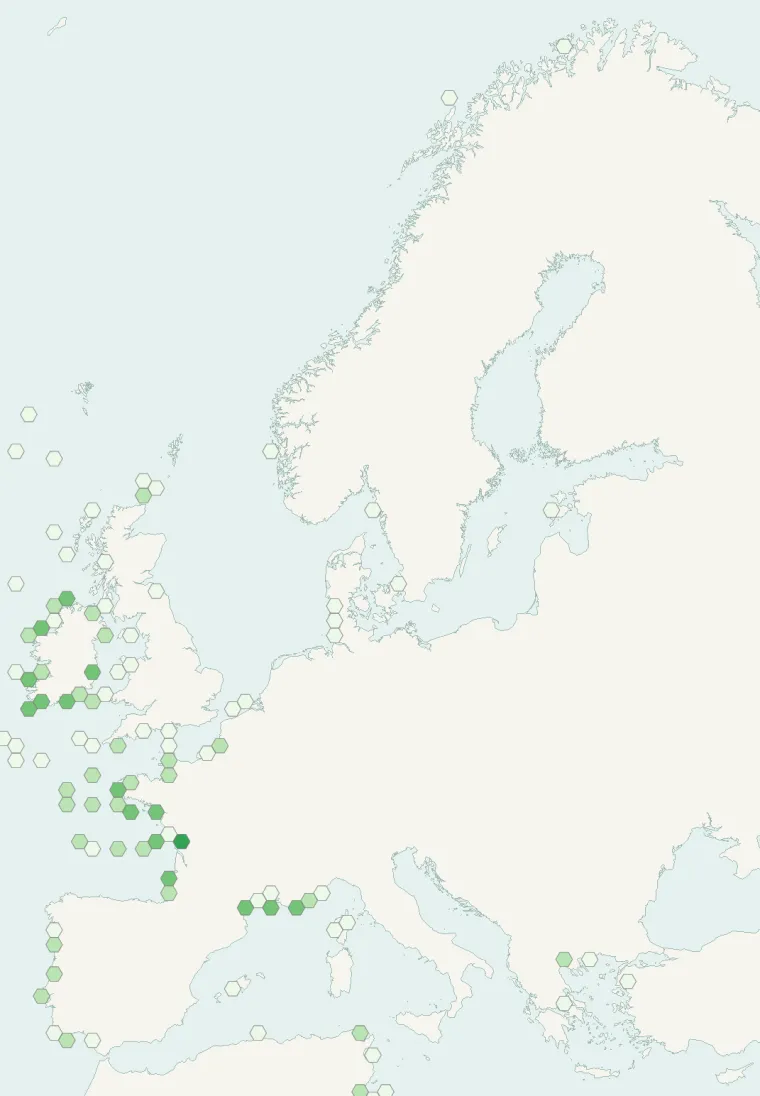
Records published on GBIF (CC0 and CC BY 4.0 licences): the darker the shade, the more records there are; they also reflect observation effort.
Atlas countries where it is recorded
Listen
-
0:21 · © Philippe Kurlapski · CC BY 2.5 · Wikimedia Commons · Original file
From Wikipedia
The leatherback sea turtle (Dermochelys coriacea), sometimes called the lute turtle, leathery turtle or simply the luth, is a large species of sea turtle. The largest of all living turtles and the heaviest non-crocodilian reptile, it reaches lengths of up to 2.7 metres (8 ft 10 in) and weights of 500 kilograms (1,100 lb). It is the only living species in the genus Dermochelys and family Dermochelyidae. It can easily be differentiated from other modern sea turtles by its lack of a bony shell; instead, its carapace is covered by oily flesh and flexible, leather-like skin, for which it is named.
Source: Wikipedia, article “Leatherback sea turtle” (version of October 12, 2026) · history and authors · licence CC BY-SA 4.0 · shortened excerpt
Protected areas where it is recorded
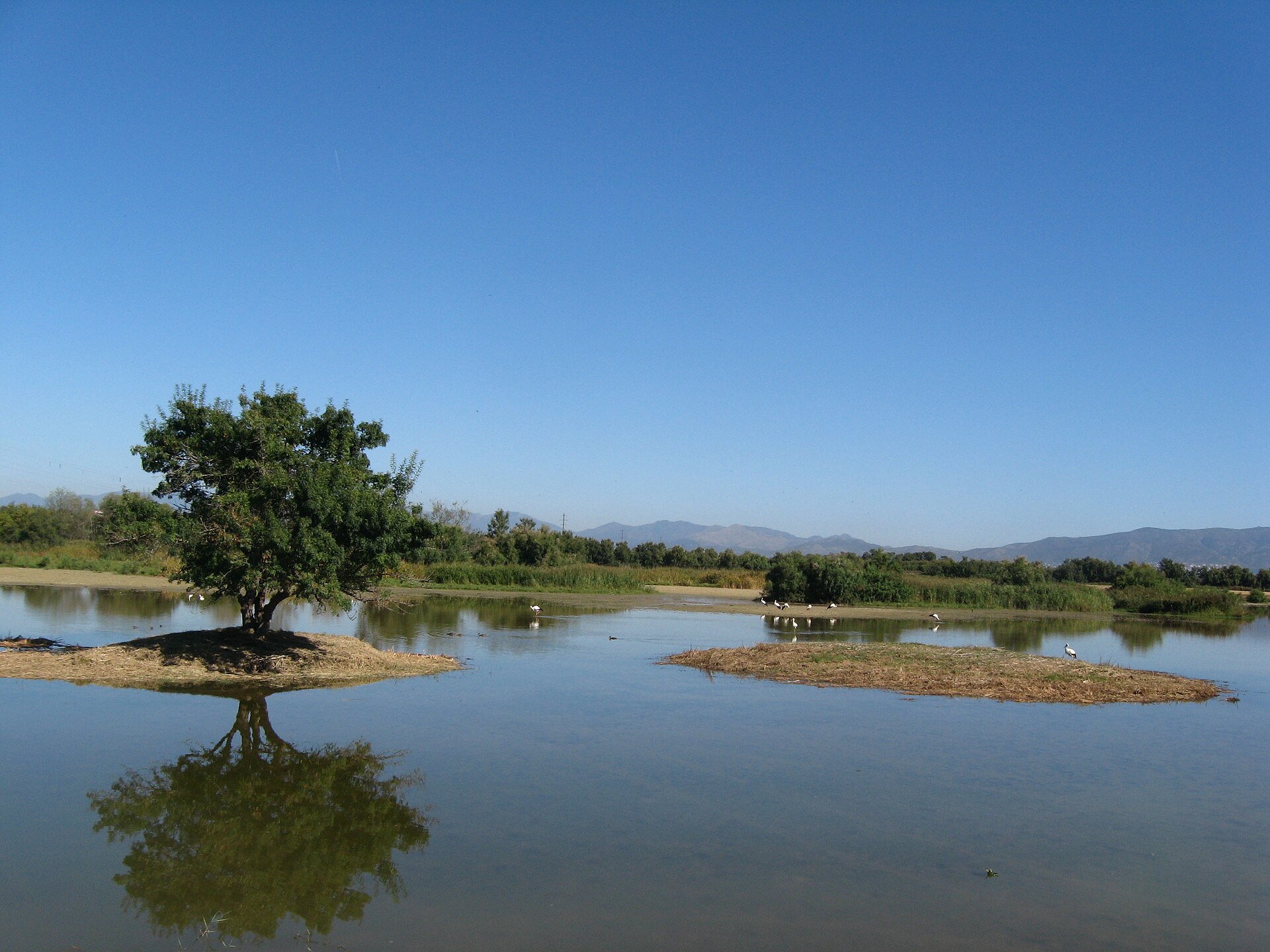
Natura 2000
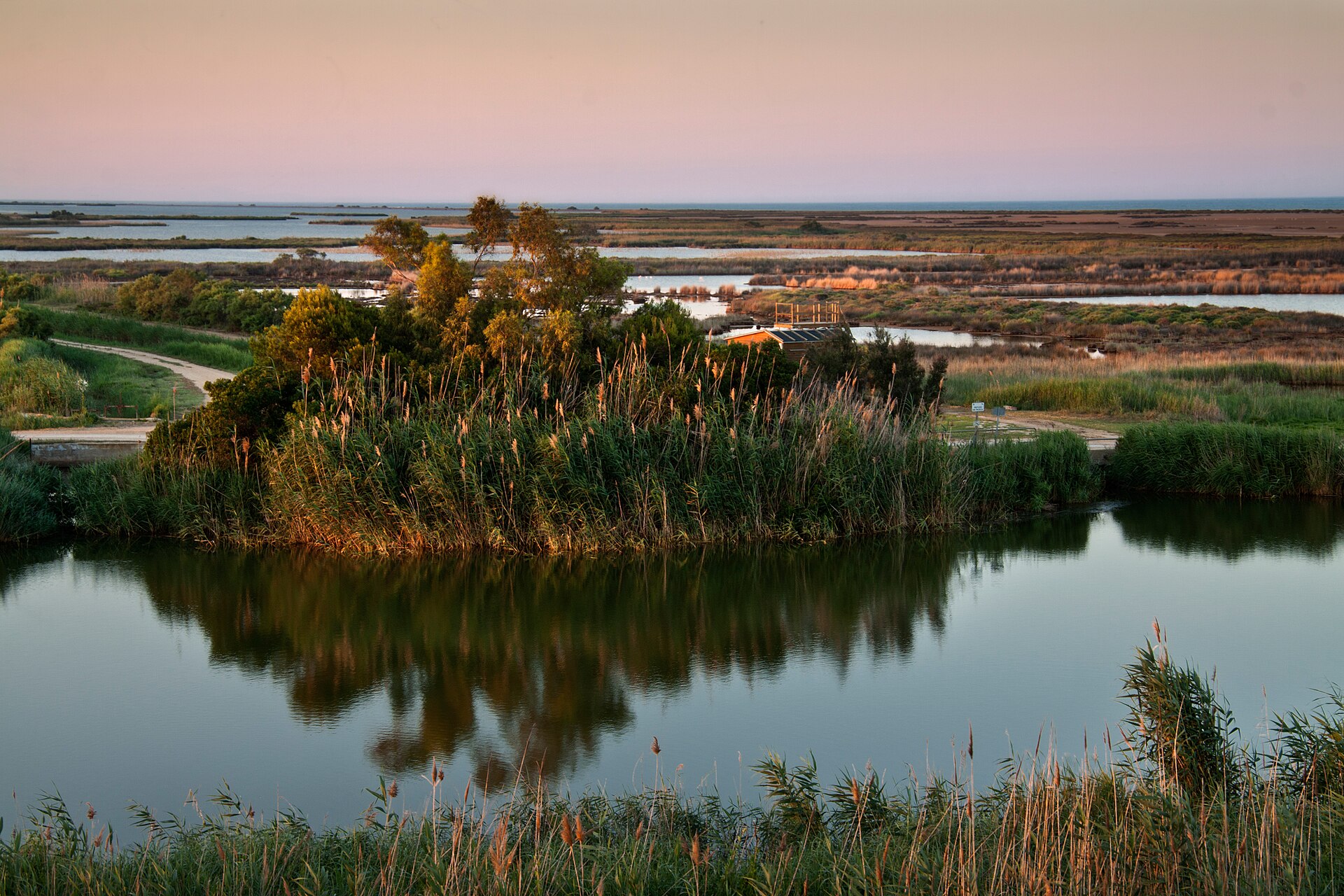
Natura 2000
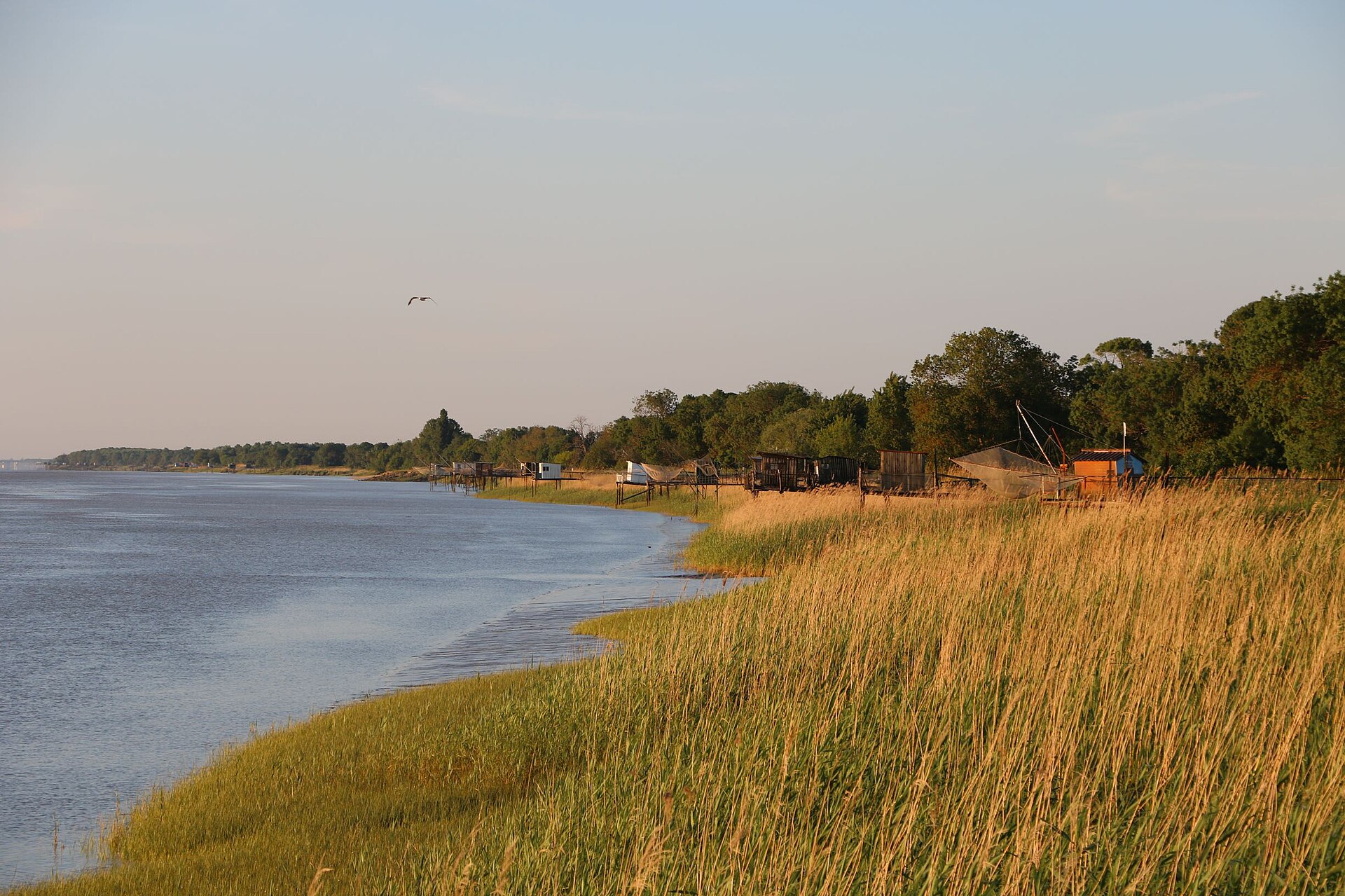
Natura 2000
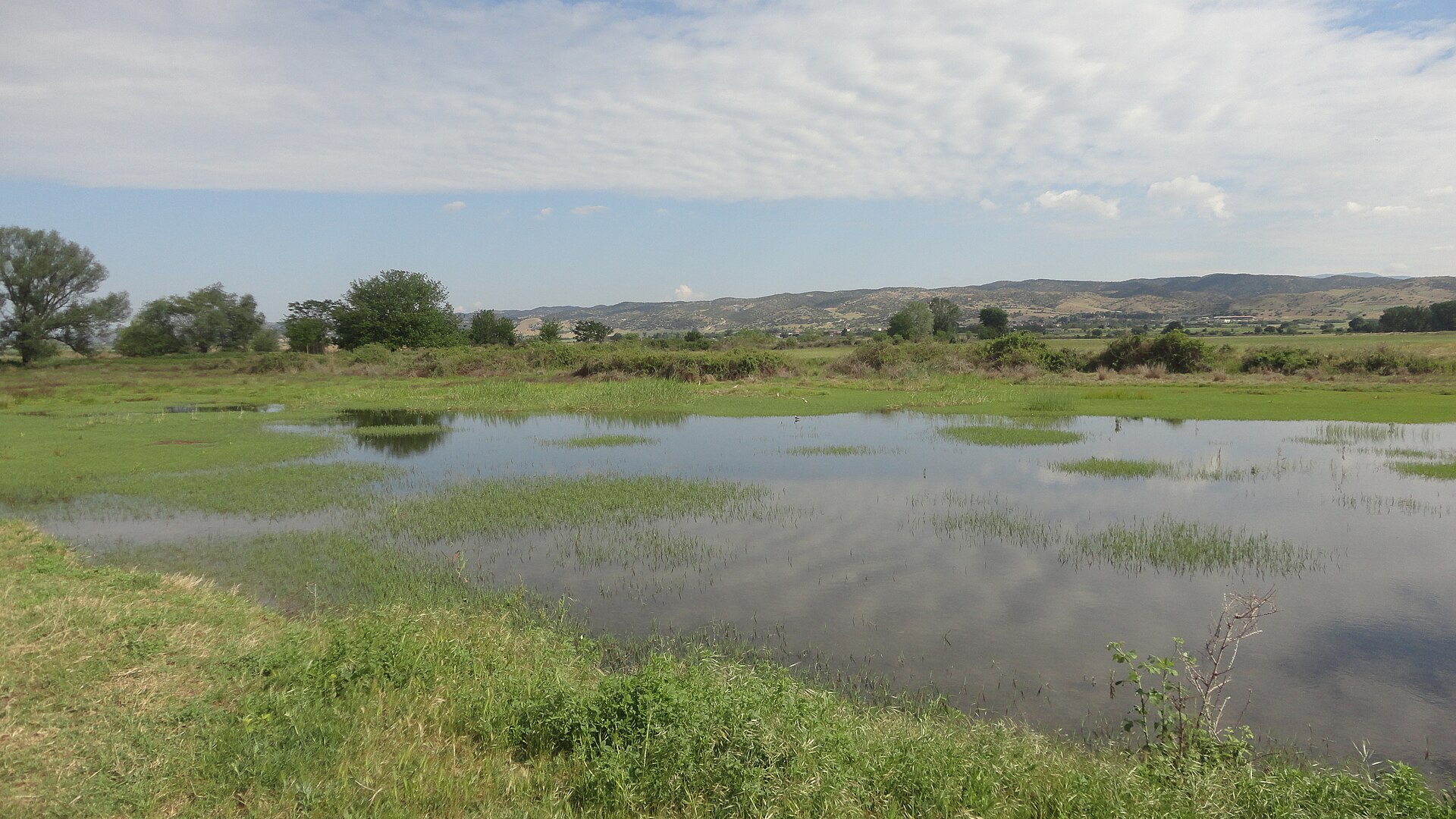
Natura 2000

Natura 2000
Other species to discover
 Balearic shearwater
Puffinus mauretanicus 4 places in common
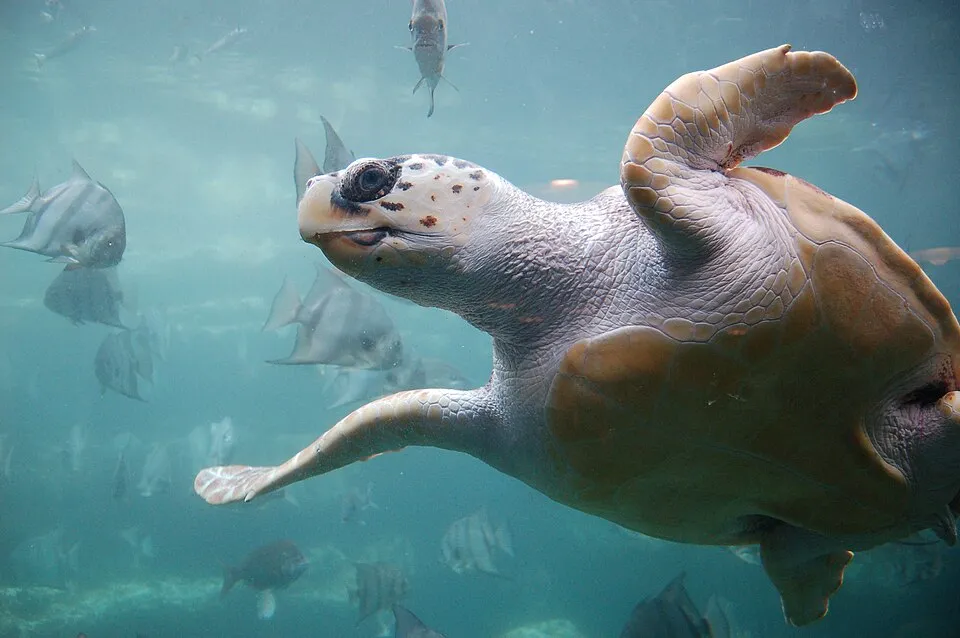 Loggerhead sea turtle
Caretta caretta 4 places in common
 European Storm Petrel
Hydrobates pelagicus 4 places in common
 Black-legged Kittiwake
Rissa tridactyla 3 places in common
 Iberian pond turtle
Mauremys leprosa 3 places in common
 Perez's Frog
Pelophylax perezi 4 places in common
Sources and credits
- Presence: most-recorded species of each place on GBIF and species of Community interest in the Natura 2000 forms (EEA, CC-BY 4.0); absence from the list does not mean the species is absent.
- Common names: Wikidata (CC0) and GBIF.
- Photos and sounds: Wikimedia Commons, author and licence given for each file.
- Classification: GBIF Backbone Taxonomy (GBIF Secretariat), CC BY 4.0, doi:10.15468/39omei.
- Countries, elevations, months and maps: GBIF.org, CC0 or CC BY 4.0 occurrences only, accessed October 22, 2026, GBIF.org.
- Base map: Natural Earth (public domain).
- Excerpt: Wikipedia, CC BY-SA 4.0 (full credit below the excerpt).
- Annexes: Directive 92/43/EEC (consolidated version), © European Union, EUR-Lex.