
Features ·
Natural parks in Germany: Nationalparks and Naturparks, from the Lüneburg Heath to the Nationale Naturlandschaften
Heathland bought by private individuals in 1906, a nature park programme launched in 1956, a first national park in 1970, then five national parks created by the GDR in the final weeks of its existence: the history of Germany's parks follows that of the country itself. Today Germany has 16 Nationalparks and 104 Naturparks, which on their own cover more than a quarter of its territory; this feature traces their origins, status, management, wildlife and challenges.
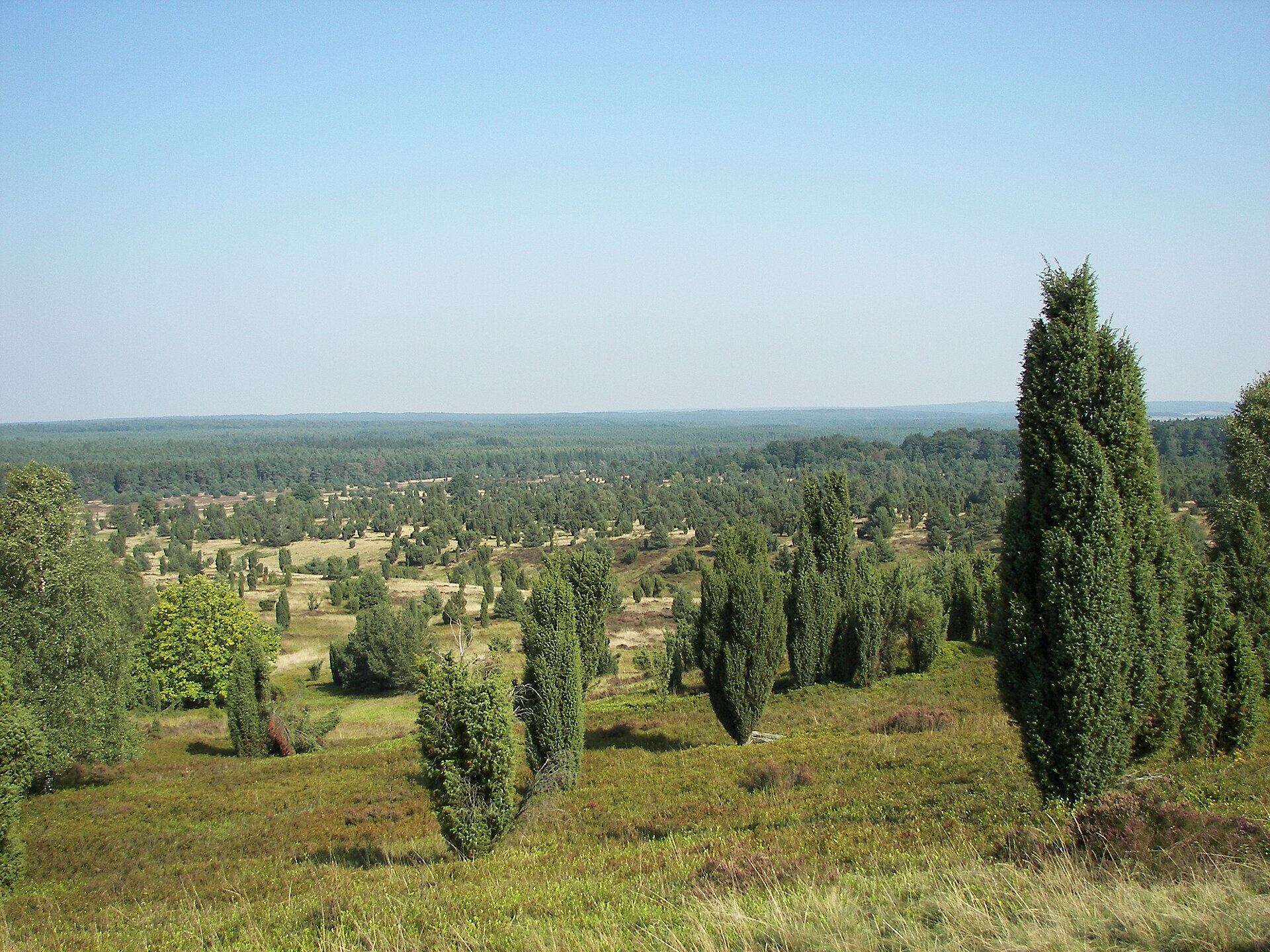
Definition: Nationalpark and Naturpark, two different ideas
In Germany, “natural parks” in the broad sense comprise two categories that the federal nature conservation act, the Bundesnaturschutzgesetz (BNatSchG), clearly distinguishes: Nationalparks (national parks) and Naturparks (nature parks).
Under § 24 of the BNatSchG, a Nationalpark is an area protected in a uniform manner that is “large, largely unfragmented and of a special character”, that meets the conditions for a nature reserve (Naturschutzgebiet) over most of its area, and that is in, or can be brought into, a state little or not at all influenced by human activity. Its primary purpose is to ensure, over most of its area, “the most undisturbed possible course of natural processes in their natural dynamics”. Research, nature education and public enjoyment come next, insofar as the conservation objective allows. The German national park corresponds to IUCN Category II.
The Naturpark, defined in § 27, follows an entirely different logic. It is a large region, consisting mainly of protected landscape areas (Landschaftsschutzgebiete) or nature reserves, that is particularly suited to recreation and sustainable tourism, and where the aim is to conserve a landscape shaped by varied land uses, with its diversity of species and habitats, and to promote sustainable regional development. The Naturpark is thus an inhabited and working cultural landscape, closer to the French regional nature park than to a national park. It has no regulations of its own: protection within it rests on the reserves and protected areas it contains.
Two further categories complete the picture, though this feature does not cover them in detail: biosphere reserves (Biosphärenreservate, § 25), which combine conservation with sustainable development and are mostly recognised by UNESCO, and national natural monuments (Nationale Naturmonumente, § 24, paragraph 4). National parks, nature parks, biosphere reserves and certified wilderness areas together make up the Nationale Naturlandschaften (“national natural landscapes”), a joint brand launched in 2005.
History: from the Lüneburg Heath to the first national park
The idea of protecting large areas emerged in Germany at the beginning of the 20th century, in a country that was already densely populated and industrialised. It drew on the homeland protection movement (Heimatschutz) and on the example of the American national parks. In 1904 the botanist Hugo Conwentz, director of the West Prussian Provincial Museum in Danzig, submitted a memorandum to the Prussian government on the threat facing “natural monuments”; in 1906 Prussia set up a Staatliche Stelle für Naturdenkmalpflege, a state office responsible for their conservation, with Conwentz at its head. The office had few resources, but it served as a model throughout Europe.
That same year, the protection of large landscapes began with a private initiative. In 1906 Wilhelm Bode, the pastor of Egestorf known as the “heath pastor”, persuaded Professor Andreas Thomsen to buy the Totengrund, a heather-clad hollow on the Lüneburg Heath (Lüneburger Heide), in order to protect it. In 1909 the Verein Naturschutzpark (VNP, “Nature Conservation Park Association”) was founded in Munich with the backing of the Kosmos society and publishing house of Stuttgart. Its ambition was to create large “nature conservation parks” on the American model in the lowlands, the uplands and the Alps. In 1910, won over by Bode, the association bought its first plots around the Wilseder Berg, the highest point of the heath, and created the Naturschutzpark Lüneburger Heide.
After the First World War, the Prussian Field and Forest Police Act of 1920 made it possible to designate nature reserves. The Neander Valley (Neandertal) was protected in 1921; in the same year the Prussian government declared the area around the Wilseder Berg a nature reserve. In Bavaria, the mountains south of the Königssee were protected as early as 1910 as the “Berchtesgaden Alps plant protection district” (Pflanzenschonbezirk Berchtesgadener Alpen, 8,600 ha), to curb the trade in alpine plants, and then designated in March 1921 as the Königssee nature reserve, covering some 20,400 ha. These two areas, the Lüneburg Heath and Berchtesgaden, would later become respectively the first Naturpark and the country's only alpine national park.
The first national law came under the Nazi regime. The Reichsnaturschutzgesetz (Reich Nature Conservation Act) of 26 June 1935 was drafted at the request of Hermann Göring, then Reichsforstmeister (Reich Master of Forestry), and adopted without parliamentary debate under the Enabling Act of 1933. For the first time it provided a single framework for the protection of species, natural monuments and reserves, introduced the concept of the protected landscape area (Landschaftsschutzgebiet) and required public authorities to consult the nature conservation services before carrying out works that altered the landscape. Its preamble echoed the regime's ideology, and historians still debate how much it actually achieved against the priorities of rearmament. In West Germany the law remained in force after 1945, from 1958 as Land law, until 1976; East Germany replaced it as early as 4 August 1954 with its own nature conservation act.
In post-war West Germany, the movement was revived by Alfred Toepfer, a Hamburg grain merchant who became president of the VNP in January 1954. On 6 June 1956, at the University of Bonn, he gave a lecture entitled “Naturschutzparke, eine Forderung unserer Zeit” (“Nature conservation parks, a demand of our time”) and presented a programme of at least 25 parks, intended to cover around 5% of the Federal Republic. The idea was new: to protect landscapes while opening them up to city dwellers for rest and recreation. That same year the Naturschutzpark Lüneburger Heide became Germany's first Naturpark, according to the Federal Agency for Nature Conservation (BfN); other sources give that title to the Hoher Vogelsberg in Hesse, designated in 1957. The Südeifel (Southern Eifel), the Pfälzerwald (Palatinate Forest) and the Siebengebirge, near Bonn, followed in 1958. The word “Naturpark” then permanently replaced “Naturschutzpark”. In 1963 the existing parks founded their national federation, the Verband Deutscher Naturparke (VDN), at Irrel in the Südeifel park. The target of 25 parks was reached at the end of 1964; at reunification West Germany had 62, according to the BfN. In 1973 Toepfer also founded the Federation of Nature and National Parks of Europe (FNNPE), today's EUROPARC Federation.
The first national park was born in Bavaria. In the mid-1960s Hubert Weinzierl, a voluntary nature conservation officer in Lower Bavaria, proposed a national park in the Bavarian Forest, between the Rachel and the Lusen; he won over Bernhard Grzimek, initially sceptical, after a hike together in 1966. On 11 June 1969 the Bavarian Landtag voted unanimously to create a park of some 13,000 ha. Hans Bibelriether was appointed head of the new administration on 22 July 1969, and the Nationalpark Bayerischer Wald was inaugurated on 7 October 1970, during European Conservation Year, by the Bavarian Minister of Agriculture, Hans Eisenmann. After a storm brought down 30,000 m³ of spruce in 1983, the Bavarian government decided to leave part of the windthrown timber where it lay: for the first time in Germany, a forest was left to develop on its own, following what would become the park's motto, “Natur Natur sein lassen” (“let nature be nature”).
Berchtesgaden followed. As early as 1953 the Deutscher Naturschutzring called for a national park in response to plans for a cable car up the Watzmann; on 13 July 1972 the Landtag decided to plan an “alpine park”, and the regulation on the Berchtesgaden Alpine Park and National Park came into force on 1 August 1978. In the 1980s the Wadden Sea joined the network: Schleswig-Holstein created its national park on 1 October 1985, Lower Saxony in 1986 and Hamburg in 1990. In the meantime, on 20 December 1976, the first federal nature conservation act, the Bundesnaturschutzgesetz, replaced the 1935 law and gave national parks and Naturparks alike a legal definition.
The turning point of 1990 came from the East. As early as 1976, a circle of GDR botanists around Lebrecht Jeschke, Michael Succow and Hans Dieter Knapp had sketched out at Wesenberg a network of large protected areas for the whole country. At the time of the Peaceful Revolution they brought this project into public debate; Michael Succow, an ecologist from Greifswald, became Deputy Minister for the Environment on 15 January 1990. In less than a year, a team at the ministry, led by Succow and then, from May 1990, by Lutz Reichhoff, prepared the Nationalparkprogramm der DDR (GDR National Park Programme). Former state hunting grounds, military land and the border strip, where remarkable landscapes had survived, were brought into consideration. On 12 September 1990, at its last meeting, the GDR Council of Ministers adopted the regulations creating five national parks (Vorpommersche Boddenlandschaft, Jasmund, Müritz, Hochharz and Sächsische Schweiz), six biosphere reserves and three Naturparks (Märkische Schweiz, Schaalsee and Drömling), covering some 4.5% of the GDR's territory. Included in a supplementary agreement to the Unification Treaty, these 14 protected areas kept their status after 3 October 1990. The Federal Environment Minister, Klaus Töpfer, called them the “family silver of German unity”. In 1997 Michael Succow received the Right Livelihood Award, often called the “Alternative Nobel Prize”.
National parks then multiplied: Harz in Lower Saxony (1994, merged in 2006 with the Hochharz in Saxony-Anhalt), Unteres Odertal (1995), Hainich (1997), Eifel and Kellerwald-Edersee (2004), Schwarzwald (2014) and Hunsrück-Hochwald (2015). An Elbtalaue national park, created in Lower Saxony in 1998, was annulled by the courts shortly afterwards, as the area was judged to be above all a cultural landscape; in 2002 it became a biosphere reserve. The federal act was revised in 2002, then entirely rewritten in 2009 following the federalism reform of 2006. In 2025 the Naturpark Sauerland-Rothaargebirge became the largest in the country, and in 2026 the Black Forest National Park was enlarged to join its two sections.
Legal framework
The reference text is the Bundesnaturschutzgesetz of 29 July 2009, in force since 1 March 2010. It succeeded the 1976 act, which was only a framework law. Since the federalism reform of 2006, nature conservation has fallen under concurrent legislation: the Bund (the federal state) legislates, but the Länder may depart from its rules, except for the general principles, species protection and marine conservation. The footnotes to § 27 on Naturparks thus point to deviations in Schleswig-Holstein, Bavaria, Lower Saxony and Baden-Württemberg.
§ 22 sets out the general procedure: protected areas are created by a “declaration” specifying the object and purpose of protection and the necessary requirements and prohibitions, and which may provide for zoning. The form and procedure are governed by Land law. Paragraph 5 adds a rule specific to national parks: a Nationalpark or national natural monument is declared “in consultation” (im Benehmen) with the Federal Environment Ministry and the Federal Transport Ministry, which are consulted but whose consent is not required.
Each Land also has its own nature conservation act. National parks are created by a Land act (Schwarzwald, Unteres Odertal), by a regulation (Bayerischer Wald, Berchtesgaden) or, where they straddle two Länder, by an interstate treaty: the Nationalpark Hunsrück-Hochwald is based on a Staatsvertrag signed in Saarbrücken on 4 October 2014 by Rhineland-Palatinate and Saarland. The national parks and a large share of the Naturparks also form part of the European Natura 2000 network, which stems from the Birds and Habitats Directives.
Types of park
Germany's national parks fall into a few broad families. The coastal and marine parks protect the Wadden Sea (Schleswig-Holstein, Lower Saxony, Hamburg) and the lagoons and cliffs of the Baltic (Vorpommersche Boddenlandschaft, Jasmund); most of their area is water. The upland forest parks are the most numerous: the Bavarian Forest, Harz, Hainich, Kellerwald-Edersee, Eifel, Black Forest and Hunsrück-Hochwald, together with the sandstone of Saxon Switzerland. That leaves one alpine park, Berchtesgaden, and two lowland parks, the Müritz, a lake and forest region in Mecklenburg, and the Lower Oder Valley, a floodplain.
According to the BfN, most of them are “developing national parks” (Entwicklungs-Nationalparke): they only partly meet the criterion of natural development without intervention so far, and are expected to reach it 20 to 30 years after their creation. This transitional status has been written into law since the 2002 revision. The parks are divided into zones: a natural dynamics zone (or core zone) left to itself, a development zone and a management zone; three parks also have a small recreation zone.
The Naturparks are even more diverse: wooded uplands (Fichtelgebirge, Spessart, Thüringer Wald), the heaths and bogs of northern Germany, the lake landscapes of Brandenburg and Mecklenburg, and wine-growing or karst valleys such as the Altmühltal. Several also carry a geopark label, such as the Geo-Naturpark Bergstraße-Odenwald or the Natur- und Geopark TERRA.vita, and the Naturpark Hohes Venn-Eifel is a German-Belgian cross-border park.
Number of parks
Germany has 16 national parks. The most recent is the Nationalpark Hunsrück-Hochwald, created in 2015; no new national park has been established since. According to the BfN (January 2022 data), they cover 1,050,442 ha, of which only 208,238 ha is land, excluding the waters of the North Sea and the Baltic: some 0.6% of the country's land area, a share the BfN considers low by European standards. The enlargement of the Black Forest park on 1 January 2026 (around 1,200 ha) is not included in these totals.
The official number of Naturparks is 104, according to the Verband Deutscher Naturparke and Nationale Naturlandschaften e. V. in their joint press release of 22 May 2025, a figure repeated in 2026 on the VDN website and by the BfN. They cover around 28% of Germany according to the VDN (more than 10.26 million hectares, or 28.7%, according to Land returns compiled by the BfN), and some 18 million people live in them. The figure has varied slightly: a 2018 Bundestag document and a 2020 publication gave 105.
To put these figures in context, the same 2025 press release counts 141 Nationale Naturlandschaften: 16 national parks, 104 Naturparks, 18 biosphere reserves and 3 certified wilderness areas. The 18 biosphere reserves cover 3.9% of the land area according to the BfN, and 17 of them are recognised by UNESCO. The Parkavela atlas itself describes all 16 national parks and only some of the Naturparks: its number of entries is not an official count.
Map
The atlas page on Germany shows a map of all the country's protected areas, and the world map places them in their European setting. The national parks form three groups: the coastline in the north, from the Wadden Sea to the island of Rügen; the great north-eastern plain, with the Müritz and the Oder; and a diagonal of uplands, from the Harz to the Bavarian Forest and from the Eifel to the Black Forest, ending with Berchtesgaden in the Alps. Several parks adjoin a neighbouring protected area: the Bayerischer Wald borders the Czech Šumava National Park, the Sächsische Schweiz the Bohemian Switzerland National Park, the Unteres Odertal a Polish landscape park, and the Wadden Sea continues into the Netherlands and Denmark. The Naturparks, for their part, cover most of the wooded uplands and lake districts.
Complete list
The atlas keeps an up-to-date directory of all German national parks and German nature parks, with an entry for each park. Here are the 16 national parks, with their year of creation, their Land and their area according to the BfN (January 2022, unless otherwise stated).
- Bayerischer Wald (Bavarian Forest), 1970: Bavaria, around 25,000 ha.
- Berchtesgaden, 1978: Bavaria, 20,804 ha.
- Schleswig-Holsteinisches Wattenmeer (Schleswig-Holstein Wadden Sea), 1985: Schleswig-Holstein, 441,500 ha.
- Niedersächsisches Wattenmeer (Lower Saxony Wadden Sea), 1986: Lower Saxony, 345,000 ha.
- Hamburgisches Wattenmeer (Hamburg Wadden Sea), 1990: Hamburg, 13,750 ha.
- Jasmund, 1990: Mecklenburg-Western Pomerania, around 3,000 ha.
- Müritz-Nationalpark (Müritz), 1990: Mecklenburg-Western Pomerania, 32,200 ha.
- Vorpommersche Boddenlandschaft (Western Pomerania Lagoon Area), 1990: Mecklenburg-Western Pomerania, 78,600 ha.
- Sächsische Schweiz (Saxon Switzerland), 1990: Saxony, 9,350 ha.
- Harz, 1990 and 1994, merged in 2006: Saxony-Anhalt and Lower Saxony, 24,732 ha.
- Unteres Odertal (Lower Oder Valley), 1995: Brandenburg, 10,323 ha.
- Hainich, 1997: Thuringia, 7,513 ha.
- Eifel, 2004: North Rhine-Westphalia, 10,770 ha.
- Kellerwald-Edersee, 2004: Hesse, 7,688 ha.
- Schwarzwald (Black Forest), 2014: Baden-Württemberg, around 11,500 ha since the 2026 enlargement.
- Hunsrück-Hochwald, 2015: Rhineland-Palatinate and Saarland, 10,230 ha.
Only Berlin and Bremen have no national park. The 104 Naturparks, too numerous to list here, are presented by the VDN on naturparke.de and by the joint brand on nationale-naturlandschaften.de; those described in the atlas include the Lüneburg Heath, the Siebengebirge, the Altmühl Valley, the Sauerland-Rothaargebirge, the Southern Black Forest and the German-Belgian Hohes Venn-Eifel park.
How parks are created
A national park is always a decision of the Land. After consultations with municipalities, landowners, foresters, hunters and the tourism sector, it is adopted by an act of the Landtag, by a government regulation or, for a park straddling two Länder, by an interstate treaty, after consultation of the federal environment and transport ministries. The land usually belongs to the Land, which explains the role of former state forests and of military sites released after the Cold War, as at Vogelsang in the Eifel or Weberstedt in the Hainich.
Local acceptance has become decisive. The BfN recommends a minimum area of 10,000 ha and, in line with IUCN and EUROPARC criteria, at least 75% of the area eventually left to natural development. Several projects have failed in the face of local opposition: the Siebengebirge, rejected in a local referendum in Bad Honnef on 27 September 2009, the Teutoburger Wald in 2012, the third Bavarian national park, abandoned in 2018, and the Schleswig-Holstein Baltic in 2024. In North Rhine-Westphalia, the government decided that a second national park would only be created in a district (Kreis) that applied for it; in June 2024, residents of the Höxter and Paderborn districts voted against an application for the Egge.
The Naturpark follows a more flexible procedure. The initiative generally comes from local authorities and stakeholders, who set up a sponsoring body, define a boundary and draw up a park plan (Naturparkplan), then apply to the Land for recognition; the Land “declares” the park under the rules of its own legislation. The Länder set their own criteria: minimum size, share of protected sites, existence of a management structure.
Managing bodies
Each national park is managed by a public authority of the Land, the Nationalparkverwaltung (or Nationalparkamt), which reports to the regional ministry of the environment or of forestry. Parks straddling two Länder have a joint administration: the Harz administration is based in Wernigerode, that of Hunsrück-Hochwald in Birkenfeld. The Bayerischer Wald administration employs around 250 people. The three Wadden Sea parks work with the Netherlands and Denmark in the Trilateral Wadden Sea Cooperation, whose Common Wadden Sea Secretariat, set up in 1987, is based in Wilhelmshaven.
The Naturparks have very varied structures, which the BfN describes as highly heterogeneous: departments of the regional administration in some Länder, associations (Vereine), special-purpose municipal associations (Zweckverbände) or districts elsewhere.
At national level, two federations jointly run the Nationale Naturlandschaften brand. The Verband Deutscher Naturparke (VDN), founded in 1963 and based in Bonn, brings together the Naturparks. Nationale Naturlandschaften e. V., founded in 1991 as EUROPARC Deutschland and renamed in 2020, represents the national parks, biosphere reserves and wilderness areas; its headquarters are in Berlin. In 2024 the two federations set up a joint foundation, the Stiftung Nationale Naturlandschaften. At federal level, the Environment Ministry and the Federal Agency for Nature Conservation (Bundesamt für Naturschutz, BfN) in Bonn fund studies and programmes but manage no parks.
Funding
National parks are funded mainly from the budgets of the Länder, which pay for staff, rangers, visitor centres, research and maintenance. The federal government contributes through targeted programmes: BfN research projects, the Federal Biological Diversity Programme, or the wilderness fund (Wildnisfonds), announced on 9 July 2019 with €10 million a year to help acquire land for large wilderness areas.
Funding for Naturparks is more precarious. It combines Land grants, contributions from member local authorities and project subsidies, notably from the EU. The Naturpark Sauerland-Rothaargebirge reports having received more than €2.3 million in subsidies over ten years. The BfN stresses that financial and human resources vary widely from one park to another and calls for adequately resourced administrations; a 2022 study (MANAKO) assessed the support needs of large protected areas at federal level.
Missions
The primary mission of a national park is to protect natural processes: to let forest, coast or river develop without intervention over most of its area. To this are added research and scientific environmental monitoring, nature education and visitor services. The administrations organise ranger-led walks, programmes for children such as the Junior Rangers, and information centres such as the Brockenhaus on the summit of the Brocken in the Harz.
The Naturparks rest on four pillars, which the VDN and the BfN summarise as conservation, recreation, education and development. In practice, they maintain landscapes, waymark trails, support regional products, train guides and run educational programmes (Naturpark-Schulen, Naturpark-Kitas, for schools and nurseries). Since the 2017 revision, the law has also assigned them education for sustainable development. Since 2006 a “quality campaign” (Qualitätsoffensive Naturparke) has assessed them on a 500-point scale; in 2022, 89 parks held a valid award, 82 of them as a “Qualitäts-Naturpark”.
Regulations
In a national park, protection is that of a nature reserve, adapted to the size of the park and to the people living there (§ 24, paragraph 3). The regulations generally prohibit leaving the paths in sensitive areas, picking plants, disturbing wildlife, wild camping and lighting fires. Forestry, hunting, fishing and farming must be largely excluded or strictly controlled by the authorities. In practice, hunting continues in the form of game “regulation” in the management zones, and bark beetle control is carried out in a peripheral strip to protect neighbouring private forests, as in the Bavarian Forest.
According to the BfN, at the end of 2023, 12 of the 16 parks had a natural dynamics zone covering at least half of their area, and 12 reach the recommended minimum size of 10,000 ha. In the Harz, for example, the natural dynamics zone covered 60% of the area at the end of 2023 according to the BfN, and the park is aiming for three quarters.
A Naturpark has no regulations of its own: the applicable rules are those of the nature reserves, protected landscape areas and Natura 2000 sites within it. Around 56% of the area of the Naturparks is covered by protected areas, but nature reserves account for less than 5% of it. Since February 2023, under an act of July 2022, § 26 of the BNatSchG has even allowed wind turbines in protected landscape areas under certain conditions, except in Natura 2000 sites and World Heritage properties.
Life and economic activity
Germany's national parks are almost uninhabited: their boundaries skirt around villages, and in the Wadden Sea the Halligen and the inhabited parts of the islands lie outside the parks, which surround them. Economic activity is concentrated around them, in the municipalities of the “national park region”: hotels, restaurants, guides, transport and crafts. Partner networks (Nationalpark-Partner) certify committed accommodation and service providers.
The Naturparks, by contrast, are places where people live. Some 18 million people live in them according to the VDN, more than one German in five. Farming, forestry, sheep grazing on the Lüneburg Heath, wine-growing and crafts shape the landscapes that the parks seek to preserve. The parks help market regional products and support networks of partner businesses (Naturpark-Partner).
Tourism
The parks are a driving force of domestic tourism. According to a study led by the geographer Hubert Job for the BfN (2016), the roughly 53 million visitor days in the national park regions generate gross turnover of €2.78 billion a year. The Nationalpark Niedersächsisches Wattenmeer is the most visited: a 2023 study estimates 21,745,000 visitor days there in 2019–2020, with gross turnover of €1.6 billion. On a different scale, the Black Forest park receives up to 800,000 visits a year, generating tourism turnover of almost €10 million according to the Baden-Württemberg government (April 2026).
The great classics are the chalk cliffs of Jasmund, made famous by the painter Caspar David Friedrich, the sandstone rocks of Saxon Switzerland and their Bastei Bridge, the ascent of the Brocken in the Harz, on foot or by narrow-gauge railway, the Darß peninsula and its cranes, the Königssee at Berchtesgaden and the treetop walkway in the Hainich. In the Naturparks, hiking dominates, along with cycling and canoeing.
Biodiversity
The network covers most of the major habitats of Central Europe. The Wadden Sea, inscribed on the UNESCO World Heritage List in 2009 (the Hamburg section in 2011), is the largest continuous expanse of intertidal mudflats in the world; it serves as a stopover and refuge for more than 10 million migratory birds a year, according to the Common Wadden Sea Secretariat. On the Baltic, the shallow lagoons (Bodden) and the chalk cliffs are home to very different wildlife and plants.
Beech forests are Germany's other great responsibility, as the country lies at the heart of the species' natural range. On 25 June 2011 five sites were inscribed on the World Heritage List as an extension of the Primeval Beech Forests of the Carpathians: Jasmund, Serrahn (Müritz), Grumsin (Schorfheide-Chorin Biosphere Reserve), Hainich and Kellerwald-Edersee. The mountains add mixed forests with silver fir, spruce-covered high plateaus and the bogs of the Bavarian Forest and the Harz, while Berchtesgaden contributes alpine habitats up to more than 2,700 m. Finally, the Oder valley protects floodplain meadows and steppe grasslands that are rare in Germany.
Surveys reveal great richness: more than 10,000 species have been recorded in the Black Forest National Park alone, including 5,000 insects and 200 birds. The Naturparks, for their part, contain around a third (32.2%) of the area of the country's Natura 2000 sites.
Flagship species
Germany's parks are associated with a handful of flagship species, and the atlas shows where to see them.
- The Eurasian lynx: present in the Bavarian Forest, it was reintroduced to the Harz, where 24 animals were released between 2000 and 2006, Germany's first official lynx reintroduction programme.
- The European wildcat: a symbol of the great beech forests of the Hainich, the Eifel and Hunsrück-Hochwald.
- The harbour seal, the grey seal and the harbour porpoise: the marine mammals of the Wadden Sea.
- The pied avocet: one of the waders of the North Sea mudflats and salt marshes.
- The common crane: up to 60,000 to 70,000 birds stop over in the Vorpommersche Boddenlandschaft in autumn, according to NABU.
- The white-tailed eagle and the osprey: raptors of the Mecklenburg lakes and the Müritz.
- The western capercaillie and the three-toed woodpecker: species of the mountain forests of the Black Forest and the Bavarian Forest.
- The bearded vulture: the first two birds released in Germany were set free on 10 June 2021 in Berchtesgaden, as part of a ten-year programme; the park is also home to the golden eagle, the chamois and the Alpine marmot.
- The black stork: a secretive breeder in the forests of the Harz and the Hunsrück.
- The Eurasian beaver and the Eurasian otter: back in the valleys of the Elbe and the Oder and in the ponds of Lusatia.
- The wolf: it has been breeding in Germany again since 2000; for the 2024–2025 monitoring year there were 219 packs, 43 pairs and 14 territorial lone individuals, according to data from the Federal Documentation and Advice Centre on Wolves (DBBW) cited by NABU.
Major parks
The Nationalpark Bayerischer Wald is the oldest of Germany's parks and their testing ground. Enlarged in 1997, it forms with the Czech Šumava park one of the largest protected forest areas in Central Europe. Its high plateaus, devastated by bark beetles in the 1990s and 2000s, have become a showcase for natural regeneration.
The Nationalpark Berchtesgaden is the country's only alpine national park: it surrounds the Königssee and rises to the summit of the Watzmann. Together with its surroundings, it has formed a UNESCO biosphere reserve since 1991, now the Biosphärenregion Berchtesgadener Land.
The Nationalpark Schleswig-Holsteinisches Wattenmeer is by far the largest: enlarged in 1999, it covers 441,500 ha, almost entirely marine, from the mudflats to the Halligen. Together with the Lower Saxony and Hamburg parks, the latter lying off Cuxhaven around the island of Neuwerk, it forms the German part of the Wadden Sea World Heritage Site.
The Nationalpark Harz, created in 2006 by merging an East German park (Hochharz, 1990) with a Lower Saxony park (1994), symbolises the former inner-German border: the Brocken (1,141 m), its summit, was a military zone closed to the public until December 1989. The Nationalpark Sächsische Schweiz, a historic climbing mecca, and the Nationalpark Jasmund, on the island of Rügen, are two more iconic landscapes that came out of the 1990 programme.
Among the Naturparks, the Lüneburg Heath, the country's first and quadrupled in size in 2007, remains the most symbolic, with its heather grazed by Heidschnucke sheep. The Siebengebirge, whose Drachenfels was bought by the Prussian state as early as 1836 to stop quarrying there, and the Sauerland-Rothaargebirge, now the largest, complete the picture.
Records
- Oldest national park: Bayerischer Wald, inaugurated on 7 October 1970 (Bavarian Landtag, 11 June 1969).
- Newest national park: Hunsrück-Hochwald, operating since 1 March 2015 and inaugurated on 23 May 2015, the first park shared by Rhineland-Palatinate and Saarland.
- Largest national park: Schleswig-Holsteinisches Wattenmeer, 441,500 ha according to the BfN, more than 97% of it water.
- Largest non-coastal national park: Müritz-Nationalpark, 32,200 ha, including lakes.
- Smallest national park: Jasmund, around 3,000 ha according to the BfN.
- Highest point in a national park: the Watzmann, in Berchtesgaden (2,713 m), the only national park in the German Alps.
- Most visited national park: Niedersächsisches Wattenmeer, 21.7 million visitor days in 2019–2020.
- Oldest Naturpark: Lüneburger Heide, in 1956 according to the BfN and the park itself (Hoher Vogelsberg, 1957, according to other sources).
- Largest Naturpark: Sauerland-Rothaargebirge, 4,215 km² since its extension was made official on 4 April 2025, ahead of a Black Forest park.
Threats
Climate change is the main threat. The droughts of 2018 to 2020 triggered an outbreak of the European spruce bark beetle in the upland forests. In the Harz, where spruce had been planted far beyond its natural range, the park's spokesperson estimated in 2023 that around 90% of the original spruce stands had died; in the core zone, the park is letting the forest regenerate on its own. Fires are another warning sign: at the end of July 2022, a fire that started in the Czech Bohemian Switzerland National Park spread into Saxon Switzerland, where some 140 to 150 ha burned, compared with more than 1,000 ha on the Czech side.
Aquatic habitats are also affected. In August 2022 a mass fish die-off struck the Oder, linked to high salinity and a bloom of toxic algae, reaching as far as the Unteres Odertal park. In autumn 2025, H5N1 avian influenza killed thousands of cranes in Germany, on an unprecedented scale according to the Friedrich-Loeffler-Institut, leading to the temporary closure of some viewing sites. On the coast, rising sea levels threaten the mudflats and salt marshes in the long term.
Finally, the BfN points to the uses that weigh on the parks in such a densely populated country: coastal defence, fishing, forestry, hunting, recreation, and sometimes transport and agriculture. Visitor numbers are concentrated on a few sites, and the Naturparks must reconcile landscape protection with urban development, intensive farming and the expansion of renewable energy.
Conservation policies
The 2007 National Strategy on Biological Diversity set a target of 2% of the country's territory as large wilderness areas (Wildnisgebiete) by 2020. It was not met: only around 0.6% of the land area was covered in 2021, according to the BfN. The new strategy, NBS 2030, adopted by the federal government on 18 December 2024, includes a field of action devoted to protected areas, their connectivity and wilderness; it retains the target of 2% of the territory as large wilderness areas, now to be reached by 2030. Germany is also part of the EU strategy, which aims for 30% protected areas, of which 10% under strict protection.
The national parks are central to these targets: they provide most of the large non-intervention areas. Other tools complement them, such as the “national natural heritage” (Nationales Naturerbe), which withdrew 156,000 ha of federal land from privatisation over ten years (2015 review), including former military sites and the former inner-German border, now the “Green Belt” (Grünes Band), as well as certified wilderness areas. The Naturparks also contribute: a BfN study identified 463,076 ha of potential wilderness areas within them.
New projects
Since 2015, proposals for new national parks have run up against local opposition. In North Rhine-Westphalia, after the negative votes of June 2024 in the districts of Höxter (66.3% against) and Paderborn (55.1% against, according to press reports), the Land government announced on 25 September 2026 that it was abandoning the Egge national park and would instead designate some 450 ha of state forest as wilderness development areas; a national park there will only be considered if the district councils approve it. In Schleswig-Holstein, the Baltic national park project was replaced in March 2024 by an action plan for the protection of the Baltic, which provides for new marine reserves. In Bavaria, the government abandoned plans for a third national park in 2018, which the CSU-Freie Wähler coalition agreement subsequently ruled out, despite calls from conservation groups for the Steigerwald or the Spessart.
Progress therefore comes mainly from enlarging existing parks. On 12 November 2025 the Baden-Württemberg Landtag voted to extend the Black Forest park: since the beginning of 2026, some 1,200 ha have linked its two previously separate sections, bringing its area to around 11,500 ha and improving habitat continuity for the capercaillie. The Bavarian Forest park, for its part, was enlarged in 2022 by some 605 ha east of Mauth, along the Czech border. The BfN considers that other areas would be suitable, notably beech forests and former military sites.
The future of the parks
The future of Germany's parks will be decided on three fronts. The first is wilderness: half of the national parks have yet to reach, in the 2020s and 2030s, the 75% non-intervention area set by international standards, and the 2% wilderness target remains a long way off. The second is climate adaptation: the dead spruce forests of the Harz and the Bavarian Forest are becoming open-air laboratories of natural regeneration. The third is public support, without which no new national park can come into being. The Naturparks, which cover more than a quarter of the country, are building on their role as places to live and learn, and in 2024 the two federations adopted a joint programme, the “NNL-Programm 2030”.
Sources and official data
- Bundesnaturschutzgesetz, current text: § 22 gesetze-im-internet.de, § 24 gesetze-im-internet.de, § 25 gesetze-im-internet.de, § 26 gesetze-im-internet.de, § 27 gesetze-im-internet.de
- Bundesamt für Naturschutz (BfN), national parks (January 2022 table): bfn.de
- BfN, national park data: bfn.de
- BfN, Naturparks (history, figures, quality campaign): bfn.de
- BfN, biosphere reserves: bfn.de
- Verband Deutscher Naturparke (VDN), overview and list of Naturparks: naturparke.de
- VDN and Nationale Naturlandschaften e. V., press release of 22 May 2025 (European Day of Parks): PDF
- Nationale Naturlandschaften, history of the alliance: nationale-naturlandschaften.de
- Federal Environment Ministry, briefing paper for the 25th anniversary of the GDR National Park Programme (2015): PDF
- Deutsches Historisches Museum, nature conservation under National Socialism: dhm.de
- Nationalpark Berchtesgaden, history of the park: bayern.de
- Naturpark Lüneburger Heide, timeline: naturpark-lueneburger-heide.de
- Baden-Württemberg government, extension of the Black Forest National Park (April 2026): baden-wuerttemberg.de
- North Rhine-Westphalia government, Egge wilderness development areas (25 September 2026): land.nrw
- Nationalpark Niedersächsisches Wattenmeer, factsheet on the tourism economy (2023): PDF
- Common Wadden Sea Secretariat: waddensea-worldheritage.org
- Federal Documentation and Advice Centre on Wolves (DBBW): dbb-wolf.de
- Nationalpark Berchtesgaden, bearded vulture reintroduction programme: bayern.de