
Mammal
Golden jackal: where to see it
Canis aureus
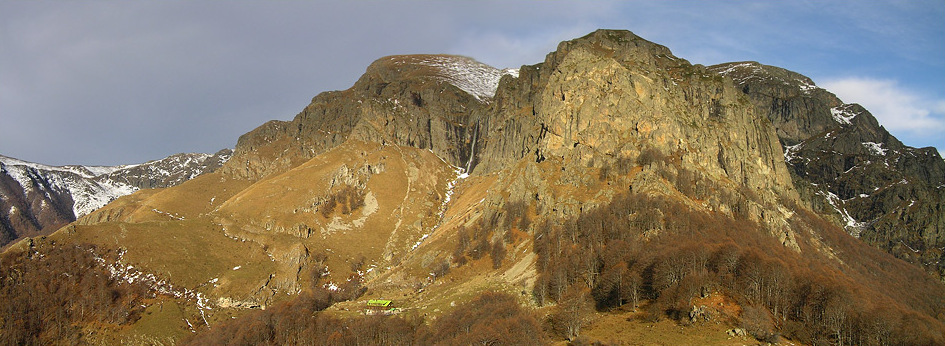
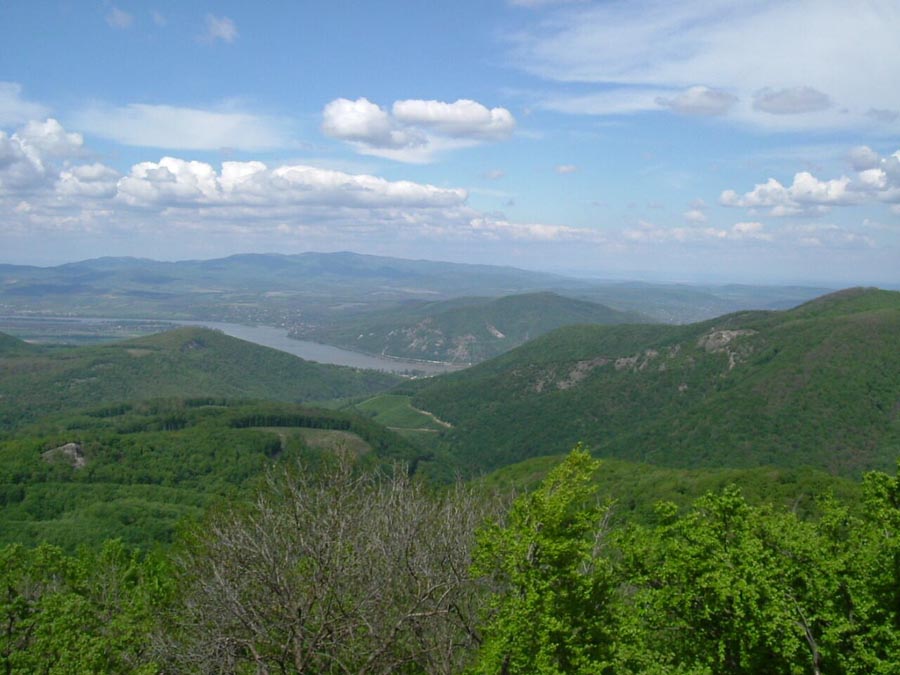
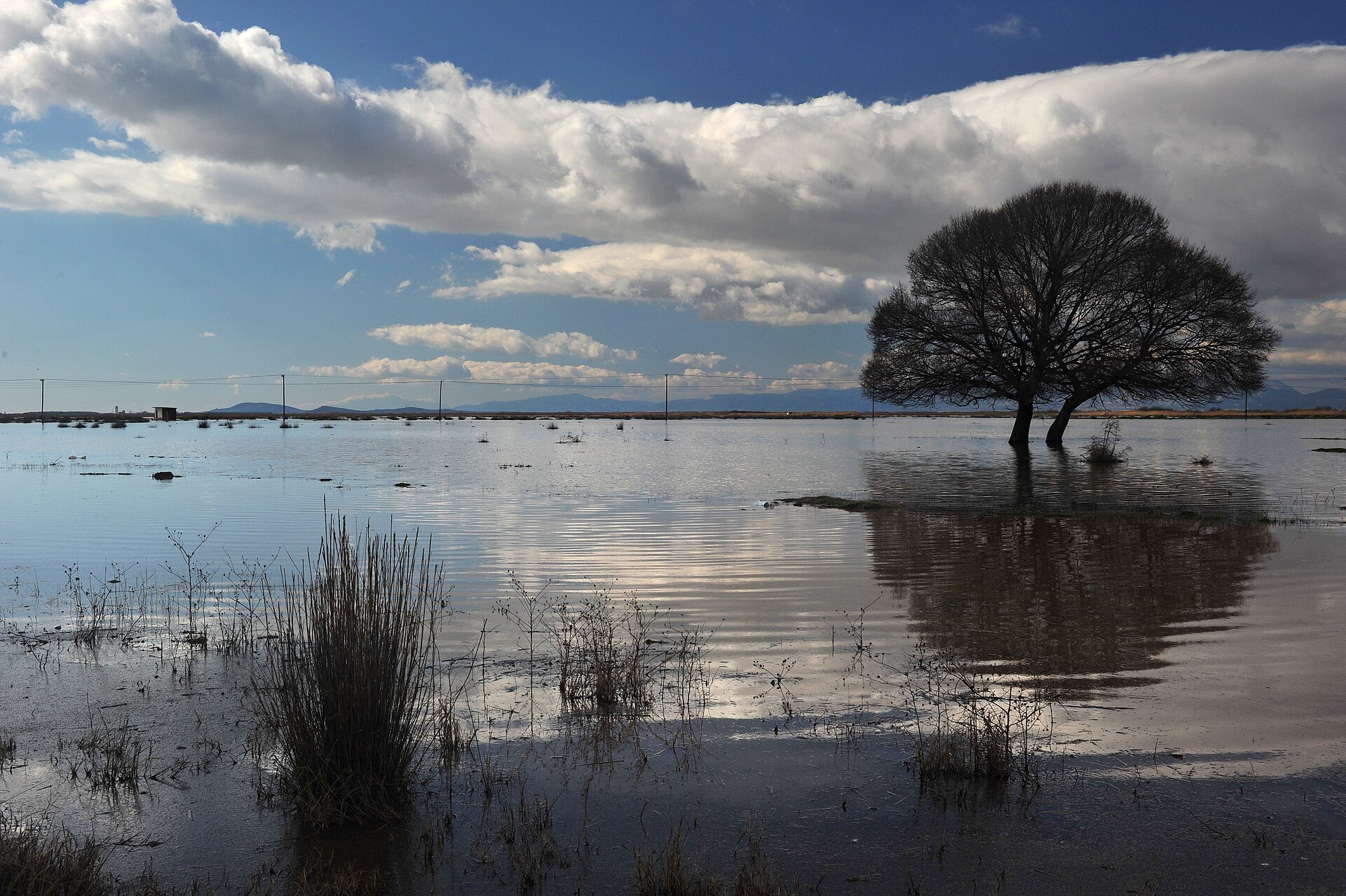
This mammal species is recorded in 10 protected areas of the atlas, and is listed on the official Natura 2000 form of each of them. Within the atlas countries, it is mostly observed in Romania, Switzerland and Greece (13 countries in all). Most records (8 in 10) lie between sea level and 1,250 m. Records are spread throughout the year. It is a species of Community interest under the Habitats Directive (Annex V). In the EU its conservation status is assessed as favourable in some biogeographical regions and unfavourable in others (2013–2018 reporting).
Best time to see it: all year round
Records published on GBIF by month (CC0 and CC BY 4.0 licences only), in the atlas countries, all years combined; they also reflect observer activity.
Key facts
- Litter size
- 5.7 young on average Wikidata, after Moehlman et al. 2018
- Gestation
- 63 days Wikidata, after Grzimeks Enzyklopädie, 1988
- Maximum recorded lifespan
- 19 years Wikidata, after Longevity of Mammals in Captivity, 2005
Status and protection
Habitats Directive V
The species is listed in Annex V of the Habitats Directive.
In the EU its conservation status is assessed as favourable in 5 biogeographical regions and unfavourable-inadequate in one (2013–2018 reporting).
Details by biogeographical region
| Region | Conservation status | Trend |
|---|---|---|
| Alpine | favourable | improving |
| Black Sea | favourable | stable |
| Continental | favourable | improving |
| Mediterranean | unfavourable-inadequate | stable |
| Pannonian | favourable | improving |
| Steppic | favourable | improving |
Distribution
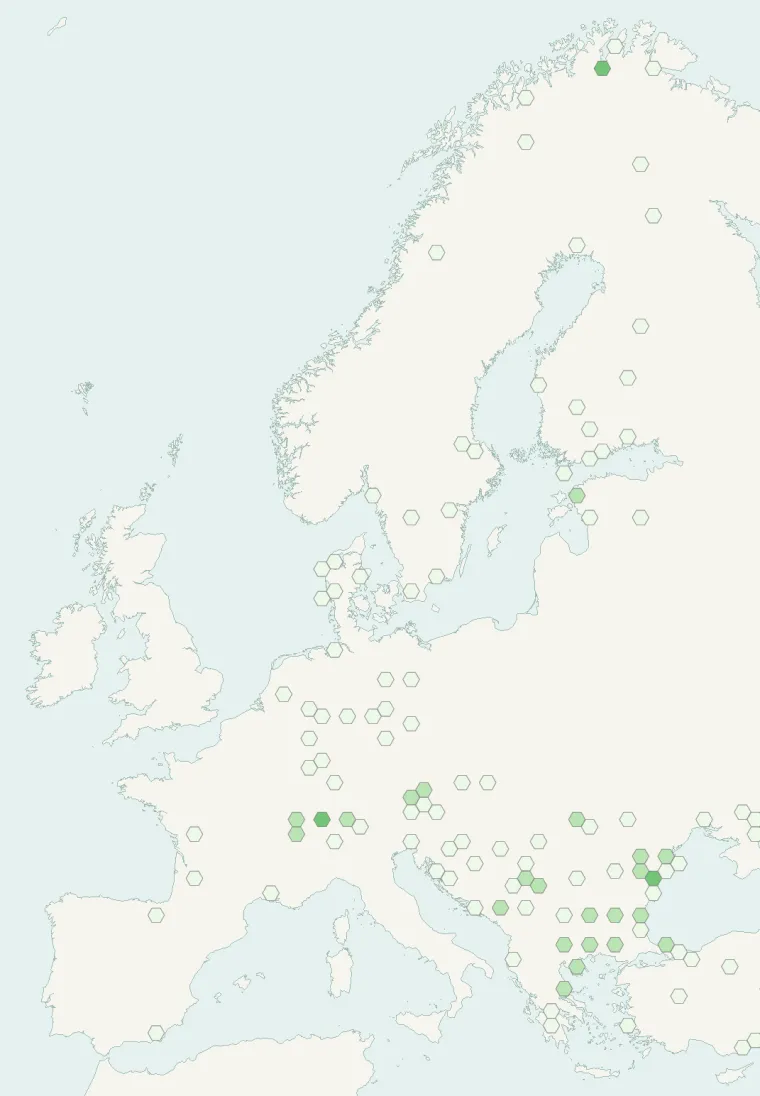
Records published on GBIF (CC0 and CC BY 4.0 licences): the darker the shade, the more records there are; they also reflect observation effort.
Atlas countries where it is recorded
Listen
-
0:14 · © Shajiarikkad · CC BY-SA 3.0 · Wikimedia Commons · Original file
From Wikipedia
The golden jackal (Canis aureus), also called the common jackal, is a wolf-like canid that is native to Eurasia. The golden jackal's coat varies in color from a pale creamy yellow in summer to a dark tawny beige in winter. It is smaller and has shorter legs, a shorter tail, a more elongated torso, a less-prominent forehead, and a narrower and more pointed muzzle than the Arabian wolf. Despite its name, the golden jackal is not closely related to the African black-backed jackal or the side-striped jackal, which are part of the genus Lupulella. It is instead closer to wolves and coyotes.
Source: Wikipedia, article “Golden jackal” (version of October 19, 2026) · history and authors · licence CC BY-SA 4.0 · shortened excerpt
Protected areas where it is recorded
Natura 2000
Natura 2000
Natura 2000

Natura 2000
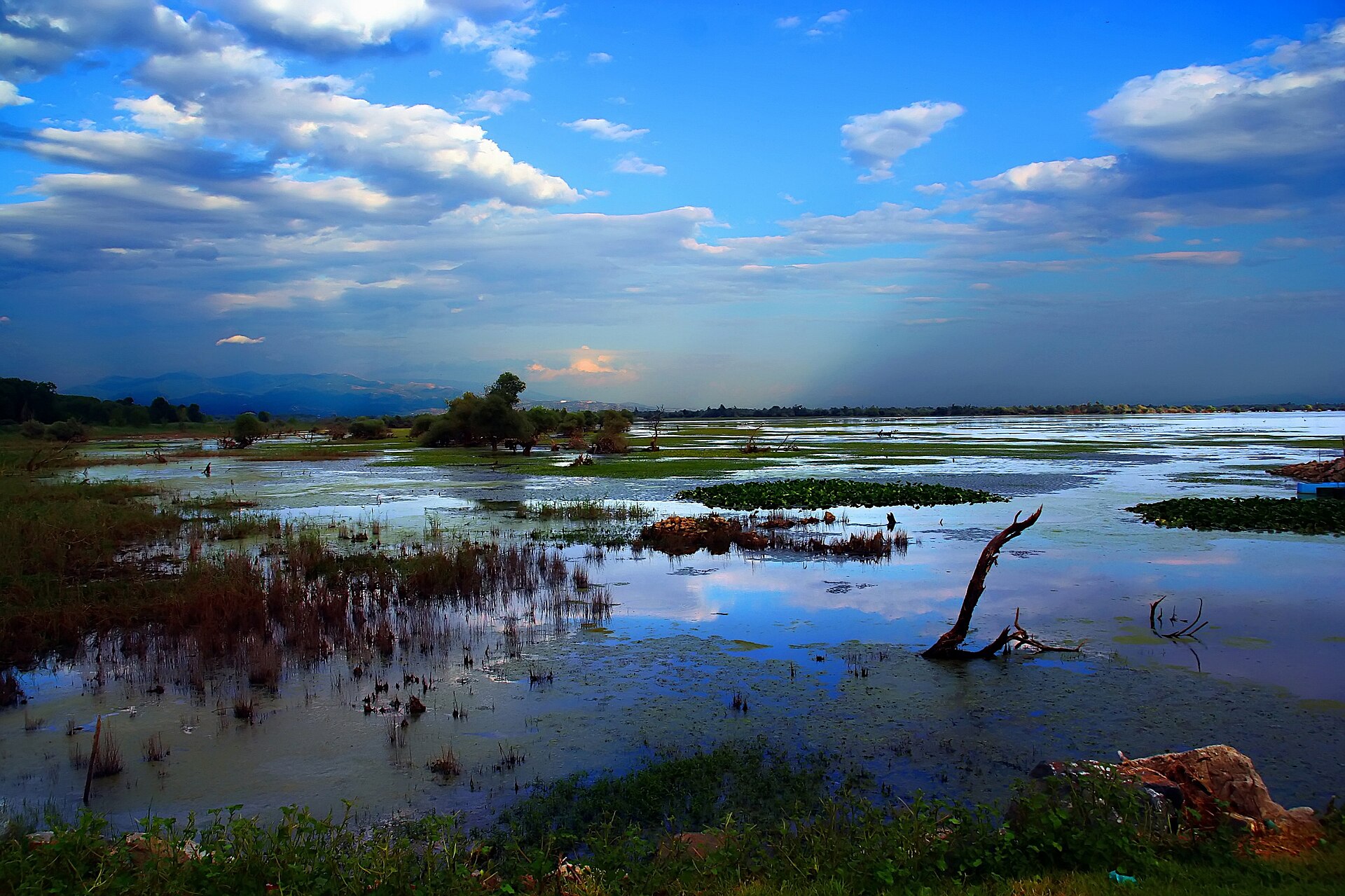
Natura 2000
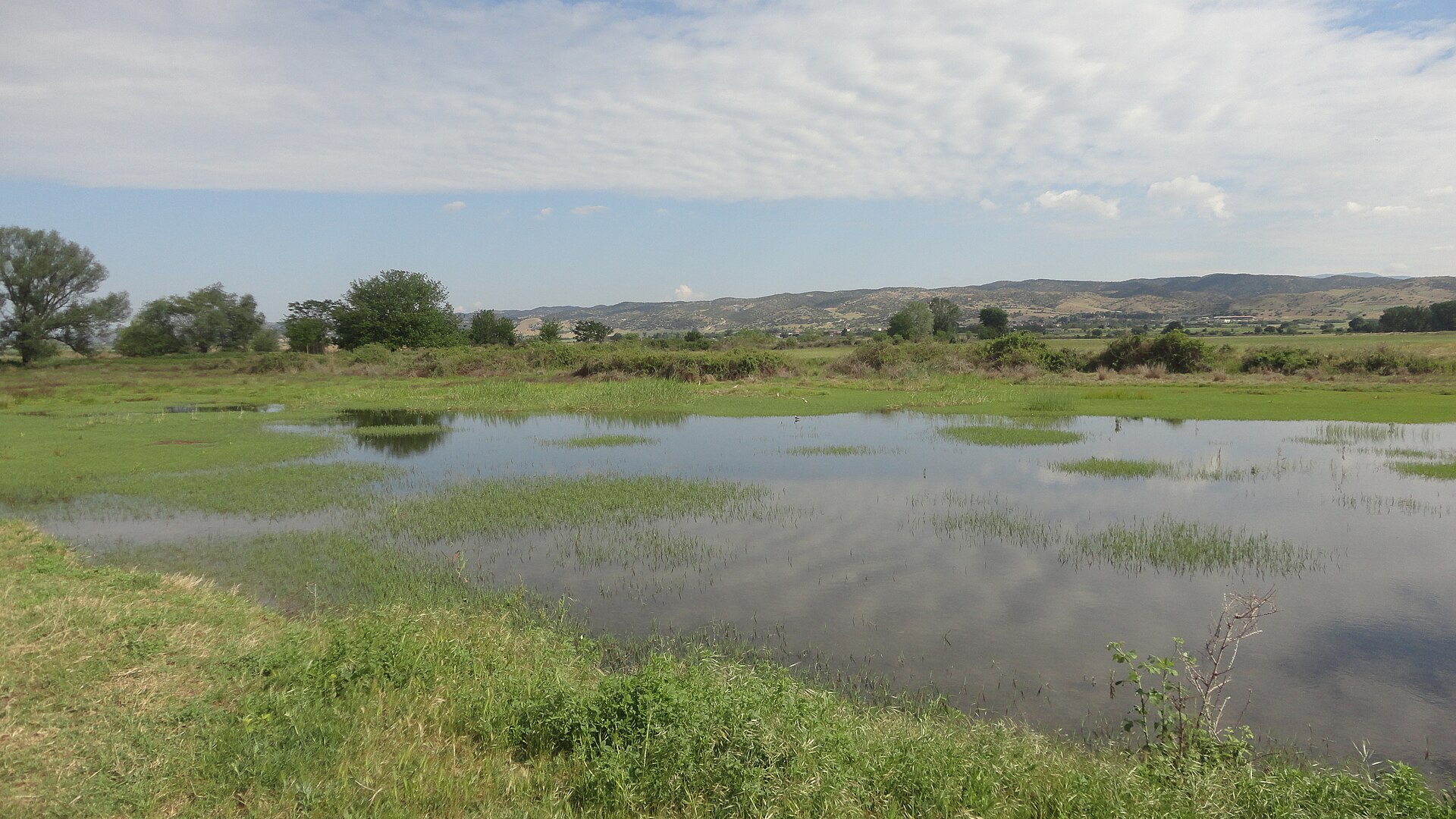
Natura 2000
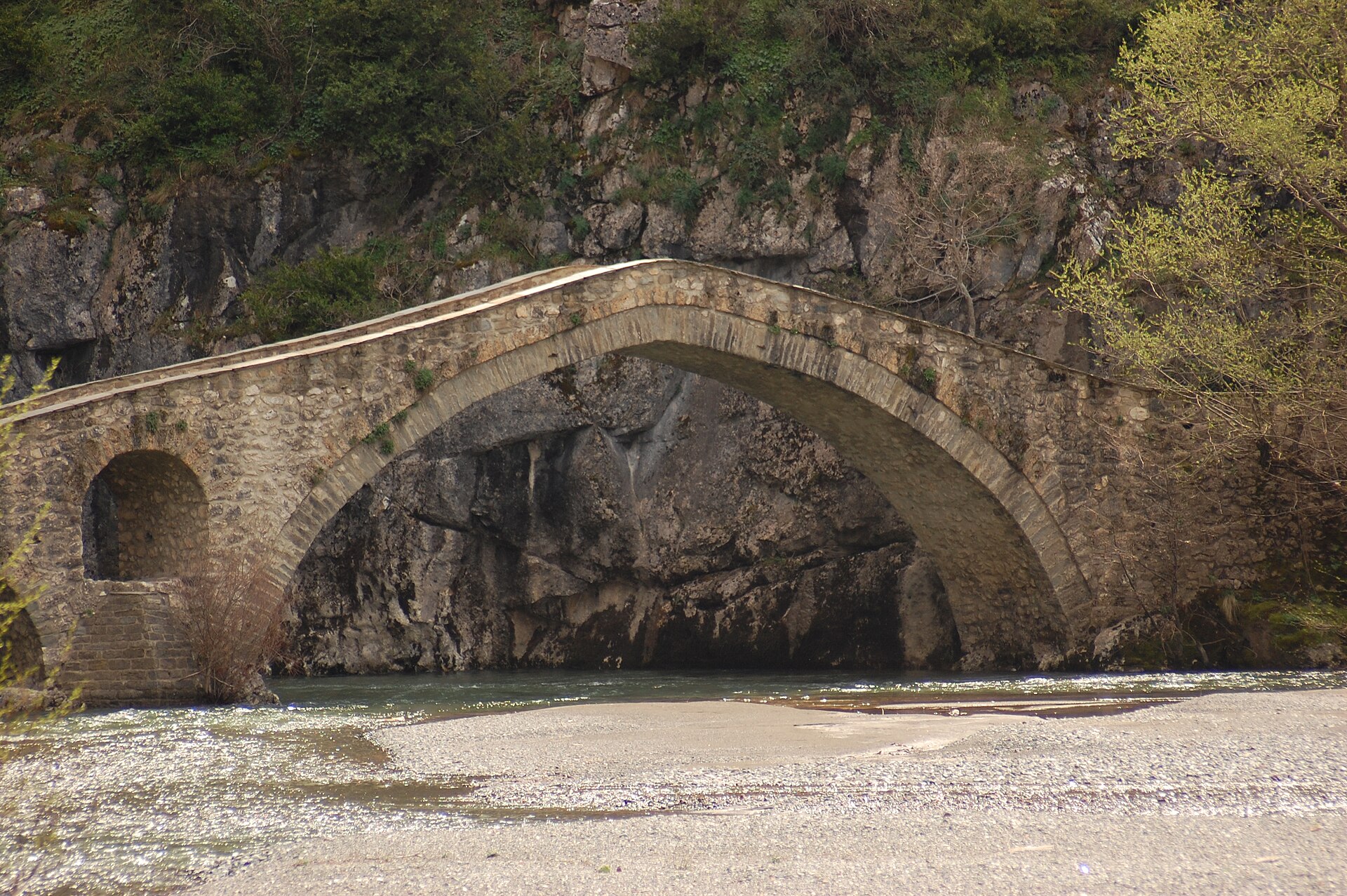
Natura 2000

Natura 2000
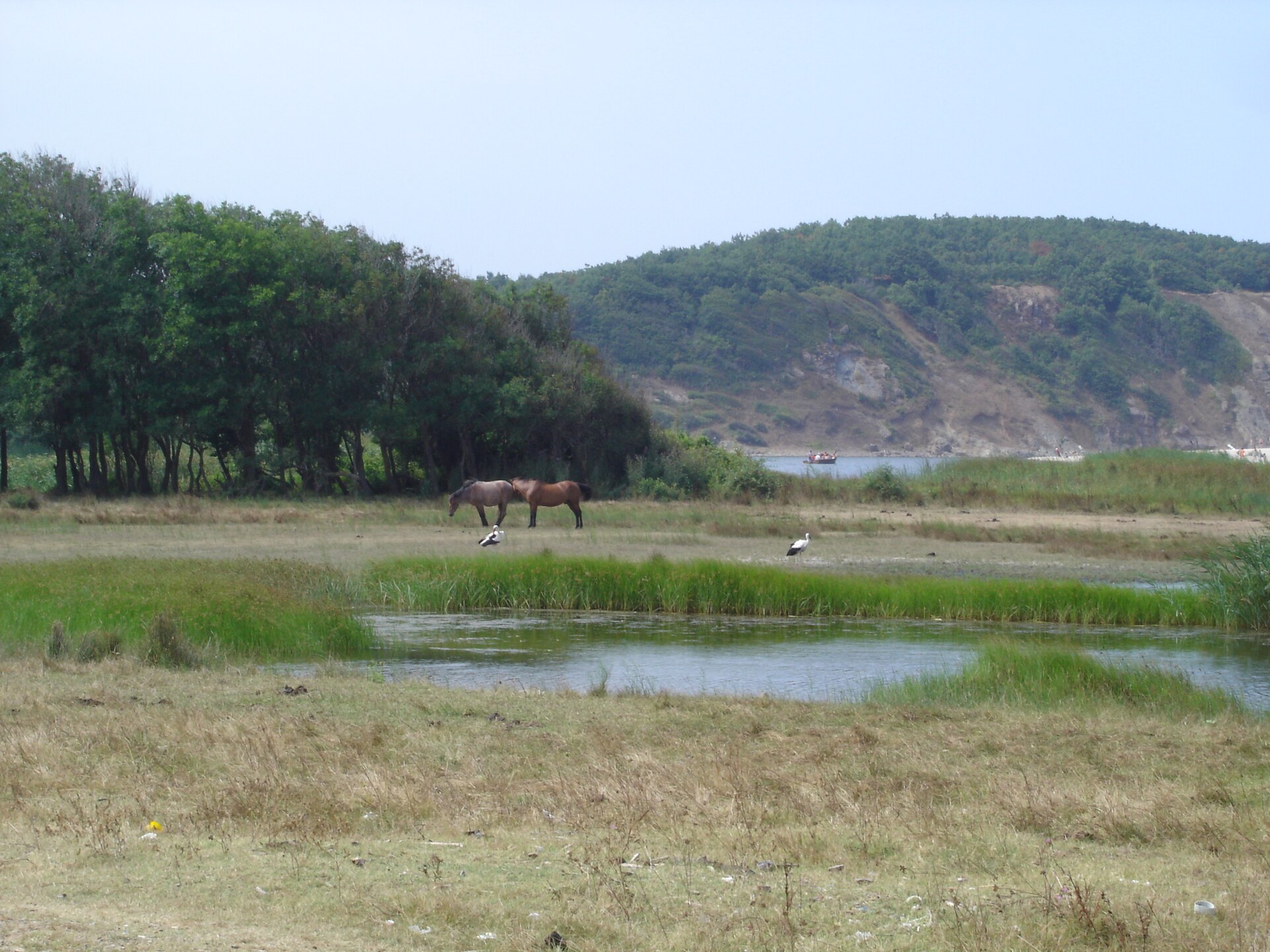
Natura 2000
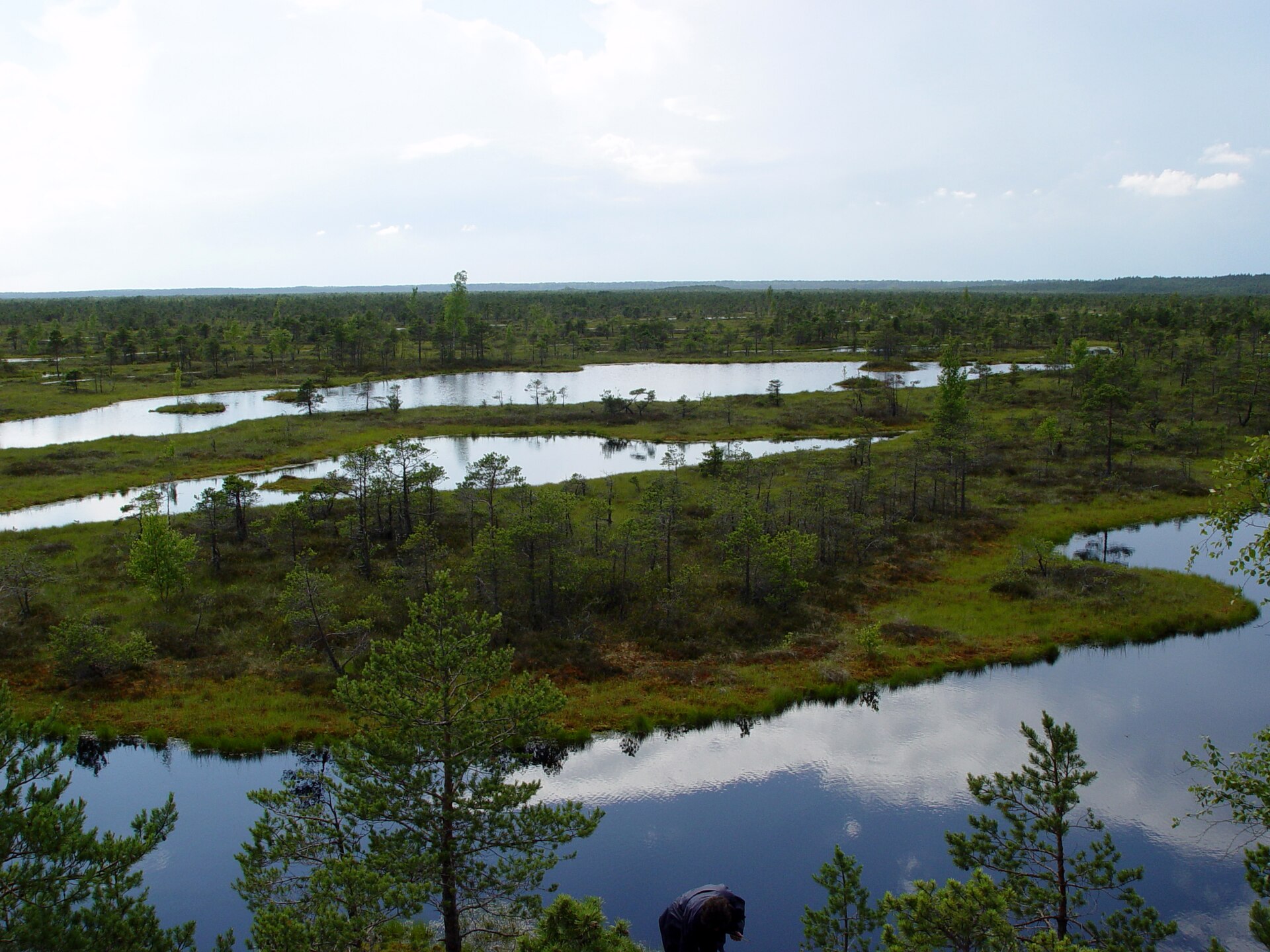
Natura 2000
Other species to discover
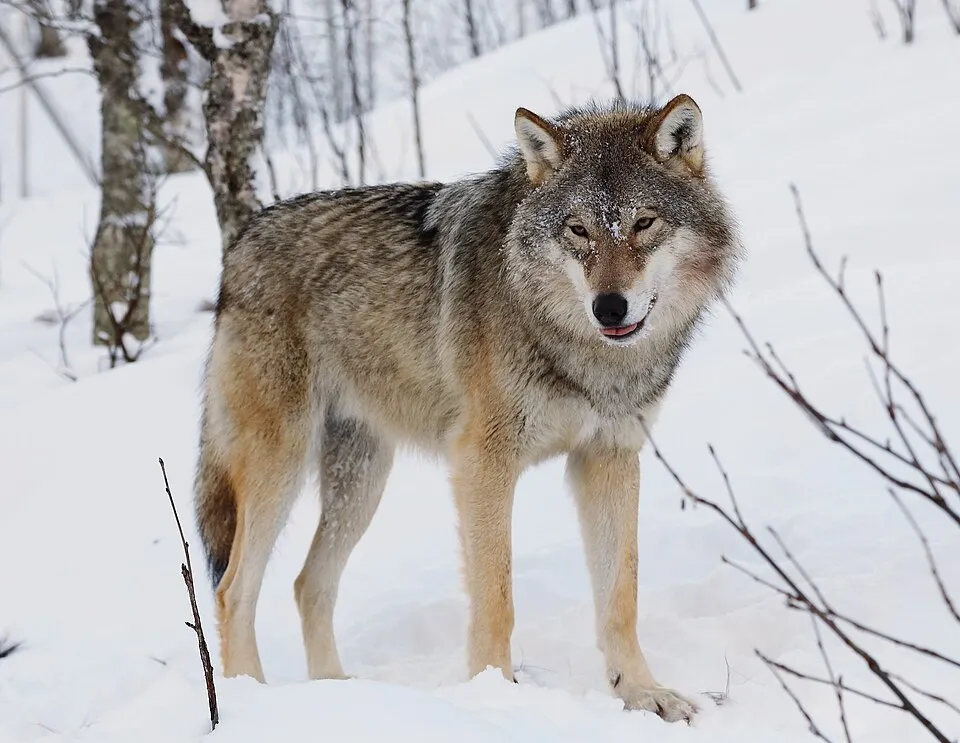 Grey wolf
Canis lupus Same genus
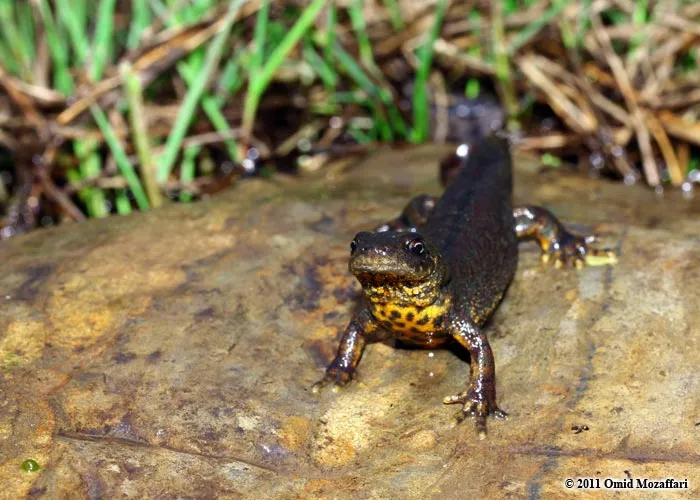 Southern crested newt
Triturus karelinii 7 places in common
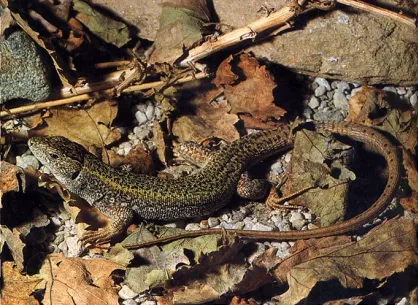 Balkan green lizard
Lacerta trilineata 6 places in common
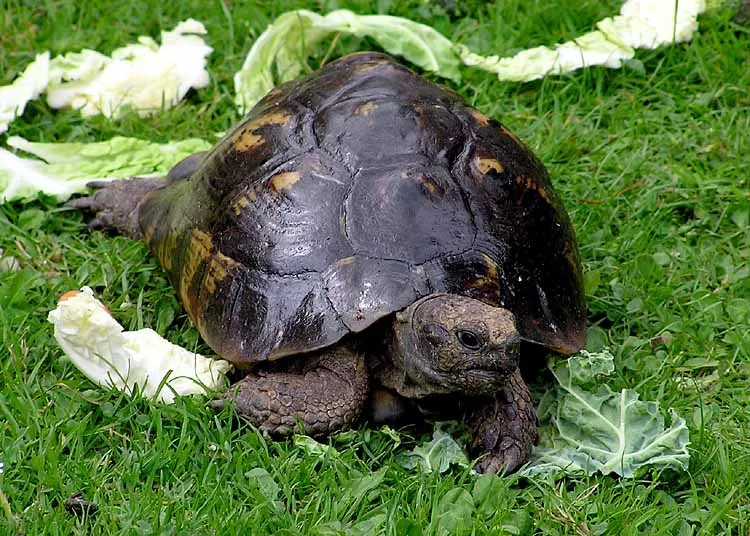 Common Tortoise
Testudo graeca 7 places in common
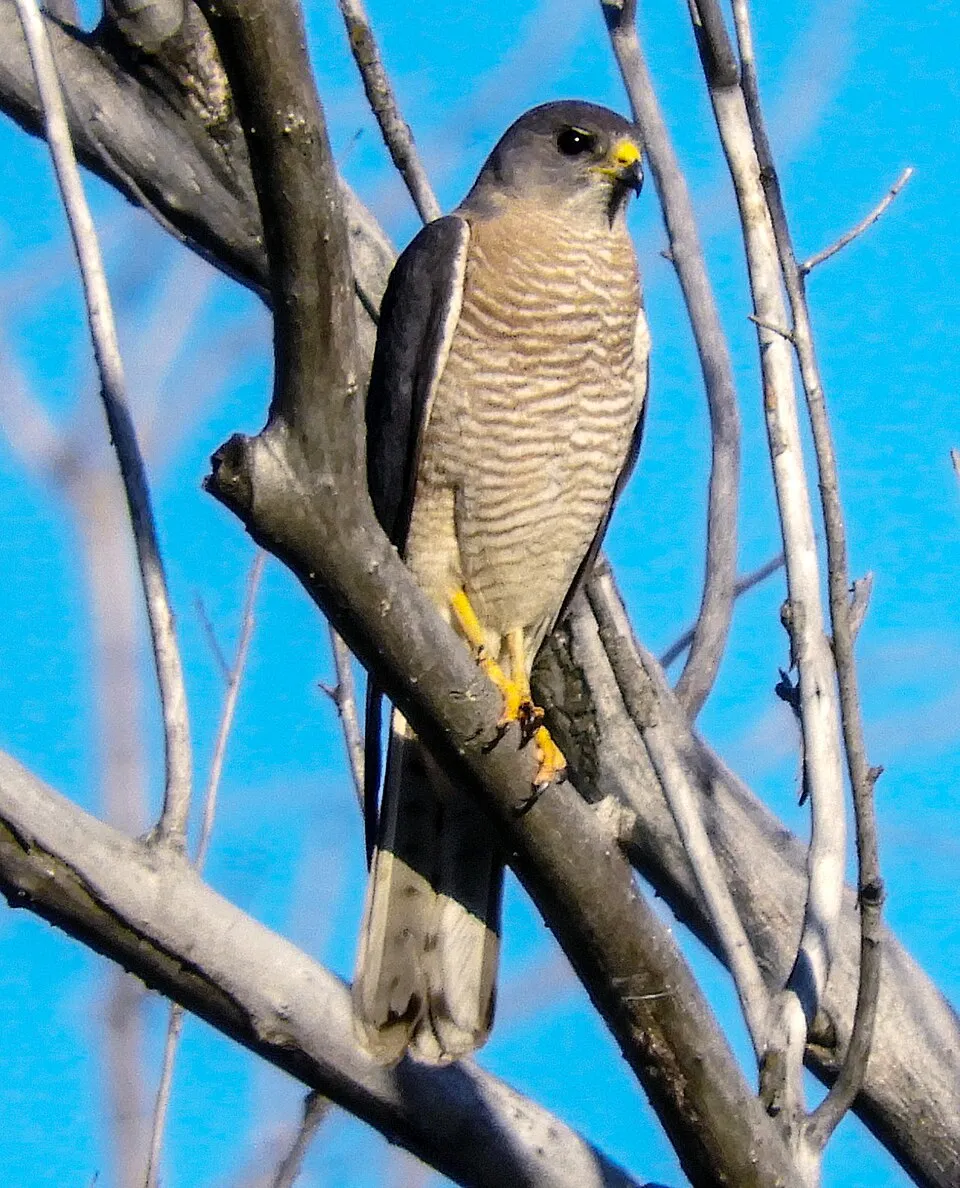 Levant Sparrowhawk
Accipiter brevipes 6 places in common
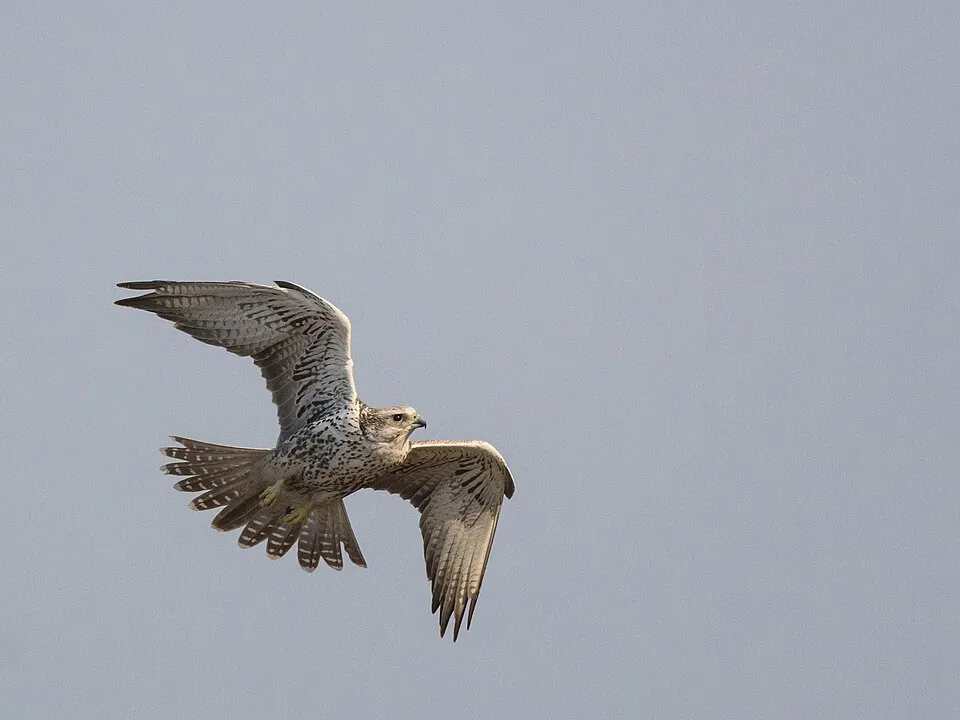 Saker Falcon
Falco cherrug 7 places in common
Sources and credits
- Presence: most-recorded species of each place on GBIF and species of Community interest in the Natura 2000 forms (EEA, CC-BY 4.0); absence from the list does not mean the species is absent.
- Common names: Wikidata (CC0) and GBIF.
- Photos and sounds: Wikimedia Commons, author and licence given for each file.
- Classification: GBIF Backbone Taxonomy (GBIF Secretariat), CC BY 4.0, doi:10.15468/39omei.
- Countries, elevations, months and maps: GBIF.org, CC0 or CC BY 4.0 occurrences only, accessed October 22, 2026, GBIF.org.
- Base map: Natural Earth (public domain).
- Excerpt: Wikipedia, CC BY-SA 4.0 (full credit below the excerpt).
- Key facts: Wikidata (CC0), with the references cited under each value.
- Annexes: Directive 92/43/EEC (consolidated version), © European Union, EUR-Lex.
- Conservation status: EEA / DG ENV, Article 17 Habitats Directive reporting (2013–2018), CC BY 4.0.