
Features ·
Natural parks in Sweden
In 1909, Sweden established nine national parks at a stroke, a first in Europe. More than a century later, the country has 31 national parks and some 5,900 nature reserves, from the glaciers of Lapland to the seabed of Koster, in a country where the right of access to nature is a constitutional principle.
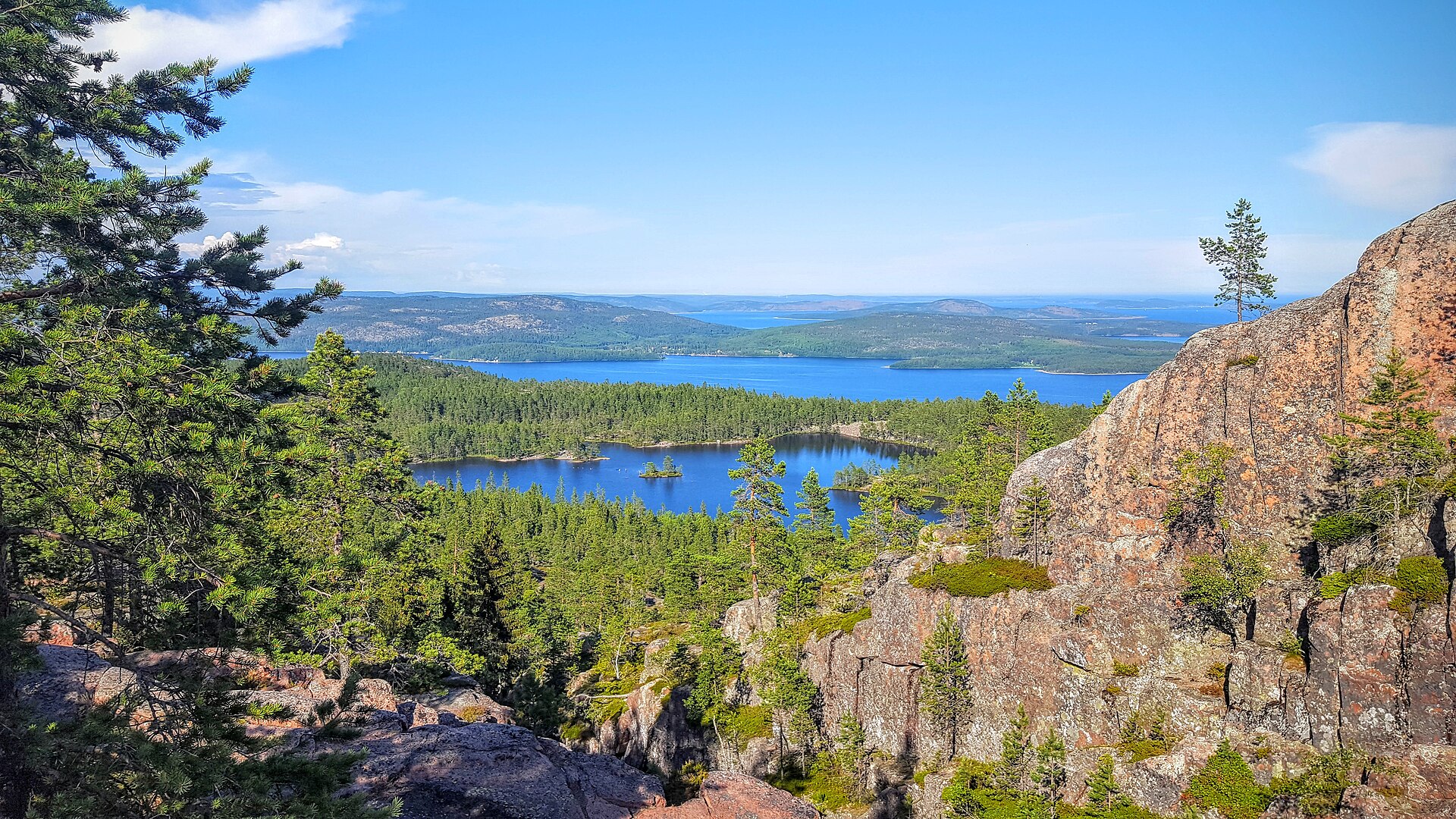
What counts as a natural park in Sweden?
In Sweden, the term “natural park” does not correspond to any legal category. The protected area landscape rests on two pillars. The first is the national park (nationalpark), the strongest form of protection in the country according to the Swedish Environmental Protection Agency (Naturvårdsverket): it is reserved for large areas of “a certain type of landscape,” kept in their natural state or in an “essentially unchanged” state. Its distinctive feature is that the land and waters must belong to the State.
The second pillar is the nature reserve (naturreservat). This is the most widely used instrument: a reserve can be established by the county administrative board (länsstyrelse, which represents the State in each of the 21 counties) or by a municipality, on public or private land, to preserve biological diversity, protect valuable natural habitats or meet the needs of outdoor recreation. In Sweden, reserves play the role that regional or nature parks play elsewhere: according to Naturvårdsverket, they cover about 85% of the area protected under the Environmental Code.
A third element, which is not a protection status, shapes all visits to nature: allemansrätten, the right of public access (literally “everyone's right”). It allows anyone to move freely through the countryside, to pick berries and mushrooms and to camp for a night or two almost anywhere, provided they show respect for wildlife, plants, landowners and other visitors. In national parks and in many reserves, this right is restricted by site-specific regulations.
History: from the 1909 law to marine parks
The forerunners. In the late 19th century, the nature conservation movement, born in North America with Yellowstone (1872), reached Europe. In Sweden, the explorer Adolf Erik Nordenskiöld was among the first to propose shielding still-untouched areas from exploitation. The political impetus came from the botanist Karl Starbäck, a member of the Riksdag, the Swedish parliament: in 1904, he tabled a motion asking the government to study the measures needed to protect “our country's nature and its natural monuments.” The Royal Swedish Academy of Sciences (Kungliga Vetenskapsakademien) then played a decisive role: its nature conservation committee issued an opinion as early as 1905, identified some of the candidate sites and placed particular emphasis on the island of Gotska Sandön. Experts appointed by the government drew up their proposals in 1907.
The 1909 laws. On March 17, 1909, the government submitted a package of texts to the Riksdag: a law on the protection of natural monuments (naturminnesmärken), a law on national parks and a proposal to set aside several Crown lands. The Riksdag passed the laws on May 5, 1909, with a single amendment, which broadened the King's power to grant exemptions, for example to hunt a species that had become too abundant. They came into force on January 1, 1910. The National Parks Act applied only to Crown lands. There, it prohibited damaging natural formations, extracting minerals, felling trees, removing plants (except berries eaten on the spot), hunting, bringing in dogs, building, cultivating, grazing livestock and displaying advertising. It did, however, preserve the rights of the Sami to grazing, wood, hunting and fishing, with the exception of bear hunting, and allowed them to keep the dogs needed for herding reindeer. The Natural Monuments Act, for its part, placed the Academy of Sciences at the center of the system: no protection could be granted without its favorable opinion.
The first nine parks. That same year, nine national parks were established: Abisko, Garphyttan, Gotska Sandön, Hamra, Pieljekaise, Sarek, Sånfjället (Sonfjället), Stora Sjöfallet and Ängsö. The Riksdag approved their establishment, proposed by the government on March 17, 1909, in a letter to the King dated May 24, 1909: this is the date used by Naturvårdsverket, and it is now celebrated every year as the European Day of Parks, launched in 1999 by the EUROPARC Federation. The statistical tables of Statistics Sweden (SCB), however, give June 21, 1909 for three of them (Garphyttan, Hamra and Sarek). The nine parks were very uneven: vast mountain areas in Lapland (Sarek, Stora Sjöfallet, Abisko), but also small sites, such as the old-growth forest of Hamra, the wooded meadow of Ängsö in the Stockholm archipelago or the cultivated hillside of Garphyttan, protected as traditional rural landscapes. Gotska Sandön then covered only 368 ha; the park was extended to the whole island in 1963, then 300 m out to sea in 1988.
“The first in Europe”: the claim, made by Naturvårdsverket, is accurate if one is speaking of national parks established by law. Switzerland did not establish its national park until 1914, and Spain its first two in 1918. This does not mean, however, that no nature had been protected in Europe before then: older reserves existed, such as the “artistic reserves” (séries artistiques) of the Forest of Fontainebleau, demarcated as early as 1853 and then extended by an imperial decree in 1861. In the same year, 1909, on May 16, the Svenska Naturskyddsföreningen (Swedish Society for Nature Conservation) was founded; it is now the country's leading environmental organization.
Tourism and hydropower. The first parks in Lapland are inseparable from the railroad. The iron ore line from Kiruna to Narvik, completed a few years earlier, brought the first tourists to Abisko, while the Svenska Turistföreningen (Swedish Tourist Association) built a hut near the Stora Sjöfallet falls as early as 1890; the falls were then nicknamed the “Niagara of the North.” These same falls became the symbol of the limits of protection: in 1919, the Riksdag voted to build a large dam at Suorva, inside the park, to supply electricity to the mines and the railroad. The area earmarked for development was removed from the park, whose boundaries were redrawn. The reservoir level has been raised four times since then; former camps, archaeological remains and grazing lands now lie under water.
From 1918 to 1962, slow growth. The network expanded in small steps: Dalby Söderskog (1918), Vadvetjåkka (1920), Blå Jungfrun (1926), Norra Kvill (1927), Töfsingdalen (1930), Muddus (1942), then Padjelanta in 1962, which remains the largest national park in the country. A 1952 nature protection law created a category of “nature park” (naturpark), which would not survive the next reform.
The 1964 reform and the birth of Naturvårdsverket. The Nature Conservation Act (naturvårdslag, SFS 1964:822), promulgated on December 11, 1964 and in force from January 1, 1965, overhauled the system. It organized protection around national parks and nature reserves, the category into which most of the former nature parks were transferred. On July 1, 1967, the State established Statens naturvårdsverk, today's Naturvårdsverket, by merging several bodies, including the National Nature Conservation Council created in 1963. The agency was given “overall supervision” of nature conservation in the realm.
The 1989 and 2008 plans. In 1989, Naturvårdsverket published a first national parks plan (Nationalparksplan för Sverige) proposing 20 new parks. It was not a decision of Parliament but a work program. Before it, four parks had already been established in the 1980s: Store Mosse (1982), Tiveden (1983), Skuleskogen (1984) and Stenshuvud (1986). The plan inspired the next wave: Björnlandet and Djurö (1991), Tyresta (1993), the Haparanda Archipelago (1995), Tresticklan (1996), Färnebofjärden (1998), Söderåsen (2001) and Fulufjället (2002). A revision, published in 2008, selected 13 new sites and 7 extensions of existing parks.
Laponia, the Sami and the Environmental Code. In 1996, UNESCO inscribed the Laponian Area (Laponia) on the World Heritage List: about 940,000 ha bringing together the Padjelanta, Sarek, Stora Sjöfallet and Muddus national parks and several nature reserves. It is the only Swedish property inscribed for both its natural and cultural values, on account of the Sami pastoral culture, which is still alive. The relationship with the Sami has also changed: when Sarek was established, the official parks website notes, they were regarded as “a part of nature” and their rights were gradually whittled away; in 2013, they regained the right to herd reindeer throughout the park. That same year, the management of Laponia was entrusted to an association, Laponiatjuottjudus, in which the Sami reindeer herding communities (samebyar) sit alongside the municipalities of Gällivare and Jokkmokk, the Norrbotten länsstyrelse and Naturvårdsverket. In the meantime, on January 1, 1999, the Environmental Code (Miljöbalken, SFS 1998:808) replaced the 1964 law and brought all the protection rules together.
The marine turn. Kosterhavet, established in 2009 off Strömstad, became Sweden's first marine national park. Åsnen, a lake in Småland dotted with islands, followed in 2018. The 31st park, Nämdöskärgården, in the outer Stockholm archipelago, was decided by the government in 2025 after a vote in the Riksdag and inaugurated on September 5, 2025: 97% of its 25,300 ha is marine, making it the first national park with a marine focus in the Swedish Baltic. A 32nd park, around Lake Bästeträsk on the island of Gotland, was proposed to the government in August 2025.
Legal framework
The key text is the Environmental Code (Miljöbalken, SFS 1998:808), in force since January 1, 1999. Its Chapter 7 deals with the protection of areas:
- Chapter 7, Section 1: anyone exercising allemansrätten or spending time in nature must show consideration and care;
- Chapter 7, Section 2: a land or water area owned by the State may be declared a national park by the government, with the consent of the Riksdag, in order to preserve a large contiguous area of a certain type of landscape in its natural or essentially unchanged state;
- Chapter 7, Section 3: the government, or the authority it designates, lays down management rules and restrictions on use;
- Chapter 7, Sections 4 to 8: the nature reserve, established by the länsstyrelse or the municipality, with its purposes, its prohibitions (building, fencing, drainage, felling, hunting, fishing, pesticides) and the possibility of prohibiting access for part of the year;
- Chapter 7, Sections 9 to 12: cultural reserve, natural monument, habitat protection area and animal and plant protection area.
The National Parks Ordinance (nationalparksförordningen, SFS 1987:938) lists the 31 parks and the purpose of each; it was amended in 2025 to add Nämdöskärgården (SFS 2025:721), then to restate the ban on fishing with gear towed along the seabed (SFS 2025:749, in force since July 1, 2026). A specific ordinance (Laponiaförordningen, SFS 2011:840) governs the management of Laponia; in May 2026, the government extended its validity until the end of 2031. Finally, allemansrätten has constitutional status: the Instrument of Government (Regeringsformen, Chapter 2, Article 15) provides that “everyone shall have access to nature in accordance with allemansrätten.”
Types of protected areas
The Environmental Code offers a range of designations. The main ones, with their numbers as of December 31, 2025 according to SCB:
- national park (31): State land, government decision with the consent of the Riksdag, golden star symbol;
- nature reserve (5,900): established by the länsstyrelse or the municipality, marked by posts bearing a white snowflake on a blue background;
- nature conservation area, naturvårdsområde (88): a less restrictive designation created in 1974, which can no longer be used for new sites since the Environmental Code came into force in 1999;
- habitat protection areas, in forests (9,019) or elsewhere (147): small areas sheltering the habitats of threatened species;
- natural monument, naturminne (1,352): a remarkable tree, an erratic boulder, a spring;
- national city park (1): the Royal National City Park (Kungliga nationalstadsparken) in Stockholm;
- Natura 2000 sites: 558 special protection areas for birds and 4,029 sites of community importance.
To these are added cultural reserves, conservation agreements concluded with landowners (naturvårdsavtal) and animal and plant protection areas.
Number of parks and reserves
As of December 31, 2025, according to the official “Skyddad natur” (Protected nature) statistics published by SCB and Naturvårdsverket on May 29, 2026, Sweden has 31 national parks covering 768,522 ha (including 70,442 ha of sea), or 1.4% of the country's total area, and 5,900 nature reserves covering 5,456,619 ha, or 10.3%. All formally protected areas combined, without double counting, account for 15.7% of the territory, marine waters included.
The number of reserves is rising quickly: 2,192 in 2000, 3,616 in 2010, 5,241 in 2020, 5,900 at the end of 2025 (SCB). Naturvårdsverket, for its part, gives “more than 6,000” reserves on its website (page reviewed in March 2026); the gap is at least partly due to SCB's method, which counts only reserves whose decision had become final by December 31, excluding those whose decision was still being notified or was under appeal. The number of national parks, by contrast, has barely changed: 26 in 2000, 29 in 2010, 30 from 2018 to 2024, 31 since 2025.
Map
The atlas's Sweden page shows the map of Swedish national parks, which can be set in the wider context of the world map. The imbalance of the network is immediately apparent: nearly 80% of the area of the national parks lies in Norrbotten County, in the far north, mainly in the Scandinavian Mountains and along their margins. The south of the country has more parks, but they are small: forests, heathlands, peat bogs, archipelagos and islands. Nature reserves, for their part, are found in almost every municipality (287 out of 290 at the end of 2025); nearly three quarters of their area, however, lies in the mountains, in the counties of Jämtland, Västerbotten and Norrbotten.
Complete list of national parks
The atlas's directory of Swedish national parks gives access to every park page. Here are the 31 parks, in order of establishment (year and county according to the SCB register):
- Abisko (1909, Norrbotten)
- Gotska Sandön (1909, Gotland)
- Pieljekaise (1909, Norrbotten)
- Sånfjället (1909, Jämtland)
- Stora Sjöfallet / Stuor Muorkke (1909, Norrbotten)
- Ängsö (1909, Stockholm)
- Garphyttan (1909, Örebro)
- Hamra (1909, Gävleborg)
- Sarek (1909, Norrbotten)
- Dalby Söderskog (1918, Skåne)
- Vadvetjåkka (1920, Norrbotten)
- Blå Jungfrun (1926, Kalmar)
- Norra Kvill (1927, Kalmar)
- Töfsingdalen (1930, Dalarna)
- Muddus / Muttos (1942, Norrbotten)
- Padjelanta / Badjelánnda (1962, Norrbotten)
- Store Mosse (1982, Jönköping)
- Tiveden (1983, Västra Götaland and Örebro)
- Skuleskogen (1984, Västernorrland)
- Stenshuvud (1986, Skåne)
- Björnlandet (1991, Västerbotten)
- Djurö (1991, Västra Götaland)
- Tyresta (1993, Stockholm)
- Haparanda Archipelago (1995, Norrbotten)
- Tresticklan (1996, Västra Götaland)
- Färnebofjärden (1998, Dalarna, Gävleborg, Uppsala and Västmanland)
- Söderåsen (2001, Skåne)
- Fulufjället (2002, Dalarna)
- Kosterhavet (2009, Västra Götaland)
- Åsnen (2018, Kronoberg)
- Nämdö Archipelago (Nämdöskärgården) (2025, Stockholm)
The roughly 5,900 nature reserves do not yet have their own pages in the atlas; their list and regulations are published by each länsstyrelse and in Naturvårdsverket's Skyddad natur mapping tool.
How a park is created
Establishing a national park takes time: at least three years, normally four to six, sometimes more than ten, according to the implementation plan published by Naturvårdsverket in 2015. The process follows well-established steps:
- preliminary consultation between Naturvårdsverket, the länsstyrelse and the municipality, often preceded by a pre-study;
- launch of the project by Naturvårdsverket, with a steering committee and a working group; in reindeer grazing areas, the Sami reindeer herding communities must be involved from the outset;
- delineation, surveys, then land acquisition: the entire area must be owned by the State, through Naturvårdsverket, by the time the proposal is submitted to the government;
- drafting of the purpose, regulations and management plan, development of entrances and trails, public consultation;
- proposal to the government, which presents a bill (proposition) to the Riksdag; after the vote, the government adds the park to the National Parks Ordinance;
- adoption of the regulations and management plan by Naturvårdsverket, then inauguration, traditionally by the King.
Nature reserves follow a lighter procedure: the länsstyrelse or the municipality prepares the case, negotiates with landowners (purchase, compensation or land exchange) and adopts a reasoned decision accompanied by regulations. At the end of 2025, according to SCB, 5,399 reserves had been established by the länsstyrelser and 501 by municipalities.
Managing agencies
Naturvårdsverket, an agency accountable to the government, prepares proposals for new parks, owns the land of the national parks, manages the “Sveriges nationalparker” (Sweden's National Parks) brand and funds their management. Day-to-day management is the responsibility, for 26 parks, of the länsstyrelse of the county concerned. There are two exceptions: the four Laponia parks (Padjelanta, Sarek, Stora Sjöfallet and Muddus) are managed by the Laponiatjuottjudus association, and Tyresta, on the doorstep of Stockholm, by the Stiftelsen Tyrestaskogen foundation, set up in 1993 by Naturvårdsverket, the Stockholm länsstyrelse, the City of Stockholm and the municipalities of Haninge and Tyresö.
For nature reserves, SCB identifies three categories of managers at the end of 2025: the länsstyrelser (4,837 reserves), municipalities (635) and other bodies, notably foundations (428). The Swedish Agency for Marine and Water Management (Havs- och vattenmyndigheten) is involved in projects with a marine or lake component.
Funding
National parks and reserves are funded mainly through two State budget appropriations managed by Naturvårdsverket: “measures for valuable nature” (anslag 1:3) and “protection of valuable nature” (anslag 1:14). According to the report submitted to the government in April 2026, 2.5 billion kronor (SEK) were spent in 2025 on the protection and management of nature, making possible, among other things, 171 State decisions establishing, enlarging or strengthening nature reserves, the restoration of more than 4,300 ha of wetlands and improved waymarking on 504 km of mountain trails. The agency estimates that this spending corresponds to more than 700 full-time jobs. It considers, however, that the appropriations of the past three years are sufficient neither to maintain the natural values of protected areas nor to meet national targets and European and international commitments.
Land acquisition weighs heavily on these budgets, since national parks must be owned by the State and the creation of a reserve on private land gives rise to a right to compensation. Municipalities fund their own reserves. Access to parks and reserves is free of charge, in keeping with allemansrätten.
Missions
National parks must, according to Naturvårdsverket, “safeguard the diversity of nature and allow visitors to experience and enjoy nature.” The criteria applied when creating new ones are precise: to represent, individually or together, the main types of Swedish landscape within a national network; to cover entire landscape units, normally of at least 1,000 ha; to consist, for the most part, of nature in its original state; to be magnificent or distinctive; and to be capable of effective protection while accommodating research, outdoor recreation and tourism.
Management aims first and foremost to let nature take its course. Where the landscape is the legacy of traditional practices, such as the wooded meadows of Ängsö or the pastures of Garphyttan, traditional upkeep must on the contrary continue, otherwise meadows and pastures would become overgrown. Nature reserves have more varied missions: biodiversity, protection of rare species, but also public access to recreational areas close to towns. Finally, all reserves and parks contribute to scientific monitoring; near Abisko, for example, there is a research station whose climate records go back more than a century.
Regulations and right of public access
Each national park and each reserve has its own regulations (föreskrifter), tailored to its purpose. The official parks website sums it up: in national parks, “allemansrätten is restricted in order to better protect nature.” Depending on the site, prohibitions may cover picking plants, hunting, lighting fires, motorized traffic, dogs or camping. In Kosterhavet, for example, it is prohibited to anchor or to fish with bottom trawls in the seabed protection zones, or to camp for more than two nights in the same place, and visitors must keep 100 m away from seal and bird protection areas, generally from March 1 to August 31.
Outside these specific rules, allemansrätten applies: passage on foot, on skis or by bicycle, camping for a night or two, picking berries and mushrooms, swimming. It also carries obligations: do not disturb, do not destroy, respect the privacy zone around homes. This right explains the absence of fences and entrance fees.
Breaches of the rules governing protected areas are criminal offenses: SCB publishes each year the number of suspected offenses recorded in this field.
Local life and economic activity
Swedish national parks are not empty of people. In the north, Sami reindeer herding is the main activity: the Sarek area serves as summer pasture for three Sami reindeer herding communities, and herding rights apply throughout Stora Sjöfallet National Park. Seasonal migration was once made on foot: the last reindeer caravans across Sarek and Padjelanta took place in the 1960s. Today, herders reach their camps by plane and round up their herds using helicopters and motorbikes. Fishing and, depending on the park, certain forms of hunting remain permitted for rights holders.
Elsewhere, parks play an indirect economic role: they attract visitors and nature tourism businesses. Naturvårdsverket points out that a national park draws attention “to the region, the municipality, the county and Sweden.” In nature reserves, which may remain privately owned, farming, grazing, fishing or forestry often continue, within the limits set by the regulations; some reserves prohibit logging, others do not. Grazing is in fact often a management tool, as in the future Bästeträsk park, where it is an integral part of the project.
Tourism
According to Naturvårdsverket, nearly 3 million visits were recorded in Swedish national parks in 2025. The visitor sites are grouped under the common “Sveriges nationalparker” brand, with a website updated in spring 2026. Several parks have a naturum, a visitor and interpretation center: naturum Laponia at Stora Sjöfallet, naturum Fulufjället at the entrance to Njupeskär, naturum Kosterhavet.
Hiking dominates. The Kungsleden, the country's most famous trail, crosses Abisko National Park following the Abiskojåkka river; the Svenska Turistföreningen's Saltoluokta mountain station is one of the gateways to Stora Sjöfallet. Sarek, a high-mountain park with almost no facilities, attracts mainly self-sufficient hikers: only the Kungsleden crosses its southern part, with Svenska Turistföreningen huts, and the interior of the park has just a few shelters, at Skárja and Jågge. In the south, Söderåsen, Tyresta, Tiveden and Stenshuvud attract a local public; Kosterhavet can be explored on foot, by kayak or along snorkeling trails. National Parks Day, on May 24, is marked by events in many parks.
Biodiversity
The national parks were conceived as a sample of Swedish landscapes: high mountains with glaciers, Arctic tundra, boreal forest and peat bogs, forested hills of central Sweden, fault valleys, broadleaf forests of the south, Baltic and North Sea archipelagos, limestone islands. A few examples are enough to gauge this diversity.
In Padjelanta, limestone bedrock and reindeer grazing have created what the official website calls the “flower paradise” of the Swedish mountains; Linnaeus passed through during his journey to Lapland in 1732. In Fulufjället, nearly 400 species of mosses and at least as many lichens grow on a sandstone plateau that reindeer have not grazed for more than a century. Kosterhavet is home to about 6,000 marine species, nearly 300 of which are found nowhere else in Swedish waters: the deep, salty Koster Trench reproduces Atlantic conditions, with one of the only two known cold-water coral reefs in Sweden (Desmophyllum pertusum, formerly Lophelia pertusa). The old-growth forests of Norra Kvill, Hamra, Muddus and Björnlandet preserve trees several centuries old, deadwood and the species that depend on it.
Nature reserves complement this network: the largest, Vindelfjällen, in southern Lapland, covers about 563,000 ha, more than any national park. Many of the parks and reserves also belong to the European Natura 2000 network.
Flagship species
Large predators are central to the image of the northern parks. The wolverine roams Sarek, Padjelanta, Muddus and Stora Sjöfallet; the lynx is present in many parks, from the north to the center of the country; the brown bear and the wolf complete this quartet, whose coexistence with reindeer herding remains a sensitive issue. The moose is everywhere, particularly in the Rapadalen delta in Sarek. The reindeer of the Swedish mountains are semi-domesticated: every animal belongs to a Sami herder.
Padjelanta is also home to the Arctic fox, a threatened species in Sweden, and, in some years, the snowy owl, which breeds when lemmings are abundant. Mountain birds such as the rock ptarmigan and raptors such as the golden eagle are characteristic there. The old-growth forests shelter the western capercaillie, the three-toed woodpecker, the Ural owl and the great grey owl. On the coasts, the white-tailed eagle, which has made a remarkable comeback, can be seen in several coastal parks; the grey seal frequents the Baltic archipelagos, and Kosterhavet is home to the largest population of harbor seals on the west coast, as well as the harbor porpoise.
Among plants, the most unexpected symbol is a spruce: in Fulufjället, Old Tjikko, a clone of Norway spruce whose roots are said to be 9,550 years old according to carbon-14 dating, is presented by the official parks website as the oldest tree in the world.
Major parks
Sarek (198,466 ha) is the flagship park of Sweden's high mountains: six of the country's highest peaks, nearly a hundred glaciers and the Rapadalen delta, the most famous delta in the Swedish mountains.
Padjelanta / Badjelánnda (199,898 ha), “the higher land” in Sami, is the largest: large lakes and rolling plateaus, summer grazing for reindeer and an exceptional flora.
Stora Sjöfallet / Stuor Muorkke (127,993 ha) and Muddus / Muttos (51,137 ha) complete the Laponia block, the former with its peaks and its hydropower history, the latter with its old-growth forests and peat bogs.
Abisko (7,710 ha), accessible by train, is the gateway to Lapland and the starting point of the Kungsleden.
Fulufjället (38,441 ha), in Dalarna, combines a mountain plateau, the Njupeskär waterfall and Old Tjikko.
Kosterhavet (38,824 ha, of which nearly 38,000 ha is sea) is Sweden's first marine national park, and Nämdöskärgården (25,294 ha) the most recent, in the Stockholm archipelago.
Further south, Söderåsen protects a horst covered with beech woods, Tyresta an old-growth forest some twenty kilometers from central Stockholm, and Åsnen a landscape of lake, islands and forests in Småland.
Records
- Oldest: the nine parks of 1909, Abisko, Garphyttan, Gotska Sandön, Hamra, Pieljekaise, Sarek, Sånfjället, Stora Sjöfallet and Ängsö (Naturvårdsverket).
- Most recent: Nämdöskärgården, the 31st park, inaugurated on September 5, 2025 (Naturvårdsverket).
- Largest: Padjelanta / Badjelánnda, 199,898 ha, just ahead of Sarek, 198,466 ha (SCB, December 31, 2025).
- Smallest: Dalby Söderskog, in Skåne, 37 ha (SCB; “36 hectares” according to the official parks website).
- Most marine: Kosterhavet, 37,962 ha of sea out of 38,824 ha (SCB).
- Largest nature reserve: Vindelfjällen, about 563,000 ha, established by the Västerbotten länsstyrelse in 1974 and described by it as the largest nature reserve in Sweden and one of the largest protected areas in Europe.
- Highest free-falling waterfall in the country: Njupeskär, in Fulufjället, 93 m high, including a 70 m free fall (official parks website).
- Oldest known tree: Old Tjikko, a spruce clone about 9,550 years old, in Fulufjället (official parks website).
- County with the most parks: Norrbotten, with 8 national parks and nearly 80% of their total area (calculated from SCB data).
Threats
The foremost threat is climate change, which is particularly visible in the mountains. The official monitoring of the environmental objectives concludes that the objective “A Magnificent Mountain Landscape” (Storslagen fjällmiljö) will not be met and that the trend is negative: the climate is warming, the number of mountain species on the Red List is rising, and pressures are building up from forestry, wind power projects, mineral exploration and the growing number of snowmobiles.
Mining is a recurring issue. The most debated case is Kallak (Gállok), near Jokkmokk: in March 2022 the government granted an iron ore exploitation concession, upheld by the Supreme Administrative Court on June 25, 2024, despite opposition from the Sami Parliament and a warning from UNESCO about the possible effects on Laponia; an environmental permit is still required before any mining can begin.
At sea, the objective “A Balanced Marine Environment” is not being met either: eutrophication, hazardous substances, weakened fish stocks, litter and alien species threaten the Baltic and the west coast. In forests, the loss of old-growth forest outside protected areas undermines ecological connectivity between the parks. Conflicts over the size of large predator populations, which weigh on reindeer herding, and rising visitor numbers at some sites add to this picture. Finally, Naturvårdsverket considers that financial resources are insufficient to maintain the natural values of areas that are already protected.
Conservation policies
Swedish policy is built on sixteen environmental quality objectives (miljökvalitetsmål): fifteen adopted by the Riksdag in 1999, joined in 2005 by a sixteenth, “A Rich Diversity of Plant and Animal Life.” Several of them directly concern protected areas: Sustainable Forests, Thriving Wetlands, A Magnificent Mountain Landscape, A Balanced Marine Environment. They are monitored annually, with an in-depth evaluation every four years; the next one is expected in early 2027.
At the European level, Sweden applies the Birds and Habitats Directives (Natura 2000 network) and, since 2024, the EU Nature Restoration Regulation ((EU) 2024/1991), which requires Member States to prepare a national restoration plan: the Swedish government adopted a draft on September 3, 2026, which was submitted to the European Commission, and the final plan must be adopted by September 1, 2027 at the latest. At the global level, Sweden is a party to the Convention on Biological Diversity, whose Kunming-Montreal Global Biodiversity Framework sets the target of protecting 30% of land and sea by 2030; with 15.7% of its territory formally protected at the end of 2025, Sweden still has a long way to go. Practical action takes the form of restoration programs for meadows and wetlands, action plans for threatened species and the ongoing creation of reserves.
New projects
The 2008 plan remains the roadmap. Besides the parks already established, it included Tavvavuoma, Kebnekaise, the Vindelfjällen mountains, Vålådalen-Sylarna-Helags, Blaikfjället, Rogen-Juttulslätten, Koppången, Reivo, Sankt Anna, Bästeträsk and a marine extension of Gotska Sandön along the Salvorev bank, covering about 55,000 ha.
As of November 2, 2026, the most advanced project is Bästeträsk, in northern Gotland: a mosaic of limestone heath (alvar), karst pavements, wetlands, lakes, coastline and old-growth forest. Naturvårdsverket submitted its proposal to the government on August 21, 2025; work on the entrances has begun, starting in the Mölnermyr nature reserve. As the government did not include a bill in its spring 2026 program, no decision could be made before the general election of September 2026, and the inauguration planned for 2026 has been postponed. If approved, Bästeträsk will become Sweden's 32nd national park and the second on Gotland. In November 2025, Svemin, the mining industry association, asked the government to redraw the boundary in order to safeguard limestone deposits.
The Vålådalen-Sylarna-Helags project, in the Jämtland mountains (more than 225,000 ha, encompassing the Vålådalen nature reserve of about 121,000 ha), was abandoned in 2019: the Sami reindeer herding communities were seeking, among other things, the possibility of protective hunting of predators in the future park, and, in the absence of agreement on the park's purpose, Naturvårdsverket and the Jämtland länsstyrelse ended the project on June 30, 2019.
The future of the parks
The Swedish network has two faces. On one side are national parks that are few in number but vast, concentrated in Lapland, and now being created at a rate of about one per decade. On the other are ever more numerous nature reserves, which carry most of the protection effort, particularly in forests and in the mountains. Recent creations show where the gaps lie: the sea, with Kosterhavet and Nämdöskärgården, and the landscapes of the south, with Åsnen and soon Bästeträsk.
Three questions dominate. The first is financial: land acquisition, essential for a national park, and the upkeep of existing areas require funds that Naturvårdsverket considers insufficient. The second is climatic: how to protect mountain ecosystems that are changing while mining and energy pressures are increasing. The third is political and cultural: the Laponia model, managed together with the Sami and extended until 2031, raises the question of the role of Indigenous peoples in managing nature, and any new park in reindeer herding areas now requires the Sami reindeer herding communities to be involved from the launch of the project, as provided for in the 2015 implementation plan.
Sources and official data
- Naturvårdsverket, Nationalparker (31 parks, page reviewed on October 30, 2025)
- Naturvårdsverket, Arbetet med nationalparker (criteria, management)
- Naturvårdsverket, Nya och utvidgade nationalparker (2008 plan, Bästeträsk)
- Naturvårdsverket, Naturreservat
- Naturvårdsverket, Allemansrätten
- Naturvårdsverket, Nationalparksplan för Sverige, Genomförande 2015–2020 (rapport 6677)
- Naturvårdsverket, SEK 2.5 billion for valuable nature in 2025 (April 2026)
- Naturvårdsverket, National Parks Day (May 2026)
- SCB, Skyddad natur official statistics (data as of December 31, 2025, published on May 29, 2026)
- Sveriges nationalparker (official parks website)
- Riksdagen, Miljöbalk (SFS 1998:808)
- Nationalparksförordning (SFS 1987:938)
- Naturvårdslag (SFS 1964:822)
- Riksdagens skrivelse no. 106 of 1909 (laws on natural monuments and national parks)
- Swedish Government, extension of the Laponia ordinance (May 2026)
- Länsstyrelsen Gotland, Bästeträsk
- Sveriges miljömål (environmental quality objectives)
- UNESCO, Région de Laponie (Laponian Area)