
Features ·
Natural parks in Canada
Born in 1885 around a hot spring in the Rockies, Canada's national park system now comprises 48 parks and reserves, from Point Pelee to Ellesmere Island, alongside hundreds of provincial and territorial parks. Its history, marked by expropriations, struggles and agreements with Indigenous peoples, sheds light on today's debates over the target of conserving 30% of the country by 2030.
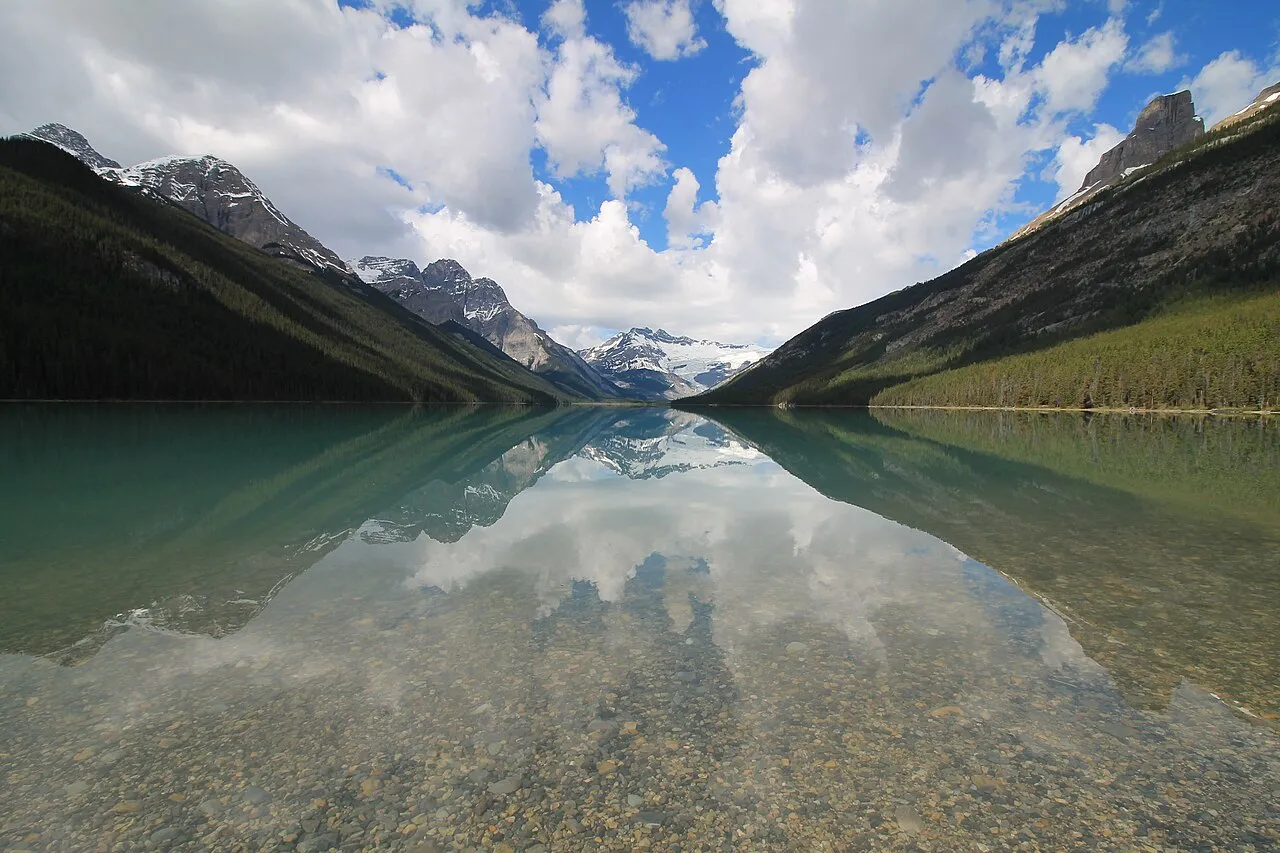
What counts as a natural park in Canada
In Canada, natural parks fall under two orders of government. National parks are federal: they are established under the Canada National Parks Act and administered by Parks Canada. Under section 4 of the Act, they are “dedicated to the people of Canada for their benefit, education and enjoyment” and must be maintained so as to leave them unimpaired for future generations. Their purpose is to protect a representative sample of each of the 39 terrestrial natural regions that Parks Canada has defined for the country.
Alongside national parks proper, the Act provides for “park reserves” (Parks Canada more simply calls them national park reserves). They enjoy the same protection, but are established in areas subject to a claim in respect of Aboriginal rights that the federal government has accepted for negotiation; they remain reserves until that claim is settled. Parks Canada also manages national marine conservation areas, a national urban park (Rouge, in Toronto) and 171 national historic sites, which are not national parks but belong to the same system.
The “regional” equivalent is made up of provincial and territorial parks, governed by the legislation of each province or territory. The terminology can be confusing: in Quebec, provincial parks have been called “national parks” (parcs nationaux) since 2001 (Parc national du Mont-Tremblant, Parc national de la Gaspésie and others), even though they do not come under Parks Canada. Quebec is therefore home to both national parks of Canada, such as Forillon and La Mauricie, and Quebec national parks.
History: from the Banff hot springs to co-managed parks
Long before the parks were created, the lands they protect had been inhabited, travelled and named by First Nations, Inuit and Métis for thousands of years. In the archives, however, the history of Canada's parks begins with a property dispute. In 1883, two brothers, William and Tom McCardell, and a fellow Canadian Pacific Railway worker, Frank McCabe, laid claim with the federal government to the Cave and Basin hot springs at the foot of the Rockies. Ottawa rejected their claim and, by an order in council of November 1885 (November 25, the generally accepted date), set aside an area of about 26 km² around the springs, “reserved from sale or settlement or squatting.”
On June 23, 1887, the Rocky Mountains Park Act enlarged this reserve to 665 km²: it was Canada's first national park, fifteen years after Yellowstone in the United States. The model was as much about tourism as about nature: the transcontinental railway had just reached the Rockies, and the park was meant to attract wealthy visitors. Rocky Mountains Park would be renamed Banff National Park under the 1930 Act. In the same period, other reserves were created along the railway or in the mountains: Yoho and Glacier as early as 1886, Waterton in 1895, Jasper in 1907. In 1904, St. Lawrence Islands Park, now Thousand Islands National Park, became the first Canadian national park east of the Rockies. In 1906, a fenced reserve was established near Edmonton to protect elk; it later received part of the Pablo-Allard bison herd purchased in Montana and would become Elk Island National Park.
In 1911, the Dominion Forest Reserves and Parks Act placed the parks under the authority of a dedicated service, the Dominion Parks Branch, entrusted to James Bernard Harkin, who headed it until 1936. Parks Canada presents its creation as that of the “first national parks service in the world,” and the event was designated a national historic event in 2011. The claim should be understood as follows: it was the first administration devoted specifically to national parks, five years before the U.S. National Park Service (1916), whereas parks already existed elsewhere under other authorities. Under Harkin, the system grew: Mount Revelstoke in 1914, Point Pelee in 1918, Kootenay in 1920, Wood Buffalo in 1922 to save the last wood bison, Prince Albert in 1927, Georgian Bay Islands in 1929.
This expansion had a darker side. In the Rockies, a policy of exclusion took hold soon after Banff was created: Indigenous peoples, notably the Stoney Nakoda, were barred from hunting and gathering on lands they had long used, and families were driven out of the Athabasca Valley when Jasper was established. Parks Canada acknowledges this today: a 2024 evaluation report by the agency states that, beginning in the 19th century, the development of national parks and protected areas disrupted Indigenous peoples' relationships with their lands “through exclusion and colonial injustices.”
The National Parks Act of 1930 gave the system its lasting legal foundation: it dedicated the parks “to the people of Canada” and set out the principle of passing them on unimpaired to future generations, wording carried over into the current Act. The system then spread to Manitoba and eastward: Riding Mountain (officially opened in 1933), Cape Breton Highlands (1936), Prince Edward Island (1937), Fundy (1948) and Terra Nova (1957), Newfoundland's first national park.
The 1960s and 1970s saw the fastest expansion, notably under Jean Chrétien, Minister of Indian Affairs and Northern Development from 1968 to 1974, the department then responsible for parks. They were also the years of the most painful expropriations. At Forillon, on the Gaspé Peninsula, the first national park of Canada in Quebec, created in 1970, about 225 families were expropriated. At Kouchibouguac, in New Brunswick, the federal-provincial agreement of October 13, 1969, provided for the expropriation of the land of 228 households, mostly Acadian, according to Parks Canada; the resistance of Jackie Vautour, who refused to leave until his death in 2021, became a symbol. These conflicts led Parks Canada to give up expropriation as a means of creating parks: the agency says it ended the practice in the 1970s, and historians date the policy change to 1979. On February 14, 2011, the House of Commons unanimously adopted a motion of apology to the people expropriated from Forillon, and Quebec's National Assembly did the same that year.
The same period saw the birth of a distinctly Canadian tool: the national park reserve. In the early 1970s, the federal government began protecting northern lands before Indigenous claims were settled: Kluane, in Yukon, and Nahanni, in the Northwest Territories, were set aside as early as 1972, and the Act was amended in 1974. Also in the early 1970s, Parks Canada adopted a system plan dividing the country into 39 terrestrial natural regions, with the aim of representing each of them with at least one park. In 1978, Nahanni was among the very first sites inscribed on the UNESCO World Heritage List; the Canadian Rocky Mountain Parks followed in 1984. On June 5, 1979, Parks Canada moved from the Department of Indian and Northern Affairs to the Department of the Environment.
From the 1980s onward, northern parks emerged from land claim negotiations. Ivvavik, in Yukon, created in 1984 by the Inuvialuit Final Agreement, was the first national park to result from a comprehensive land claim settlement. On the Pacific coast, the Haida Nation's campaign against logging in the South Moresby archipelago led to the 1988 South Moresby Agreement between Canada and British Columbia, then to the 1993 Gwaii Haanas Agreement between Canada and the Haida Nation: an Archipelago Management Board, made up of equal numbers of representatives from both parties, administers the reserve, while each party maintains its position on ownership of the land. This co-management model would inspire later parks. In 1988, amendments to the Act made the maintenance of ecological integrity a paramount consideration in park management.
In 1998, the Parks Canada Agency Act (assented to on December 3, 1998) made Parks Canada a separate agency. An expert panel on the ecological integrity of the parks, launched the same year, submitted its report in March 2000 and shaped the new Canada National Parks Act, assented to on October 20, 2000: section 8 makes the “maintenance or restoration of ecological integrity” the “first priority of the Minister when considering all aspects of the management of parks.” The national marine conservation areas legislation followed in 2002.
Almost all the parks created over the past two decades rest on agreements with Indigenous nations: Ukkusiksalik in Nunavut (2003), Gulf Islands (2003), Torngat Mountains in Labrador (2008), the expansion of Nahanni to about 30,000 km² (2009), Sable Island (2013), Nááts'ihch'oh (2014), Qausuittuq and the Mealy Mountains (2015). In 2015, Rouge became Canada's first national urban park. In August 2019, Thaidene Nëné National Park Reserve was established with the Łutsël K'é Dene First Nation, and Tallurutiup Imanga National Marine Conservation Area, in Lancaster Sound, was formalized with the Inuit. On July 4, 2024, the establishment agreement for Pituamkek National Park Reserve, signed with the Mi'kmaq of Prince Edward Island, made it Canada's 48th national park. On May 22, 2026, an agreement for a new national marine conservation area reserve, Mia-yaltwa Ha'lidzogm hoon, was signed on British Columbia's Central Coast with six Indigenous nations and the province.
Legal framework
The core statute is the Canada National Parks Act (S.C. 2000, c. 32), current to October 19, 2026, on the federal legislation website and last amended on January 31, 2025. Its main provisions:
- section 4: the parks are dedicated to the people of Canada and must be left unimpaired for future generations;
- sections 5 to 7: a park is established or enlarged by order amending Schedule 1 (parks) or Schedule 2 (park reserves), provided that, for a park, the federal Crown holds clear title free of any encumbrance and, for a park or a reserve alike, the province agrees; the proposal is tabled in Parliament, and the area of a park cannot be reduced by order alone;
- section 8: ecological integrity, the first priority of management;
- section 11: each park must have a management plan, tabled in Parliament and reviewed at least every ten years;
- sections 13 and 14: no disposition or occupation of public lands in a park without authorization, and the power to declare natural areas “wilderness areas”;
- section 17: regulation of traditional renewable resource harvesting activities by Indigenous peoples in certain parks;
- section 26: hunting prohibited, except as provided by the Act;
- Schedules 4 and 5: the seven park communities and the authorized commercial ski areas.
Several parks managed by Parks Canada are not yet listed in the schedules of the Act: the consolidated version current to October 19, 2026, includes neither Pukaskwa, Bruce Peninsula, the Mealy Mountains nor Pituamkek. Since the Act defines a park or park reserve as an area “named and described” in Schedule 1 or 2, these four places are managed by Parks Canada as national parks without yet being, in law, parks or park reserves within the meaning of the Act.
The system also rests on the Parks Canada Agency Act (S.C. 1998, c. 31), the Canada National Marine Conservation Areas Act (S.C. 2002, c. 18), the Rouge National Urban Park Act (S.C. 2015, c. 10, assented to on April 23, 2015, and in force on May 15, 2015) and the Species at Risk Act. Land claim agreements, protected by the Constitution, set the boundaries, harvesting rights and co-management bodies of several northern parks.
Each province has its own legislation: in Quebec, the Parks Act (Loi sur les parcs); in Ontario, the Provincial Parks and Conservation Reserves Act, 2006, section 3 of which also makes the maintenance of ecological integrity the first priority; in British Columbia, the legislation on provincial parks and conservancies.
Types of parks
The federal system distinguishes several categories:
- national park: a protected area listed in Schedule 1 of the Act, representative of a natural region;
- national park reserve: the same protection, pending settlement of an Indigenous claim (Schedule 2); Kluane is both a national park and a national park reserve;
- national marine conservation area (NMCA) and NMCA reserve: marine or freshwater areas where sustainable fishing remains possible but mining and oil and gas development are prohibited; Fathom Five and the Saguenay–St. Lawrence Marine Park, the latter co-managed with Quebec, belong to this group;
- national urban park: Rouge, in the Greater Toronto Area, the only example to date.
The provinces have their own categories: provincial parks (classified in Ontario by purpose: wilderness, nature reserve, cultural heritage, recreational and so on), conservation reserves, ecological reserves, British Columbia's conservancies, and Quebec's national parks. To these are added Indigenous Protected and Conserved Areas (IPCAs), designated and managed by Indigenous nations, often in connection with a federal or provincial park, as at Thaidene Nëné.
How many parks?
According to Parks Canada's official national parks page (modified September 17, 2026), Canada has 37 national parks and 11 national park reserves, for a total of 48 parks, representing 31 of the 39 terrestrial natural regions and protecting about 343,377 km². The agency's 2026–27 Departmental Plan gives a figure of 353,086 km² for national parks; the discrepancy is not explained.
Parks Canada also administers 5 national marine conservation areas covering about 123,490 km² (official page updated in November 2025), one national urban park and 171 national historic sites. An agency news release of May 28, 2026, counts six of them, without naming them: the sixth is probably the Mia-yaltwa Ha'lidzogm hoon reserve, whose establishment agreement had just been signed on May 22 but which has not yet been established under the Act. According to the Departmental Plan, in December 2024 Parks Canada administered 3.51% of the country's land and inland waters and 2.12% of its oceans.
For provincial parks, the figures vary from province to province. Quebec has 28 national parks, plus the Saguenay–St. Lawrence Marine Park, covering just over 44,000 km², or almost 3% of its territory (Government of Quebec, June 30, 2026). Ontario has 344 provincial parks covering about 8.3 million hectares and 306 conservation reserves (provincial announcement of July 2026). British Columbia has more than 1,000 protected areas covering over 14 million hectares, or 14.7% of the province (BC Parks, January 2026).
The Parkavela atlas currently features 47 pages on Canadian national parks and reserves; this number reflects the atlas's progress, not the official count.
Map
The Canada page of the atlas maps the national parks and reserves featured in Parkavela, and the world map shows where they lie in relation to the parks of the neighbouring United States. It reveals the contrast that shapes the system: in the south, parks that are often small and busy, close to major cities and the Trans-Canada Highway; north of the 60th parallel, immense roadless territories, reachable by plane or boat, which account for most of the protected area. Every province and territory has at least one national park.
Complete list
The directory of Canada's national parks gives the up-to-date list of atlas pages. The 48 parks and reserves listed by Parks Canada are distributed as follows:
- British Columbia: Glacier, Mount Revelstoke, Yoho, Kootenay, and the reserves Pacific Rim, Gulf Islands and Gwaii Haanas
- Alberta: Banff, Jasper, Elk Island, Waterton Lakes and Wood Buffalo, shared with the Northwest Territories
- Saskatchewan: Prince Albert and Grasslands
- Manitoba: Riding Mountain and Wapusk
- Ontario: Pukaskwa, Bruce Peninsula, Georgian Bay Islands, Point Pelee and Thousand Islands
- Quebec: La Mauricie, Forillon and the Mingan Archipelago reserve
- New Brunswick: Fundy and Kouchibouguac
- Nova Scotia: Cape Breton Highlands, Kejimkujik and the Sable Island reserve
- Prince Edward Island: Prince Edward Island and the Pituamkek reserve
- Newfoundland and Labrador: Gros Morne, Terra Nova, Torngat Mountains and the Akami-Uapishkᵘ-KakKasuak-Mealy Mountains reserve
- Yukon: Kluane (park and reserve), Ivvavik and Vuntut
- Northwest Territories: Aulavik, Tuktut Nogait and the reserves Nahanni, Nááts'ihch'oh and Thaidene Nëné
- Nunavut: Auyuittuq, Sirmilik, Quttinirpaaq, Ukkusiksalik and Qausuittuq
How a park is created
Parks Canada describes the creation of a national park in five steps: identifying representative natural areas in a region not yet represented; selecting a potential park area; assessing the park's feasibility, in consultation with the public, Indigenous nations and other partners; negotiating the necessary agreements; and finally, establishing the park under the Canada National Parks Act. Each step has its own timeline, a project can stall along the way, and interim protection against development applies between the feasibility study and establishment.
Parks Canada cannot create a park on its own: the Act requires that the lands belong to the federal Crown, free of encumbrances, and that the province agree. In practice, a new park brings together the federal government, the province or territory and one or more Indigenous nations. Pituamkek is a recent example: feasibility study launched in August 2019, public consultation in 2021, memorandum of understanding signed on January 19, 2022, establishment agreement on July 4, 2024. Such timelines are often measured in decades: a first proposal for a park on the East Arm of Great Slave Lake, which became Thaidene Nëné in 2019, dates back to the late 1960s; for lack of sufficient support, the federal government merely withdrew 7,340 km² from disposal in 1970 under the Territorial Lands Act.
Managing agencies
The Parks Canada Agency, created in 1998, reports to the Minister of the Environment. Its 2026–27 Departmental Plan provides for 5,683 full-time equivalents. The system is organized into regional field units, and each park is headed by a superintendent.
Co-management with Indigenous peoples has become the norm in many parks. Parks Canada's 2024–25 Departmental Results Report counts 23 active cooperative management structures at natural heritage places. Gwaii Haanas is governed by an Archipelago Management Board with equal representation; the Act provides for a Wildlife Advisory Board at Wood Buffalo, responsible for the hunting, fishing and trapping permits of the Cree of Fort Chipewyan; at Pituamkek, the 2024 agreement establishes shared governance with the Mi'kmaq.
Provincial parks have their own managers: in Quebec, Sépaq manages 23 national parks located south of the territories covered by the northern agreements, the Kativik Regional Government manages 4 in Nunavik, and the Cree Nation of Mistissini operates Nibiischii National Park; in Ontario, Ontario Parks; in British Columbia, BC Parks.
Funding
Parks Canada is funded mainly by appropriations voted by Parliament, supplemented by entry, camping and other service fees. Its actual spending amounted to $1,368,745,848 in 2024–25; for 2026–27, the Departmental Plan forecasts spending of $1,293,436,573, including $1,131,244,167 for its core responsibility (protecting and presenting heritage places), and reductions of $24,566,000.
Major conservation programs also draw on dedicated envelopes: the 2021 federal budget funded the “Enhanced Nature Legacy” initiative with about $2.3 billion over five years, shared among Environment and Climate Change Canada, Parks Canada and Fisheries and Oceans Canada. The federal government also supports “Project Finance for Permanence” initiatives led by Indigenous nations: in the Northwest Territories, the “Our Land for the Future” initiative brings together $300 million in federal funding and $75 million from other sources (grant agreement of July 2025).
In 2025 and 2026, the government offered free summer admission to Parks Canada sites with the “Canada Strong Pass” (June 19 to September 7, 2026), along with a 25% discount on camping.
Missions
The Parks Canada Agency Act tasks the agency with implementing federal policy on national parks, national historic sites, national marine conservation areas and other protected heritage places. Its preamble lists the maintenance or restoration of the ecological integrity of national parks among the national interests.
In practice, its missions come down to four areas: protecting and restoring ecosystems, measured by more than 600 scientific indicators; completing the system so that every natural region is represented; welcoming visitors and helping them discover nature and history; and advancing reconciliation with Indigenous peoples through co-management, Indigenous Guardians programs and the return of traditional uses. The 2026–27 plan sets a target: at least 92% of park ecosystems in good or fair condition by March 2030.
Regulations
In a national park, hunting is prohibited (section 26 of the Act), as are commercial logging and mining, since public lands may not be disposed of or used without authorization under the Act. Recreational fishing requires a national park fishing permit. Each park's management plan sets out zoning, from special preservation to park services, and some wild areas can be declared wilderness areas.
Exceptions are governed by the Act. Indigenous peoples may carry out traditional harvesting activities in parks where a treaty, a land claim agreement or Aboriginal rights provide for it: this is the case in the large northern parks, at Wood Buffalo, Wapusk, Gros Morne and the Mingan Archipelago. The seven communities located in parks (Banff, Lake Louise, Jasper, Field, Waterton, Waskesiu and Wasagaming) have their area and commercial zones capped by Schedule 4, and the authorized commercial ski areas are listed in Schedule 5.
Visitor rules are tightening in the busiest areas: in Banff, the Moraine Lake road has been closed to personal vehicles since 2023, with access by shuttle or commercial transportation.
Local life and economic activity
National parks are not empty of people. Banff and Jasper are real towns with municipal governments, and Lake Louise, Field, Waterton, Waskesiu and Wasagaming are resort villages. In the North, the parks are closely tied to neighbouring Inuit, Dene and Gwich'in communities, who hunt and fish there and take part in their management.
According to a study published by Parks Canada on May 28, 2026, covering the 2025–26 fiscal year, visitors to parks and historic sites spent $6.5 billion in communities in or near the sites; the direct contribution to gross domestic product is estimated at $5.9 billion, with about 59,000 full-time jobs, $3.4 billion in labour income and $839 million in tax revenue.
This economy is vulnerable. The Jasper wildfire of July 2024 destroyed about a third of the town's buildings (358 of 1,113 structures according to Parks Canada's initial assessment, more than 400 properties and structures according to the following one), as well as many park facilities, and insured damage is estimated at $1.23 billion, making it the second-costliest wildfire in Canadian history according to the federal government.
Tourism
Parks Canada sites received 23.2 million visits in 2024–25, a decline from the previous year due mainly to lower visitation at Jasper after the fire, then 26.2 million visitors in 2025–26 according to the May 2026 news release. In summer 2025, free summer admission increased visitation by 13% compared with the same period in 2023.
Banff remains by far the most visited park: 4,515,168 visitors in 2025, a record, up 7.14% from 2024, according to the park's annual report. Parks Canada's shuttles to Lake Louise and Moraine Lake recorded 1,069,351 rides. This tourist pressure, concentrated on a few sites in the Rockies, contrasts with the low visitation of the Arctic parks, most of which can be reached only by plane.
Provincial parks play an equally important role in close-to-home tourism, from Algonquin Park in Ontario to Parc national du Mont-Tremblant in Quebec.
Biodiversity
The system covers a range of environments rare for a single country: the Carolinian forest and marshes of Point Pelee, the mixed-grass prairie of Saskatchewan, the temperate rainforest of the Pacific coast, the high mountains and glaciers of the Rockies and the Saint Elias Mountains, the boreal forest of the Canadian Shield, the coasts and cliffs of the Atlantic, and the tundra and polar deserts of the Arctic. The 48 parks represent 31 of the 39 terrestrial natural regions; the 2024–25 report states that only 6 of the 29 marine regions are represented by a national marine conservation area.
Parks Canada tracks the health of its ecosystems through an ecological integrity monitoring program. In 2024–25, ecological integrity was maintained or improved for 80% of monitored ecosystems. In Banff, for example, 74 non-native plant species are known, 36 of which are actively managed, and in 2025 the park drew up a list of 53 conservation measures for 20 species at risk.
The large northern parks protect ecosystems that are still intact, with their large predators and migrations. Wood Buffalo encompasses much of the Peace-Athabasca Delta, a wetland of international importance, and Thaidene Nëné extends to the treeline, east of Great Slave Lake.
Flagship species
A few species sum up the history of the system on their own:
- bison: the wood bison prompted the creation of Wood Buffalo, which according to Parks Canada is now home to the largest herd of wood bison in the world; the plains bison was saved in part at Elk Island, reintroduced in Grasslands National Park and then in Banff, where 16 bison from Elk Island were transferred on February 1, 2017, with the herd exceeding 100 animals in 2023 (where to see the American bison);
- whooping crane: Wood Buffalo is home to its last natural nesting area, the population wintering in Texas;
- grizzly bear: in Banff, the estimated population rose from about 64 bears (2012–2014) to 71 (2021–2023), but road and rail collisions remain a major cause of death;
- mountain caribou: in Jasper, the Maligne herd has disappeared, and Parks Canada has launched a captive breeding program to bolster the remaining herds; the first release took place on June 24, 2026, in the Tonquin Valley: five caribou from the breeding centre, four yearling males and one adult male;
- polar bear: Wapusk, on Hudson Bay, protects a major maternity denning area;
- muskox, snowy owl and snow goose in the Arctic parks (muskox, snowy owl, snow goose);
- black-footed ferret: 34 animals were released in Grasslands National Park in October 2009, the first reintroduction of the species in Canada, but it has not been observed there since 2013;
- birds of lakes and coasts: the common loon, symbol of Canada's lakes, the bald eagle and the northern gannet of the cliffs of the Gulf of St. Lawrence (common loon, bald eagle, northern gannet);
- carnivores of the boreal forest and the tundra, from the wolf to the wolverine (grey wolf, wolverine).
Major parks
- Banff (Alberta, 1885): the oldest, at the heart of the Canadian Rocky Mountain Parks inscribed as a World Heritage Site in 1984, with its glacial lakes, the town of Banff and Lake Louise.
- Jasper (Alberta, 1907): the largest park in the Canadian Rockies, about 11,228 km² according to the Act, rebuilding after the 2024 fire.
- Wood Buffalo (Alberta and Northwest Territories, 1922): Canada's largest national park, a World Heritage Site, refuge of the wood bison and the whooping crane.
- Kluane (Yukon): the country's highest mountains, including Mount Logan, and vast icefields.
- Nahanni (Northwest Territories): the canyons of the South Nahanni River and Virginia Falls, one of the first natural World Heritage Sites in 1978.
- Gwaii Haanas (British Columbia): rainforest and Haida culture, a testing ground for co-management since 1993.
- Gros Morne (Newfoundland): fjords and exposed rocks from the Earth's mantle, a World Heritage Site.
- Forillon and La Mauricie (Quebec, 1970): the first two national parks of Canada in Quebec.
- Pacific Rim (British Columbia): beaches and coastal forest on Vancouver Island.
- Quttinirpaaq (Nunavut): the northernmost park, on Ellesmere Island.
- Thaidene Nëné (Northwest Territories, 2019): a symbol of the new reserves created with Indigenous nations.
- Point Pelee (Ontario, 1918): tiny but remarkably rich, a hotspot for bird and monarch butterfly migration.
Records
- Oldest: Banff, whose hot springs reserve dates from 1885 and the park from 1887.
- Largest: Wood Buffalo, “Canada's largest national park” according to Parks Canada, covering about 4.5 million hectares according to UNESCO.
- Second largest: Quttinirpaaq, at 37,775 km², which is also the country's northernmost park.
- Smallest: Georgian Bay Islands, “Canada's smallest national park” according to its 2022 management plan (14 km²), established in 1929.
- Highest: Kluane, home to Mount Logan (5,959 m), Canada's highest peak.
- Most visited: Banff, with 4,515,168 visitors in 2025.
- Most recent: Pituamkek, on Prince Edward Island, the 48th national park (agreement of July 4, 2024).
- First park created by a land claim agreement: Ivvavik (1984).
- First national urban park: Rouge (2015).
- First international peace park: Waterton-Glacier, created in 1932 with Glacier National Park in Montana.
- Oldest provincial park: Algonquin, created by an Ontario act of May 1893; The Canadian Encyclopedia, however, traces the first provincial park back to Queen Victoria Park in Niagara (1885). In Quebec, Mont-Tremblant Park and Laurentides Park were created on January 12, 1895; in British Columbia, Strathcona dates from 1911.
Threats
Climate change is the most pervasive threat. It lengthens fire seasons, favours forest pests, causes the glaciers of the Rockies and the Saint Elias Mountains to retreat, and transforms the sea ice on which polar bears and Arctic ecosystems depend. The 2024 Jasper fire, contained at about 32,700 ha, exposed the vulnerability of the parks and of the communities within them. In response, Parks Canada is stepping up prescribed burns and fireguards: in 2025, in Banff, more than 100 ha were thinned around the town.
Fragmentation by roads and railways weighs on large wildlife. In Banff, the Trans-Canada Highway was fully twinned to four lanes over 82 km, with work completed in January 2014, along with fencing and wildlife overpasses and underpasses that have reduced wildlife collisions by more than 80% according to Parks Canada; road and rail mortality among grizzly bears nonetheless remains a concern.
Overcrowding affects the star attractions of the Rockies, with traffic jams, full parking lots and disturbance of wildlife. Invasive species, both plant and aquatic, are spreading. Finally, pressures from outside the parks matter as much as those from within: at Wood Buffalo, the World Heritage Committee asked Canada in 2017 for an action plan, submitted on February 1, 2019, with more than 140 measures, to address the effects of climate change and upstream development on the Peace-Athabasca Delta.
Several populations remain fragile: mountain caribou, whooping crane, black-footed ferret (extirpated from the wild in Canada according to COSEWIC, 2021), and species of the prairies and of Carolinian habitats.
Conservation policies
Canada has committed to conserving 25% of its lands and oceans by 2025 and 30% by 2030, a target taken up in the Kunming-Montreal Global Biodiversity Framework, adopted in Montreal in December 2022, and in Canada's 2030 Nature Strategy, published by the federal government in June 2024. The official tally falls short: as of December 31, 2025, 14.0% of land and freshwater (including 12.9% in protected areas) and 15.5% of marine territory (including 11.4% in protected areas) were conserved. The 2025 target was not met, and 16.0 percentage points remain to be gained on land and 14.5 points at sea to reach the 2030 target.
Parks Canada aims to contribute at least 6% of land and 6% of marine territory by December 2030. In 2021, the agency committed to creating 10 new national marine conservation areas and 4 new freshwater areas by 2030, co-managed with Indigenous communities.
Current policies draw on several levers: active restoration (bison reintroduction, prescribed burns, wildlife crossings), Indigenous Guardians programs, recognition of Indigenous Protected and Conserved Areas, and Project Finance for Permanence initiatives, which combine public and philanthropic funds to secure the long-term management of vast territories. The provinces have their own commitments: Quebec has pledged to protect 30% of its territory by 2030.
New projects
As of October 29, 2026, Parks Canada's page on new national parks lists four projects under way, in addition to other projects announced by the agency or its partners:
- South Okanagan-Similkameen (British Columbia): proposed national park reserve in one of the regions of the country richest in species at risk; memorandum of understanding with the province and the Syilx Okanagan Nation in July 2019, followed by negotiation, still under way, of an establishment agreement with the Lower Similkameen and Osoyoos Indian Bands.
- Seal River Watershed (Manitoba): proposed national park reserve; a joint proposal by the watershed's First Nations alliance, Manitoba and the federal government, presented on April 17, 2026, provides for about one third of the area to become a national park reserve and two thirds a provincial park.
- Teetł'it Gwinjik, Peel River watershed (Yukon): proposed national park.
- Tū Łī́dlini, Ross River area (Yukon): potential protected area under study.
- Manitoba Lowlands: feasibility study included in the 2026–27 plan.
- Ojibway National Urban Park, in Windsor (Ontario): in spring 2026 the City signed an agreement in principle with Parks Canada; the proposed area covers 444 ha, and designation still requires consultations and an agreement among the partners.
- Mia-yaltwa Ha'lidzogm hoon (British Columbia): a national marine conservation area reserve on the Central Coast, whose agreement was signed on May 22, 2026; Parks Canada estimates that it could cover up to 6,700 km², with legal establishment expected to take several years.
In the provinces, Nibiischii National Park in Quebec, operated by the Cree Nation of Mistissini, illustrates the arrival of parks managed by Indigenous nations in provincial systems.
The future of the parks
Canada's system approaches the end of the decade with three major tasks. The first is to complete it: 8 of the 39 terrestrial natural regions and most marine regions still have no representative park or marine conservation area, often in areas coveted for agriculture, industry or resources. The second is adapting to climate change: parks designed to protect landscapes thought to be unchanging must now manage more frequent fires, retreating glaciers and species moving north or upslope. The third is governance: almost all current projects involve Indigenous nations, and the line between national park, reserve, Indigenous protected area and provincial park is becoming more fluid.
On top of these challenges comes the management of record visitation in a few southern parks, which is pushing Parks Canada toward shuttles, reservations and quotas. The 30% by 2030 target, still distant in light of the end-of-2025 figures, will depend as much on provincial systems and Indigenous areas as on new federal parks.
Sources and official data
- Parks Canada, “National parks” page (number of parks and reserves, area, natural regions): https://parcs.canada.ca/pn-np
- Parks Canada, creating new national parks and projects under way: https://parks.canada.ca/pn-np/cnpn-cnnp
- Parks Canada, national marine conservation areas: https://parcs.canada.ca/amnc-nmca
- Parks Canada, 2026–27 Departmental Plan: https://parks.canada.ca/agence-agency/bib-lib/plans/dp/plan-ministeriel-2026-2027-departmental-plan
- Parks Canada, 2024–25 Departmental Results Report: https://parks.canada.ca/agence-agency/bib-lib/rapports-reports/rmr-dpr/2024-2025
- Parks Canada, news release of May 28, 2026, on economic impact: https://www.canada.ca/fr/parcs-canada/nouvelles/2026/05/parcs-canada-publie-son-rapport-mis-a-jour-sur-son-impact-sur-leconomie-canadienne.html
- Canada National Parks Act (S.C. 2000, c. 32): https://laws-lois.justice.gc.ca/fra/lois/n-14.01/
- Parks Canada Agency Act (S.C. 1998, c. 31): https://laws-lois.justice.gc.ca/fra/lois/p-0.4/
- Canada National Marine Conservation Areas Act (S.C. 2002, c. 18): https://laws-lois.justice.gc.ca/fra/lois/c-7.3/
- Parks Canada, Cave and Basin National Historic Site, “Banff's legacy”: https://parks.canada.ca/lhn-nhs/ab/caveandbasin/culture/heritage-legacy
- Parks Canada, Directory of Federal Heritage Designations, establishment of the Dominion Parks Branch: https://www.pc.gc.ca/apps/dfhd/page_nhs_eng.aspx?id=12876
- Parks Canada, passes for people expropriated from Forillon: https://parcs.canada.ca/pn-np/qc/forillon/visit/permis-permits
- Parks Canada, history of the establishment of Gwaii Haanas: https://parks.canada.ca/pn-np/bc/gwaiihaanas/info/histoire-history
- Parks Canada, Pituamkek timeline: https://parcs.canada.ca/pn-np/cnpn-cnnp/pituamkek/chronologie-timeline
- Parks Canada, Banff National Park 2025 annual report: https://parks.canada.ca/pn-np/ab/banff/info/gestion-management/involved/plan/2025
- Parks Canada, 2024 Jasper wildfire: https://parcs.canada.ca/pn-np/ab/jasper/visit/feu-alert-fire/feudeforet-jasper-wildfire
- Parks Canada, evaluation of the Indigenous Guardians Initiative (2024): https://pcweb2.azureedge.net/-/media/agen/bib-lib/rapports-reports/evaluation/examens-review/2025/evaluation-indigenous-guardians-initiative-2024.pdf
- Environment and Climate Change Canada, “Canada's conserved areas” indicator: https://www.canada.ca/fr/environnement-changement-climatique/services/indicateurs-environnementaux/aires-conservees.html
- Canada's 2030 Nature Strategy: https://www.canada.ca/fr/environnement-changement-climatique/services/biodiversite/strategie-nature-2030-canada.html
- Government of Quebec, national parks network: https://www.quebec.ca/agriculture-environnement-et-ressources-naturelles/protection-de-lenvironnement/reseau-parcs-nationaux/proteger-rendre-accessible-territoire
- BC Parks, types of parks and protected areas: https://bcparks.ca/about/our-mission-responsibilities/types-parks-protected-areas/
- Ontario, Provincial Parks and Conservation Reserves Act, 2006: https://www.ontario.ca/fr/lois/loi/06p12
- UNESCO, World Heritage List (Canada): https://whc.unesco.org/fr/etatsparties/ca