Poland · Terrestrial
Kraków Valleys Landscape Park
Landscape park of 20,686 hectares in Poland, established in 1981.
Overview
Landscape park of 20,686 hectares in Poland, established in 1981.
Kraków Valleys Landscape Park is located in Poland (Europe). It is a predominantly terrestrial area. Established in 1981, it covers about 20,686 hectares.
Protections and designations
Natura 2000 · habitats (SAC) · 2 sites
- Czerna PLH120034
- Dolinki Jurajskie PLH120005
Protected as a landscape park. International labels and designations: Natura 2000 network (2 sites). Key dates: established in 1981 and first Natura 2000 site under the Habitats Directive in 2008.
In our collections
Timeline
-
1981
Established
-
2008
First Natura 2000 site under the Habitats Directive 2 such sites designated up to 2009
Sources: Wikidata (CC0) for establishment and international labels; EEA Natura 2000 database (CC-BY 4.0) for site designation dates.
Frequently asked questions
Where is Kraków Valleys Landscape Park?
In Poland (Europe). Representative point: 50.1803° N, 19.6971° E.
How large is Kraków Valleys Landscape Park?
About 20,686 hectares (207 km²). It is the 45th largest of the 121 landscape parks in Poland covered by Parkavela.
When was Kraków Valleys Landscape Park established?
In 1981.
What habitats and landscapes does Kraków Valleys Landscape Park include?
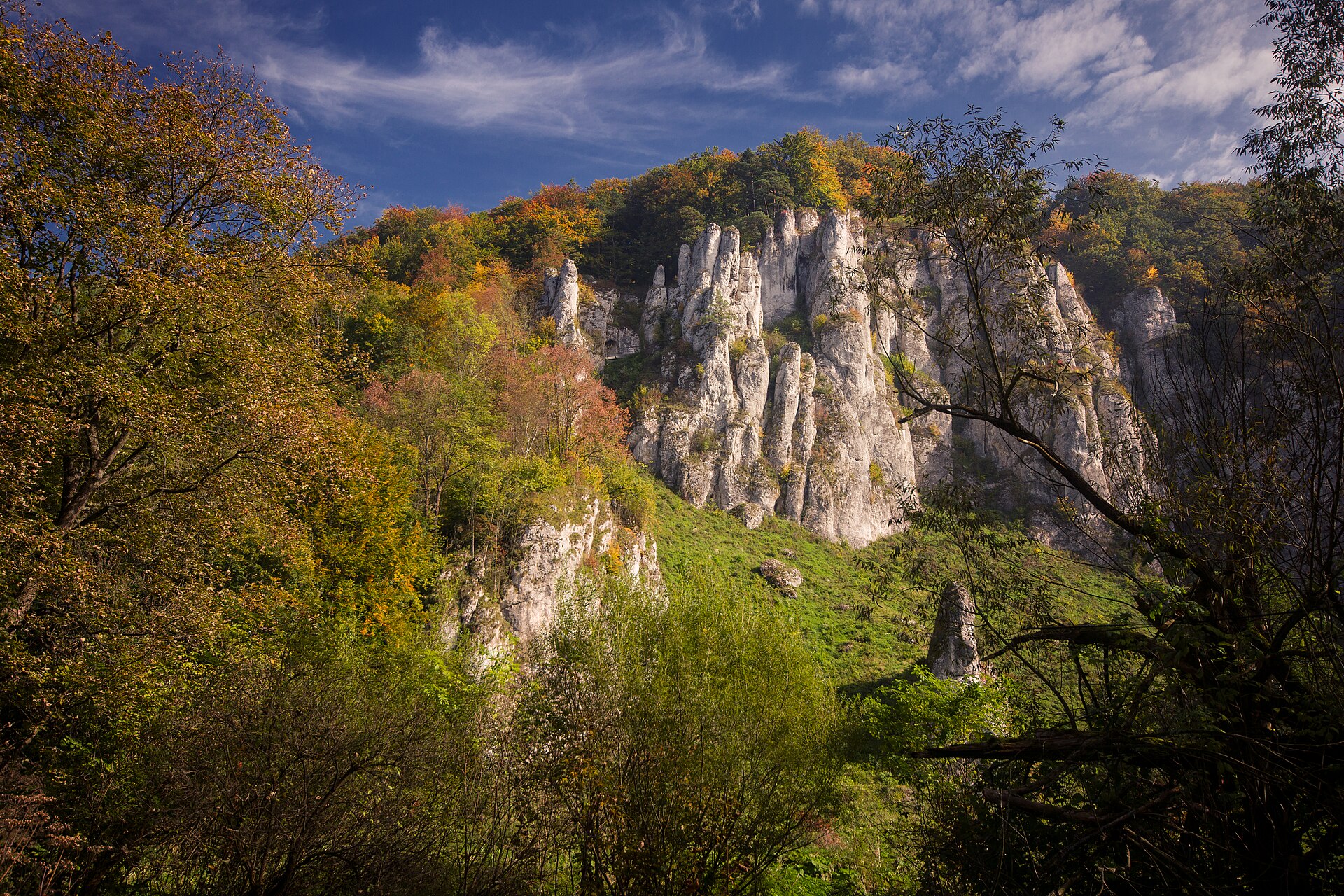
A terrestrial area, with forests.
What rocks lie beneath Kraków Valleys Landscape Park?
According to the European 1:1 million geological map (EGDI), the bedrock consists mainly of clays and silts (63% of sampled points), conglomerates and breccias (13%) and sands and gravels (13%). These are mostly sedimentary rocks. The geological units date mainly from the Quaternary (75% of sampled points).
What is the highest point of Kraków Valleys Landscape Park?
Grodzisko, at 513 m (OpenStreetMap).
What are the main summits of Kraków Valleys Landscape Park?
Grodzisko (513 m), Ostrońska Góra (483 m), Wiucha (483 m), Eliaszówka (480 m) and Dębowa Góra (471 m) (OpenStreetMap).
Which international labels apply to Kraków Valleys Landscape Park?
Natura 2000 network (2 sites).
When is the best time to visit Kraków Valleys Landscape Park?
Mildest period: from June to August, with average temperatures of 16 to 19 °C.
Is there snow in Kraków Valleys Landscape Park?
Yes. According to NASA's MODIS satellites (2015–2025 average), snow covers most of the site in January, with about 40 snow-covered days a year on average.
What is there to see in Kraków Valleys Landscape Park?
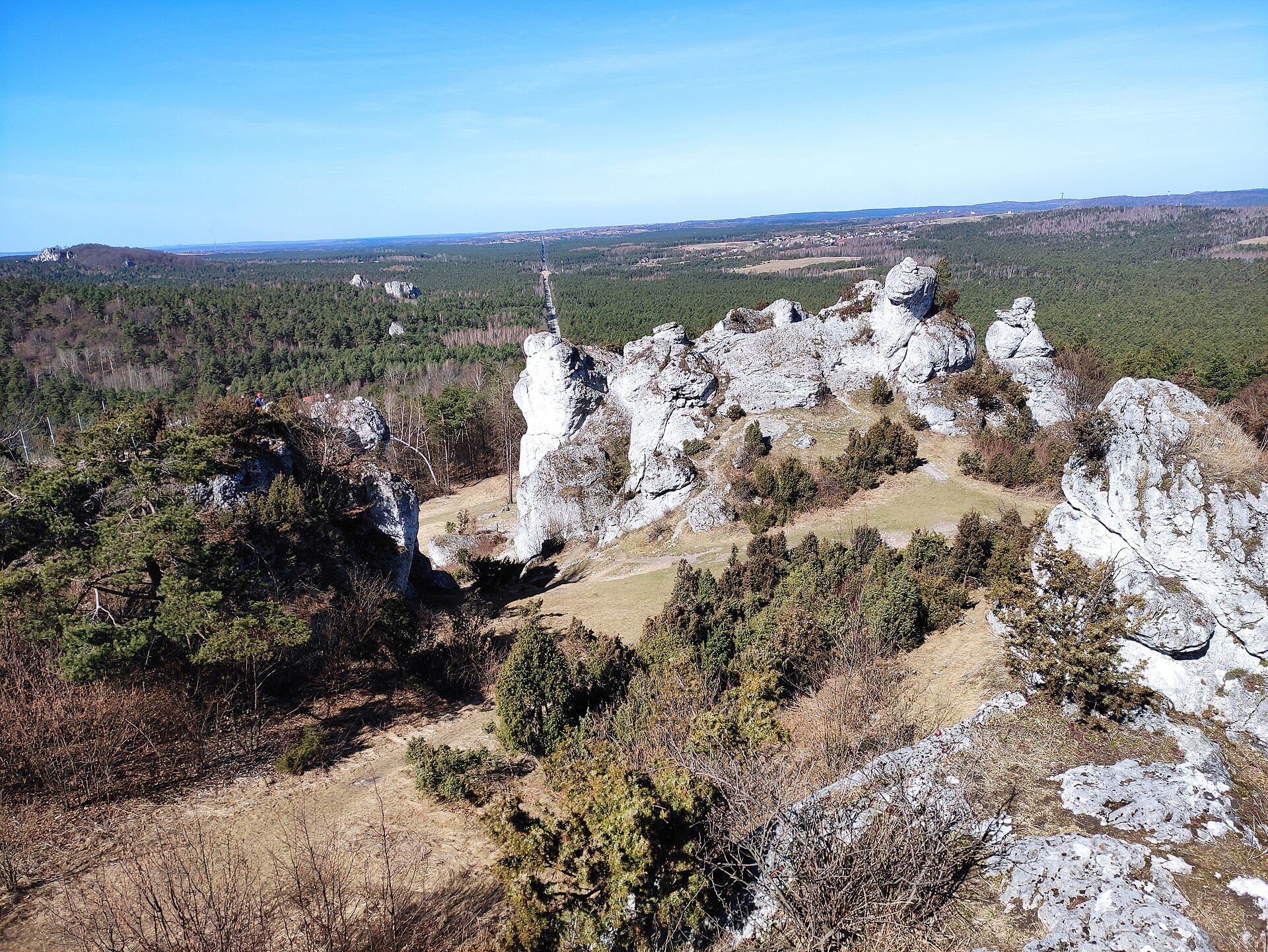
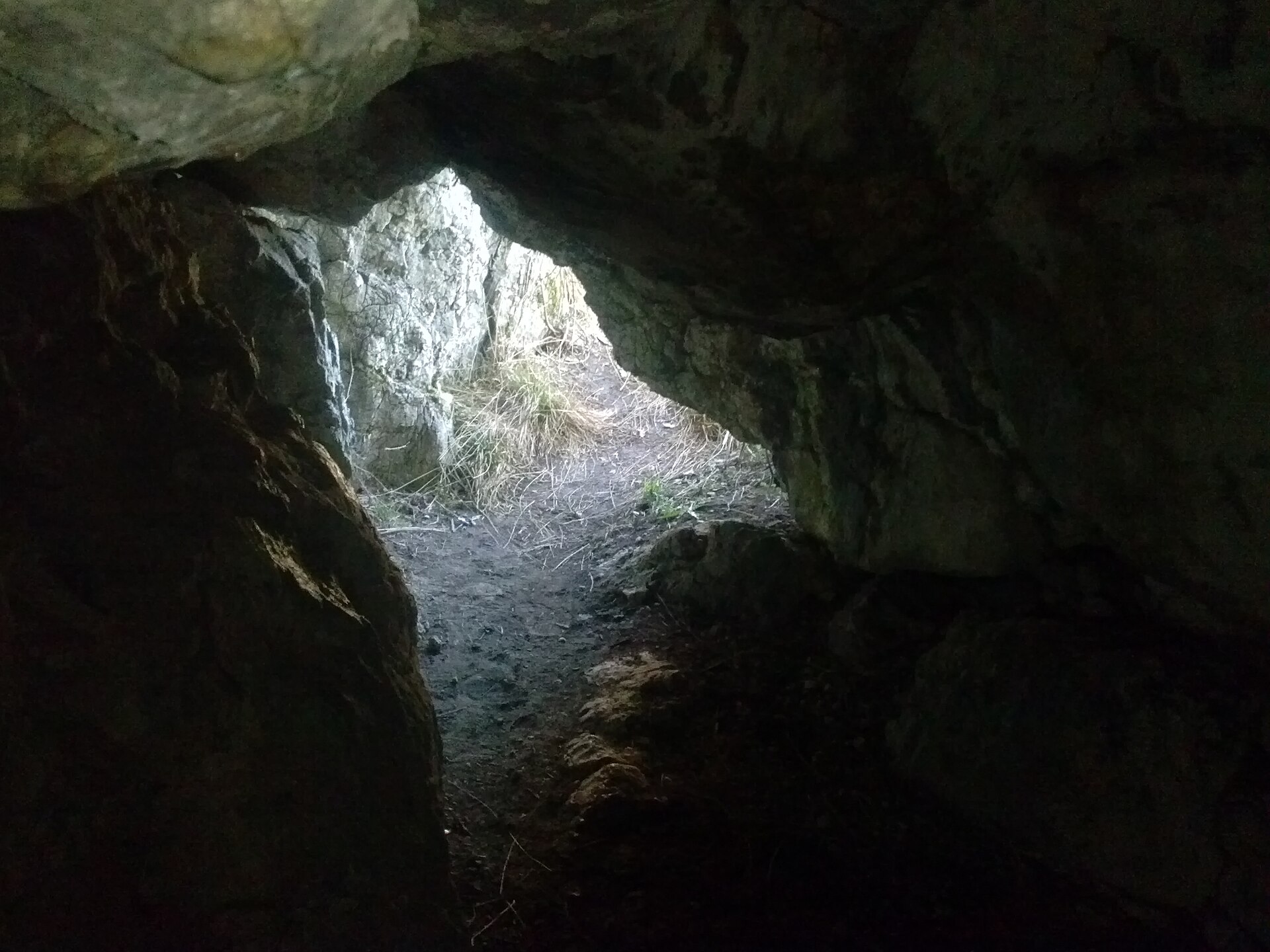
29 viewpoints, 5 waterfalls, 2 lakes and ponds and 42 caves, including Paryż Górny, Szum, Księży Staw and Jaskinia Racławicka (Grzmiączka) (446 m) (OpenStreetMap).
Where can I stay in Kraków Valleys Landscape Park?
1 mountain hut and 6 campsites, including Kluczwoda Kemping and Pole namiotowe Brandysówka (OpenStreetMap).
Are there historic monuments in Kraków Valleys Landscape Park?
Yes. According to Wikidata, 77 monuments listed in the Polish register of monuments stand within the boundary. For example: “Cmentarz choleryczny (grupa fortowa TONIE) w Krakowie” in Kraków, “Brama wjazdowa” in Garlica Murowana and “Dwór w Modlnicy” in Modlnica.
What is the nearest large city to Kraków Valleys Landscape Park?
Nearest towns of over 50,000 people, as the crow flies: Kraków (6 km) and Jaworzno (14 km). Nearest airport: John Paul II International Airport Kraków-Balice (KRK), about 7 km away.
How can I reach Kraków Valleys Landscape Park by train?
The nearest railway station is Bukowno, less than 1 km from the site boundary.
Where can I get visitor information on site?
Punkt Informacji Turystycznej MSiT.
Are there waymarked hiking trails in Kraków Valleys Landscape Park?
Yes. Waymarked hiking routes listed in OpenStreetMap: 22, including Szlak Maryjny, Via Regia Droga św. Jakuba, Zalew Chechło and Olkusz Stary Cmentarz. The “M02-06 · Szlak Maryjny - etap 9.” route runs for about 21 km through the site, with some 180 m of ascent on its longest section.
Which species can be seen in Kraków Valleys Landscape Park?
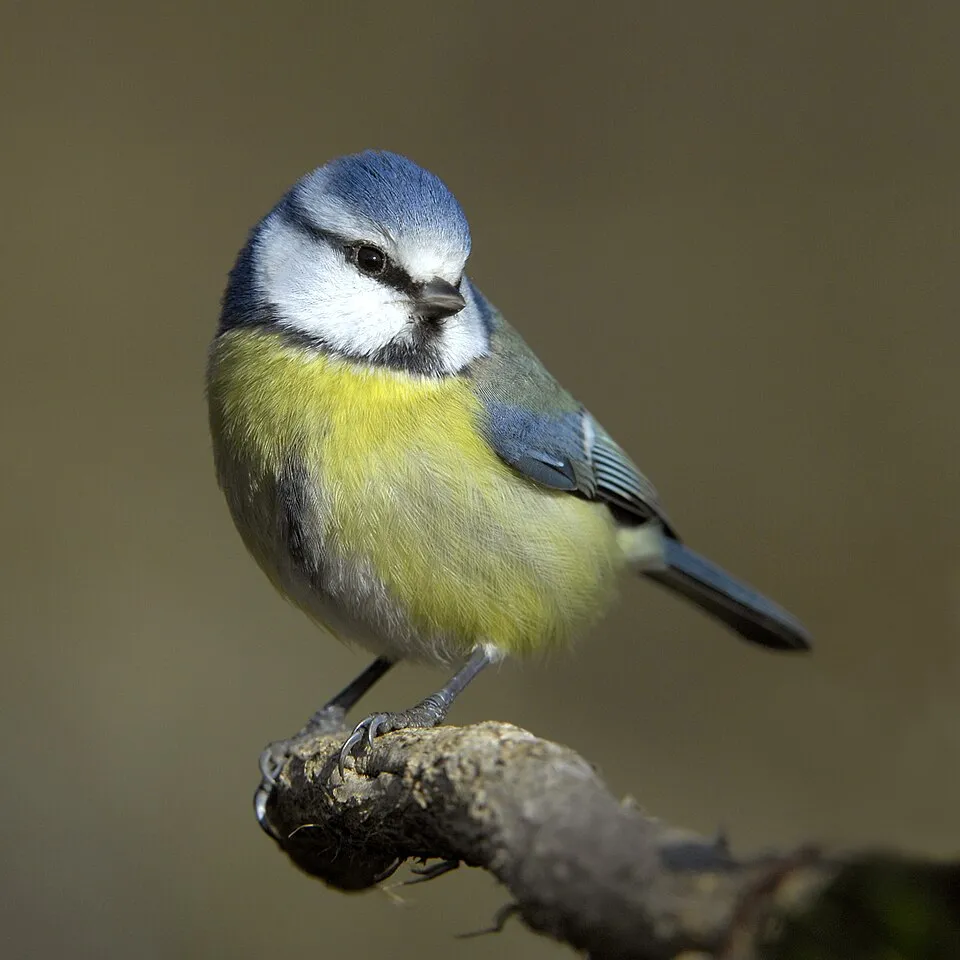
Among the species most often recorded on GBIF are Turdus merula (Common Blackbird), Parus major (Great tit), Dendrocopos major (Great Spotted Woodpecker) and Cyanistes caeruleus (Eurasian blue tit).
© OpenStreetMap
Download the boundary: GeoJSON · GPX Boundary © OpenStreetMap contributors (ODbL).
Geography
The representative point of the site lies at around 415 m above sea level. Over the 1996–2025 period, the mean annual temperature is about 8.2 °C and total precipitation reaches roughly 828 mm per year. The warmest month is usually July, the coolest January, and the wettest July. According to the European 1:1 million geological map (EGDI), the bedrock consists mainly of clays and silts (63% of sampled points), conglomerates and breccias (13%) and sands and gravels (13%). These are mostly sedimentary rocks. The geological units date mainly from the Quaternary (75% of sampled points).
Area
- Area
- 20,686 ha
- Elevation
- 415 m
- Snow cover
- ≈ 40 days a year
- Coordinates
- 50.1803, 19.6971
Bedrock
- Clays and silts 63 %
- Conglomerates and breccias 13 %
- Sands and gravels 13 %
- Limestones 6 %
- Metamorphic rocks 6 %
Sedimentary rocks 94 % · Metamorphic rocks 6 % · Main age: Quaternary (75%)
Source: EGDI 1:1M geological map (EuroGeoSurveys and national geological surveys), CC BY 4.0 · 16 sampled points within the site.
Main summits
- Grodzisko513 m
- Ostrońska Góra483 m
- Wiucha483 m
- Eliaszówka480 m
- Dębowa Góra471 m
- Mazurkowa466 m
- Łabajowa Skała460 m
- Boża Męka457 m
- Skałki453 m
- Krzemionka449 m
Data © OpenStreetMap contributors (ODbL)
Climate
● Mean temperature (°C) · ▮ Precipitation (mm)
Source: Copernicus ERA5-Land (C3S, doi:10.24381/cds.68d2bb30), monthly averages 1996–2025 interpolated to the representative point, temperatures adjusted for elevation.
Contains modified Copernicus Climate Change Service information 2026. Neither the European Commission nor ECMWF is responsible for any use that may be made of the Copernicus information or data it contains.
Snow cover measured by satellite
J
F
M
A
M
J
J
A
S
O
N
D
average share of the site under snow · snowiest parts · ≈ 40 days a year
Snow cover: MODIS/Terra MOD10CM v61 (Hall & Riggs, 2021, NASA NSIDC DAAC, doi:10.5067/MODIS/MOD10CM.061), imagery from NASA GIBS (ESDIS); 2015–2025 average, grid of about 5 km.
Natural habitats
According to CORINE Land Cover (2018), the site is mainly made up of farmland (47%), forests (39%) and built-up or developed land (8%). Woodland mixes broadleaved and coniferous trees. Elevation ranges from about 260 m to 513 m (highest point: Grodzisko). The 2 Natura 2000 sites overlapping the area list 12 habitats of European interest (4 priority), the most extensive being Asperulo-Fagetum beech forests, Galio-Carpinetum oak-hornbeam forests and Luzulo-Fagetum beech forests.
Biodiversity
Based on occurrences aggregated by GBIF, several species are regularly recorded within the site. Among the most frequent are Turdus merula (Common Blackbird), Parus major (Great tit), Dendrocopos major (Great Spotted Woodpecker) and Cyanistes caeruleus (Eurasian blue tit). The full list of documented taxa is shown below. The overlapping Natura 2000 sites list 9 species of European interest: 6 mammals, 2 amphibians and 1 plant.
Habitats of European interest
From the official forms of the 2 Natura 2000 sites overlapping the area (areas reported for each whole site).
- Asperulo-Fagetum beech forests 462 ha
- Galio-Carpinetum oak-hornbeam forests 148 ha
- Luzulo-Fagetum beech forests 73 ha
- Medio-European limestone beech forests of the Cephalanthero-Fagion 50 ha
- Lowland hay meadows (Alopecurus pratensis, Sanguisorba officinalis) 36 ha
- Alluvial forests with Alnus glutinosa and Fraxinus excelsior (Alno-Padion, Alnion incanae, Salicion albae) priority 11 ha
- Semi-natural dry grasslands and scrubland facies on calcareous substrates (Festuco-Brometalia) (* important orchid sites) 7 ha
- Tilio-Acerion forests of slopes, screes and ravines priority 2 ha
and 4 more
Species of European interest
Mammals · 6
Barbastelle (Barbastella barbastellus), Bechstein's bat (Myotis bechsteinii), Pond bat (Myotis dasycneme), Geoffroy's bat (Myotis emarginatus), Greater mouse-eared bat (Myotis myotis), Lesser horseshoe bat (Rhinolophus hipposideros)
Amphibians · 2
European fire-bellied toad (Bombina bombina), Great crested newt (Triturus cristatus)
Source: Natura 2000 standard data forms (EEA, CC-BY 4.0). Not exhaustive: sensitive species are not published.
Species to look out for
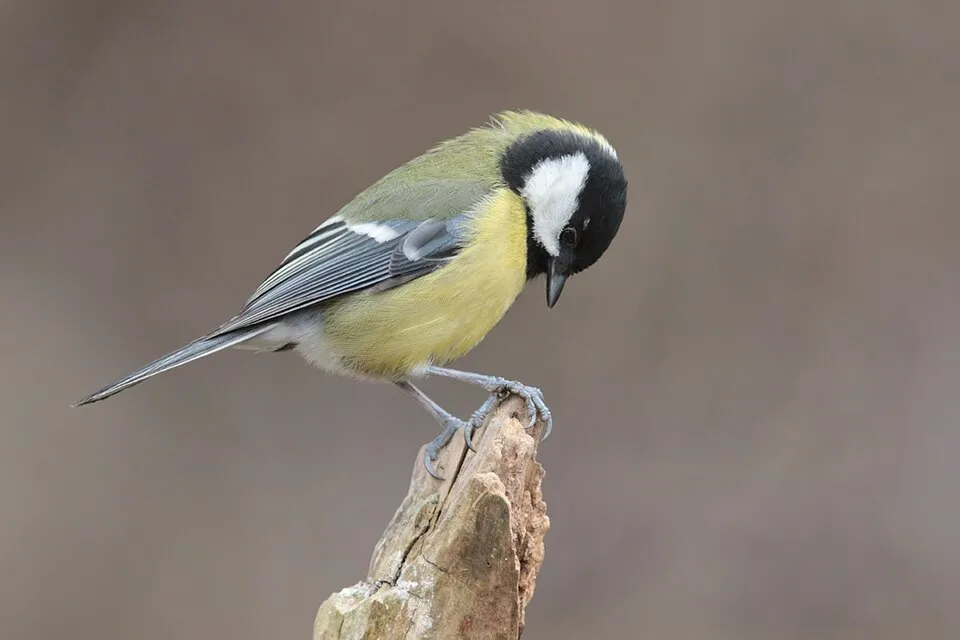

Bird
Great Spotted Woodpecker
Dendrocopos major292 records © Sławomir Staszczuk (info [AT] photoss.net) · CC BY-SA 3.0
Observed species
Occurrences documented via GBIF; they are neither an exhaustive inventory nor proof of current presence.
- Common Blackbird · Turdus merula · 415
- Great tit · Parus major · 299
- Great Spotted Woodpecker · Dendrocopos major · 292
- Eurasian blue tit · Cyanistes caeruleus · 278
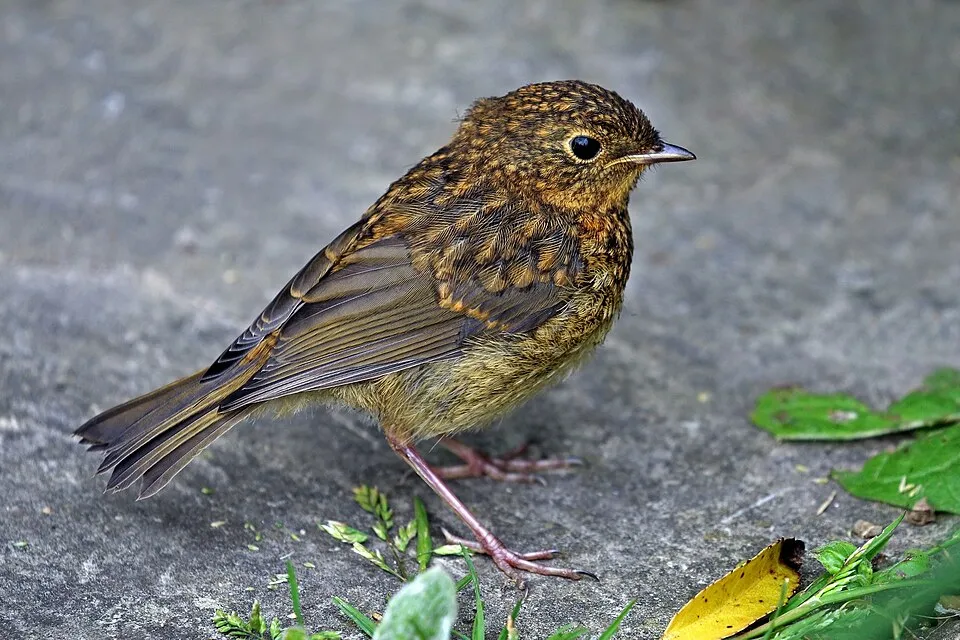
- European robin · Erithacus rubecula · 267
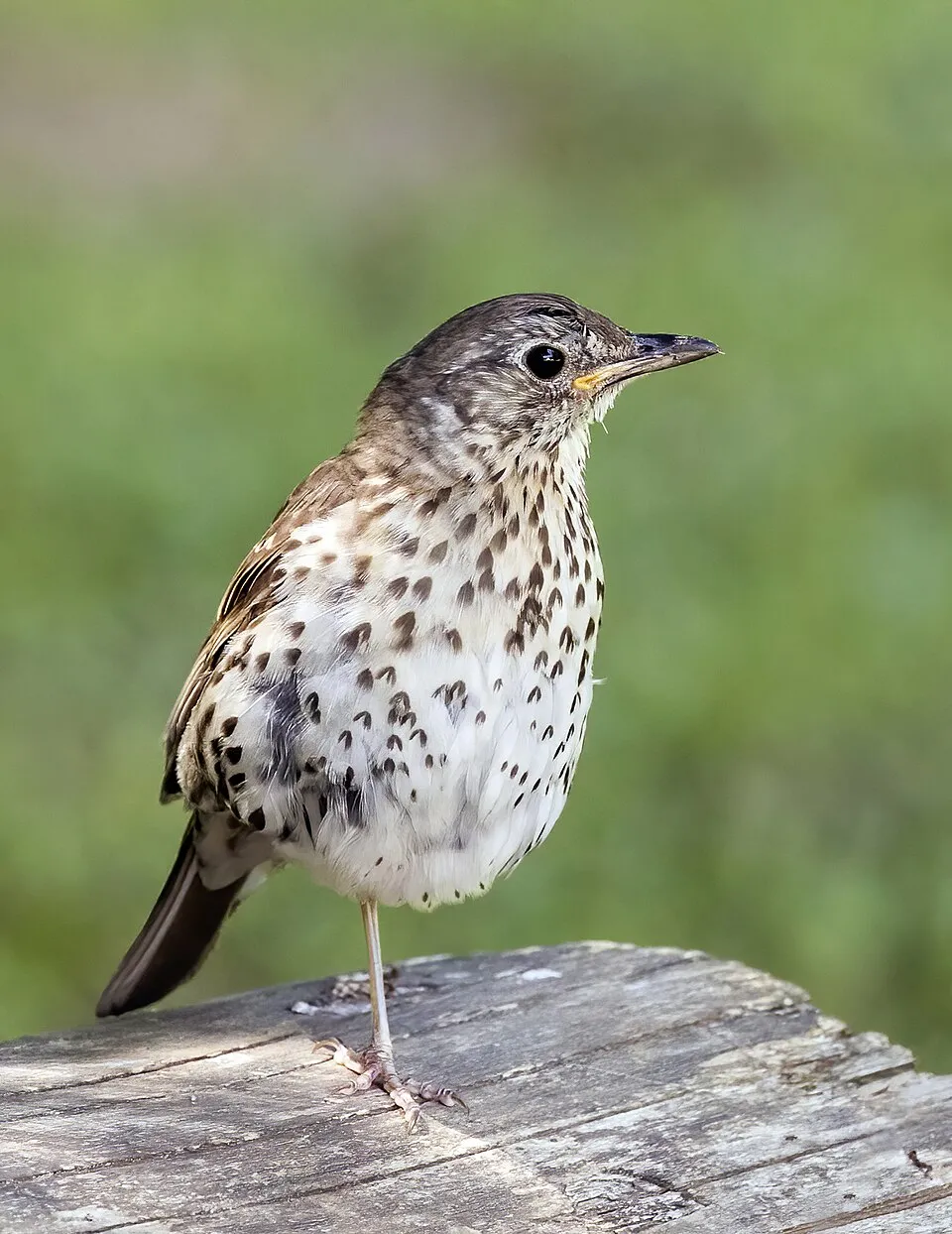
- Song Thrush · Turdus philomelos · 258
- House Sparrow · Passer domesticus · 241
- Yellowhammer · Emberiza citrinella · 240
- Eurasian Chaffinch · Fringilla coelebs · 238
- Eurasian Collared Dove · Streptopelia decaocto · 226
- Common Chiffchaff · Phylloscopus collybita · 215
- Hawfinch · Coccothraustes coccothraustes · 213
+18 more species
- Eurasian Jay · Garrulus glandarius · 197
- Common Pheasant · Phasianus colchicus · 192
- Eurasian Nuthatch · Sitta europaea · 191
- Common Buzzard · Buteo buteo · 188
- Northern Raven · Corvus corax · 186
- Common Wood Pigeon · Columba palumbus · 171
- Eurasian Blackcap · Sylvia atricapilla · 170
- Eurasian Siskin · Spinus spinus · 167
- Barn Swallow · Hirundo rustica · 156
- European Green Woodpecker · Picus viridis · 153
- Eurasian Wren · Troglodytes troglodytes · 151
- Coal tit · Periparus ater · 146
- Tawny owl · Strix aluco · 137
- Common Starling · Sturnus vulgaris · 137
- Willow Tit · Poecile montanus · 134
- Long-tailed Tit · Aegithalos caudatus · 134
- Goldcrest · Regulus regulus · 128
- Black Redstart · Phoenicurus ochruros · 109
Records: GBIF.org (CC-BY). Names: Wikidata (CC0), GBIF. Photos: Wikimedia Commons.
Conservation challenges
The primary purpose of the site is to preserve its natural habitats and the biodiversity they support. The species recorded (Biodiversity tab) reflect its ecological value. The designations it holds frame its management and the control of land use.
According to Global Forest Change data (University of Maryland, Global Forest Watch), about 735 ha of tree cover were lost within the boundary between 2001 and 2023 (4% of its area), peaking in 2016 and 2018. These losses include logging, storms and fires, and do not account for regrowth. Apart from forest felling and regrowth (about 690 ha in total), land cover remained almost unchanged between 1990 and 2018 according to CORINE Land Cover; only some 59 ha were built over. At night, 27% of the area gives off artificial light detectable from space (NASA VIIRS Black Marble composite, 2016). Built-up and developed land (buildings, business areas, roads, quarries) covers 8% of the area, and farmland 47% (CORINE Land Cover). According to the Natura 2000 forms, of 11 assessed habitats of European interest, 3 are in excellent condition and 2 in average or reduced condition. According to the Water Framework Directive assessment (2022 river basin management plans, data 2014–2019), none of the 79 km of rivers assessed within the site reaches good ecological status; they mostly have moderate ecological status. Since 2000, 6 invasive alien species have been recorded within the site (GBIF observations), 2 of them listed as of Union concern under EU Regulation 1143/2014. Among them: Impatiens glandulifera (Himalayan Balsam), Reynoutria japonica (Japanese Knotweed) and Impatiens parviflora (Small balsam).
Pressure indicators
Tree cover lost
735 ha
2001–2023 · 4% of the area
20012023
Fires since 2016
0
No large fire mapped (fires over about 30 ha)
Light at night
27%
of the area gives off artificial light visible from space
DarkLit
Built-up land
8%
buildings, business areas, roads, quarries · farmland 47%
Land cover change
< 0.5%
of the area changed, 1990–2018 · CORINE
forest felling and regrowth: 690 ha in total
Rivers and lakes
0%
of the 79 km of assessed rivers in good or high ecological status · WFD 2022
assessments 2014–2019
Invasive alien species
6
incl. 2 of EU concern · since 2000
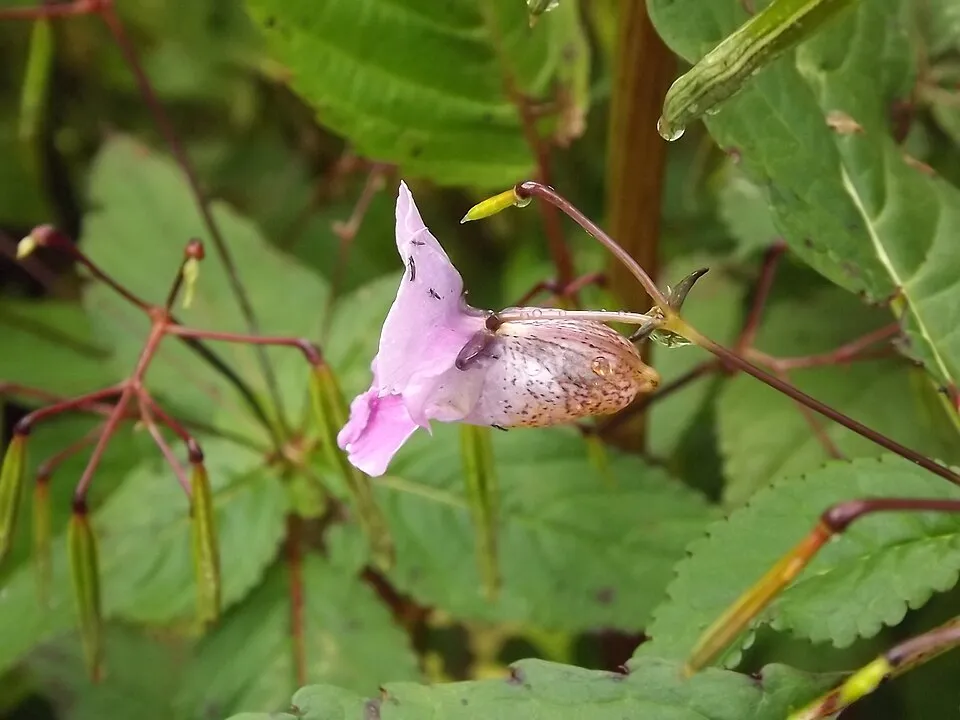 Himalayan Balsam
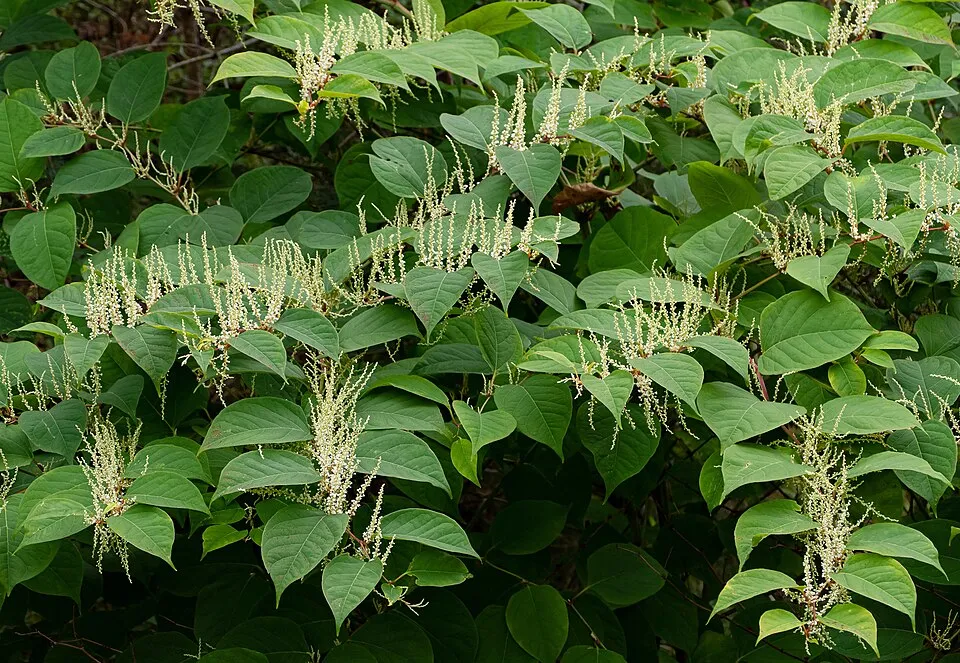 Japanese Knotweed
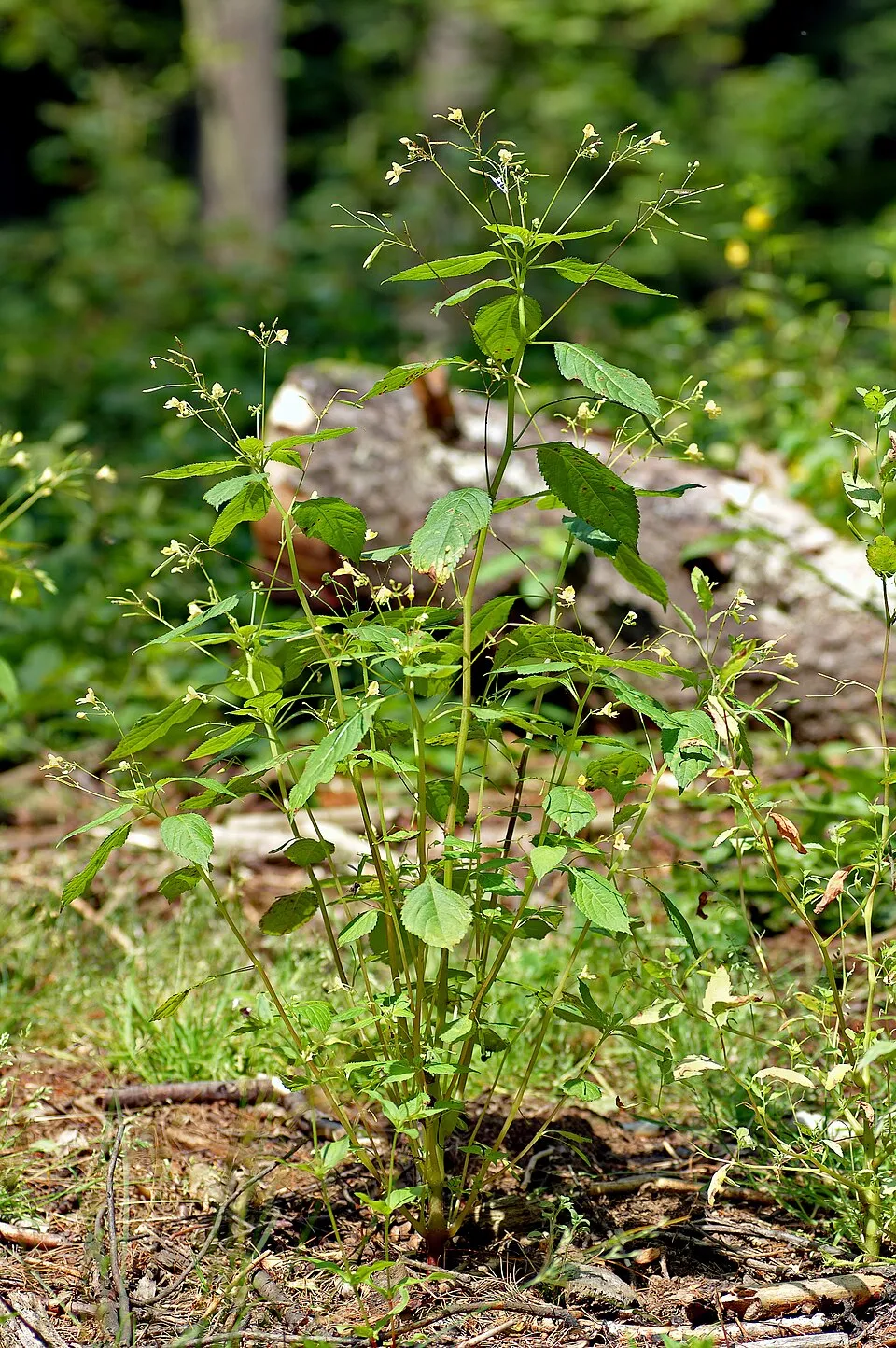 Small balsam
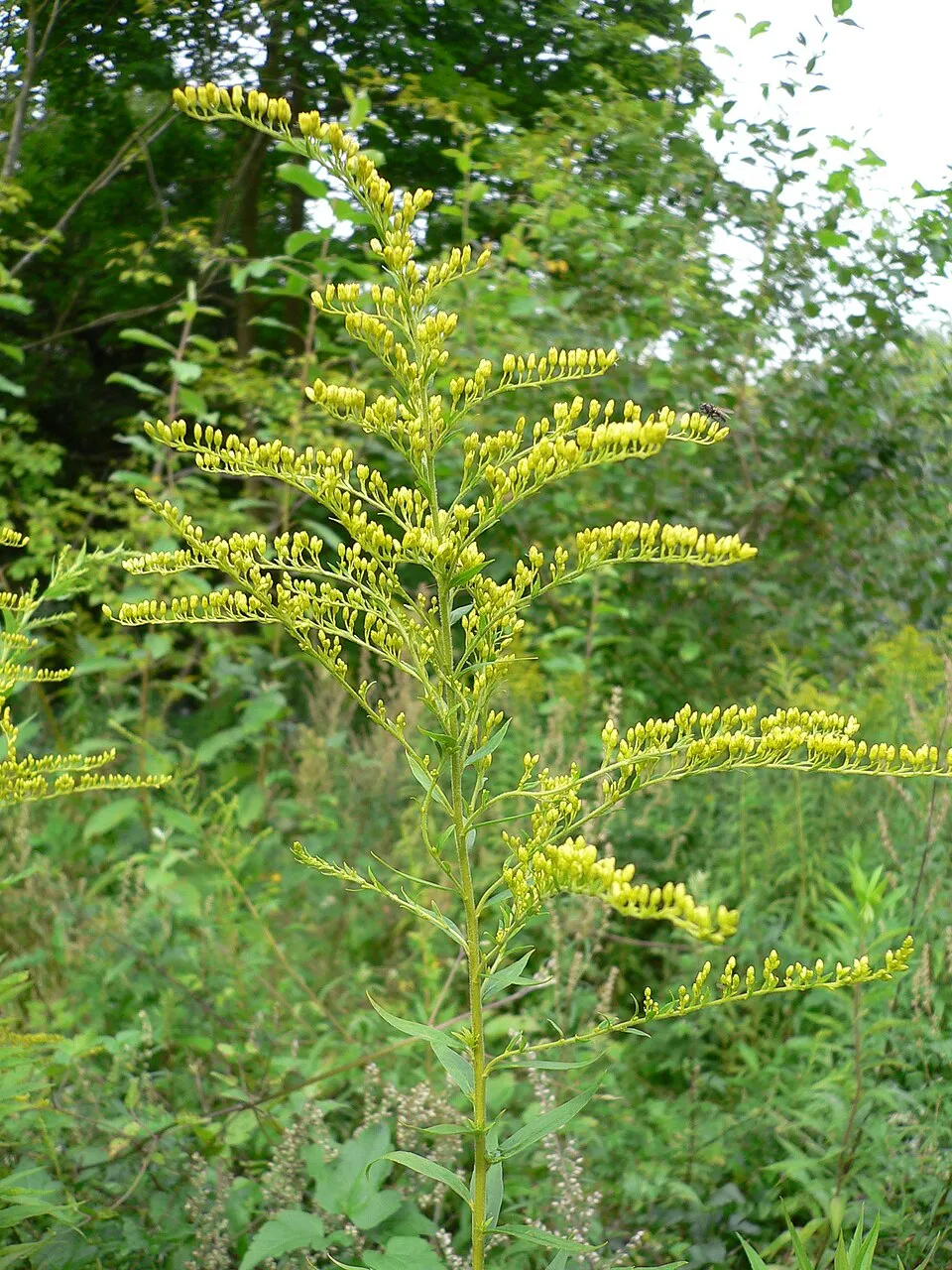 Canada goldenrod
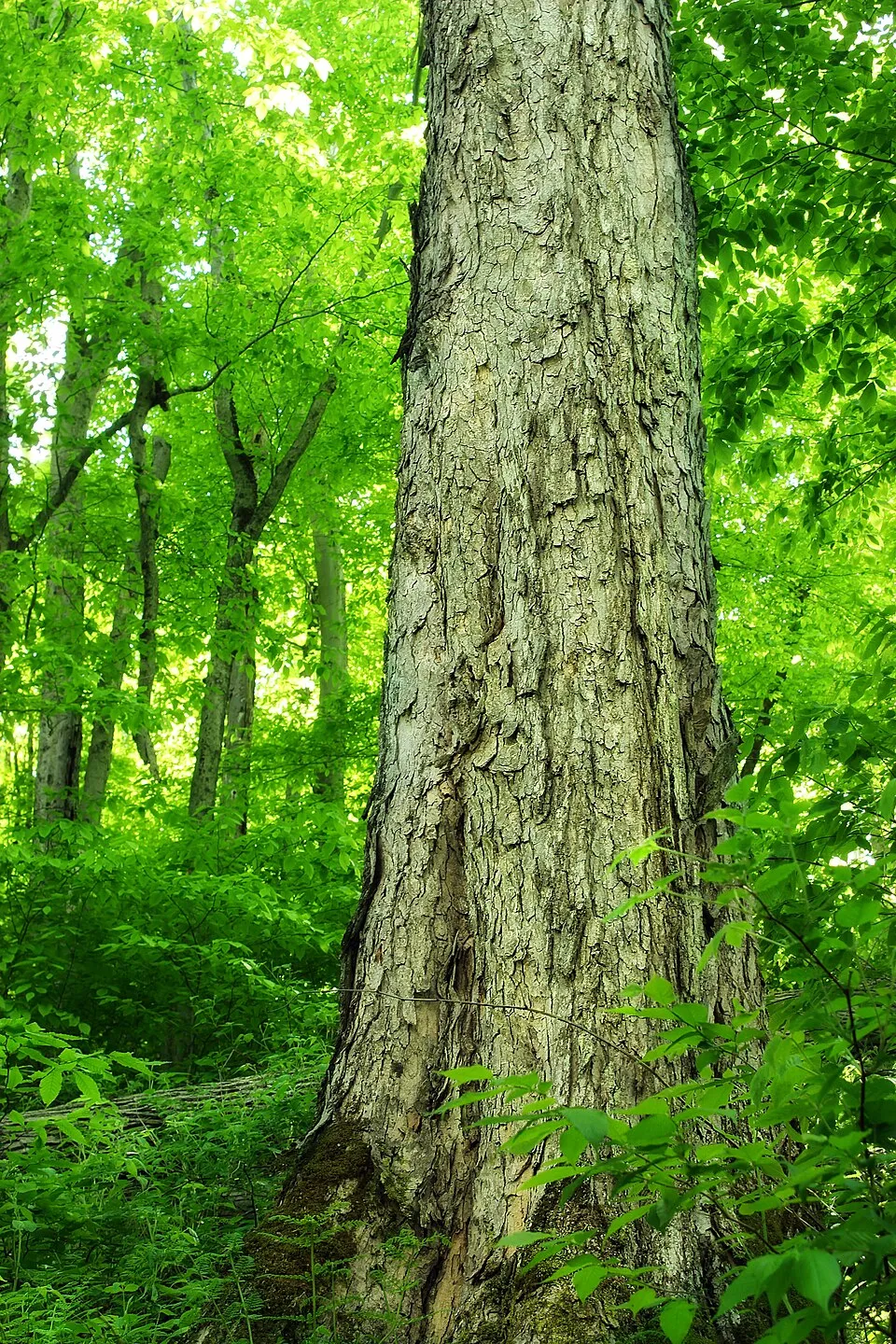 Northern red oak
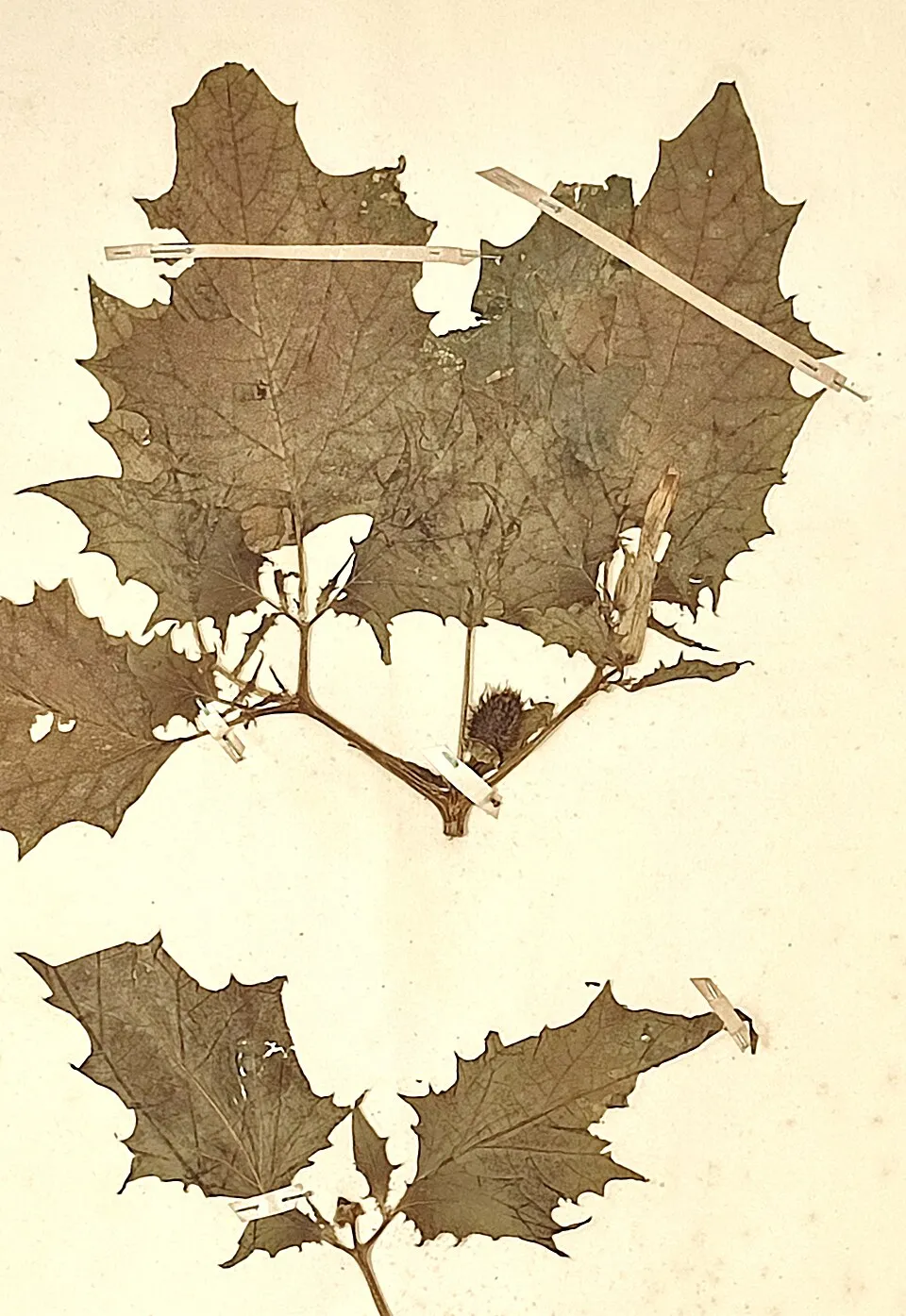 Jimsonweed
Photos: Himalayan Balsam © Guptaele · CC BY-SA 4.0; Japanese Knotweed © W.carter · CC0-1.0; Small balsam © André Karwath aka Aka · CC BY-SA 2.5; Canada goldenrod © Georg Slickers · CC BY-SA 4.0; Northern red oak © Nicholas A. Tonelli from Northeast Pennsylvania, USA · CC BY 2.0; Jimsonweed © Giuseppe Frizzi · Public domain
Sources: Global Forest Change (Hansen et al., University of Maryland, via Global Forest Watch, CC-BY 4.0); EFFIS, European Commission / Copernicus; NASA Black Marble 2016 (public domain); CORINE Land Cover 2018 (Copernicus) or MODIS.
CORINE Land Cover Change 1990–2018: generated using European Union's Copernicus Land Monitoring Service information (EEA), aggregated by Parkavela; DOI 10.2909/f30f1000-7cf8-43bb-872c-5eb093911b24.
Ecological status of water bodies: European Environment Agency, WISE – Water Framework Directive, 3rd river basin management plans (2022), CC BY 4.0. Official national classification, not comparable between countries.
Invasive alien species: Global Register of Introduced and Invasive Species (ISSG, CC BY 4.0); Union list, Regulation (EU) 1143/2014 (INBO, CC0); GBIF.org records (CC0 / CC BY 4.0), at least 2 per species.
Practical information
Cities and airport
- Kraków
6 km as the crow flies - Jaworzno
14 km as the crow flies - Airport: John Paul II International Airport Kraków-Balice (KRK)
7 km as the crow flies
Visitor information
- Punkt Informacji Turystycznej MSiT
2 km from the site boundary
Things to see
29 viewpoints · 5 waterfalls · 2 lakes and ponds · 42 caves
- Paryż Górny
viewpoint - Szum
waterfall - Księży Staw
lake or pond - Jaskinia Racławicka (Grzmiączka)
cave · 446 m - Leśny Dwór
lake or pond
Where to stay
1 mountain hut · 6 campsites
- Kluczwoda Kemping
campsite - Pole namiotowe Brandysówka
campsite
Hiking
22 waymarked routes listed, including:
Szlak MaryjnyVia Regia Droga św. JakubaZalew ChechłoOlkusz Stary CmentarzSzlak Twierdzy KrakówSzlak Doliny Szklarki
By bike
SOG Rowerowy Szlak Orlich Gniazd · 13 km
+ 19 local loops
Signed cycle routes: this does not mean that cycling is allowed on footpaths.
Data © OpenStreetMap contributors (ODbL) · Wikidata (CC0)
Routes © OpenStreetMap contributors (ODbL), via Waymarked Trails
Waymarked hiking routes
Olkusz Stary Cmentarz - Paczółtowice Dolina Eliaszówki
17 km within the site ↗ 184 m↘ 102 m 359–471 m
Szlak Twierdzy Kraków - pętla północna
2.9 km within the site ↗ 22 m↘ 33 m 248–285 m
Tracks © OpenStreetMap contributors (ODbL), clipped to the boundary; elevation gain and profiles computed on the longest section from Mapzen Terrain Tiles (≈ 30 m), indicative only.
Access and visiting
The nearest railway station is Bukowno, less than 1 km from the site boundary. Nearest towns of over 50,000 people, as the crow flies: Kraków (6 km) and Jaworzno (14 km). Nearest airport: John Paul II International Airport Kraków-Balice (KRK), about 7 km away. About 1.6 million people live within 20 km of the site boundary, 830,000 of them within 10 km; some 34,000 people are estimated to live inside (GHSL estimate, 2020). Visitor information on site: Punkt Informacji Turystycznej MSiT. Waymarked hiking routes listed in OpenStreetMap: 22, including Szlak Maryjny, Via Regia Droga św. Jakuba, Zalew Chechło and Olkusz Stary Cmentarz. A signed cycle route crosses the site: “SOG Rowerowy Szlak Orlich Gniazd” (OpenStreetMap). To see: 29 viewpoints, 5 waterfalls, 2 lakes and ponds and 42 caves, including Paryż Górny, Szum, Księży Staw and Jaskinia Racławicka (Grzmiączka) (446 m). Where to stay: 1 mountain hut and 6 campsites, including Kluczwoda Kemping and Pole namiotowe Brandysówka. To plan a visit (access, opening periods, visitor rules), it is best to consult the official information from the managing body and the official website listed in this page's sources.
Source: OpenStreetMap (ODbL), Wikidata (CC0), October 2026.
Built heritage
According to Wikidata, 77 monuments listed in the Polish register of monuments stand within the boundary. Among them are 27 religious buildings, 17 houses and civic buildings and 7 castles and fortifications. Examples include “Cmentarz choleryczny (grupa fortowa TONIE) w Krakowie” in Kraków, “Brama wjazdowa” in Garlica Murowana and “Dwór w Modlnicy” in Modlnica.
27 religious buildings17 houses and civic buildings7 castles and fortifications
-
Cmentarz choleryczny (grupa fortowa TONIE) w Krakowie
Kraków -
Brama wjazdowa
Garlica Murowana -
Dwór w Modlnicy
Modlnica -
Eastern coupled battery
Bibice -
Cmentarz przykościelny w Bolechowicach
Bolechowice -
Bramka, Świętego Wojciecha 81 w Modlnicy
Modlnica -
Dwór w Tomaszowicach
Tomaszowice -
Western coupled battery
Zielonki
and 69 more
Source: Wikidata (CC0), monuments in each country’s official heritage protection registers, at national or regional level. Each item links to its Wikidata entry.
When to visit
Mildest period: from June to August, with average temperatures of 16 to 19 °C. Average temperatures drop below 0 °C from December to February: frost is common. Precipitation peaks in July (up to 110 mm per month). According to NASA's MODIS satellites (2015–2025 average), snow covers most of the site in January, with about 40 snow-covered days a year on average. Day length ranges from about 8 h 04 min in December to 16 h 22 min in June. Wildlife records published on GBIF peak for birds (May), plants (March and April) and butterflies and moths (July). These peaks also reflect when observers are most active.
Source: Copernicus ERA5-Land (C3S), monthly averages 1996–2025 at the representative point, temperatures adjusted for elevation.
Contains modified Copernicus Climate Change Service information 2026. Neither the European Commission nor ECMWF is responsible for any use that may be made of the Copernicus information or data it contains.
Wildlife records calendar
JFMAMJJASOND
Birds
Plants
Butterflies & moths
Monthly records published on GBIF (CC-BY), relative to the busiest month; also reflects observer activity.
Gallery
© Jerzy Opioła · CC BY-SA 3.0
© PPawel · CC BY-SA 3.0
© Zbooycio · CC BY-SA 4.0
© marek7400 · CC BY 3.0
© Earth Science and Remote Sensing Unit, Lyndon B. Johnson Space Center · Public domain
© Earth Science and Remote Sensing Unit, Lyndon B. Johnson Space Center · Public domain
Sources and licences
- Wikidata: Q6435967
- OpenStreetMap: relation 19549848
- Wikipedia: en.wikipedia.org/wiki/Kraków_Valleys_Landscape_Park
- WDPA: 148559
References
- cds.climate.copernicus.eu: climate · CC-BY-4.0
- registry.opendata.aws: elevation of the reference point, detailed relief · PD
- land.copernicus.eu: land cover, land cover change, sea share · COPERNICUS
- doi.org: population around the site · CC-BY-4.0
- wikidata.org: official area, establishment date, protected heritage, nearby cities and airport, access and peaks, lake depths, places to see · CC0-1.0
- eea.europa.eu: bathing water quality, ecological status of waters · CC-BY-4.0
- en.eurovelo.com: EuroVelo cycle routes · ODbL-1.0
- cycling.waymarkedtrails.org: cycle routes · ODbL-1.0
- opentopodata.org: elevations · PD
- forest-fire.emergency.copernicus.eu: wildfires · COPERNICUS
- globalforestwatch.org: tree cover loss · CC-BY-4.0
- gbif.org: seasonality of sightings, invasive alien species, observed species · CC-BY-4.0
- europe-geology.eu: geology · CC-BY-4.0
- hydrosheds.org: lakes · CC-BY-4.0
- natura2000.eea.europa.eu: Natura 2000 habitats and species · CC-BY-4.0
- openstreetmap.org: official name, access and peaks, places to see, trail difficulty, wheelchair access · ODbL-1.0
- earthobservatory.nasa.gov: night light · PD
- hiking.waymarkedtrails.org: route difficulty · ODbL-1.0
- nsidc.org: snow cover · PD
- wikidata.org: Wikipedia article · CC-BY-SA-4.0
Data © OpenStreetMap contributors (ODbL), Wikidata (CC0) and the sources cited.